

Prerequisites
Before we begin, make sure the following prerequisites are met:
- SQL Server Data Tools (SSDT) designer installed for Visual Studio.
- SQL Server Integration Services Projects 2022+ Visual Studio extension installed.
- SSIS PowerPack is installed.
Get release note details in SSIS
-
Open Visual Studio and click Create a new project.
-
Select Integration Services Project. Enter a name and location for your project, then click OK.
-
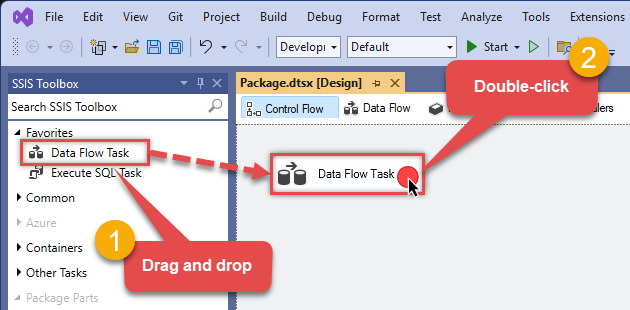
From the SSIS Toolbox, drag and drop a Data Flow Task onto the Control Flow surface, and double-click it:
-
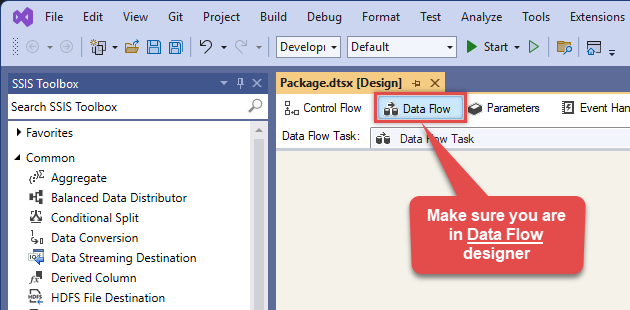
Make sure you are in the Data Flow Task designer:
-
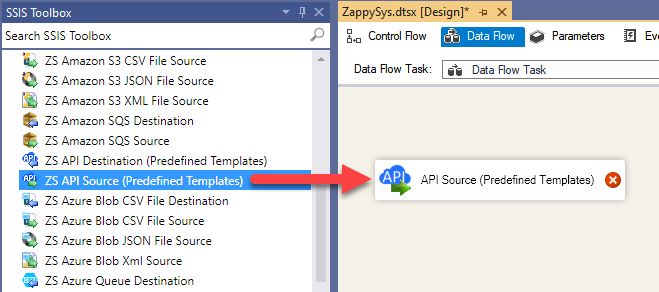
From the SSIS toolbox drag and API Source (Predefined Templates) on the data flow designer surface, and double click on it to edit it:
-
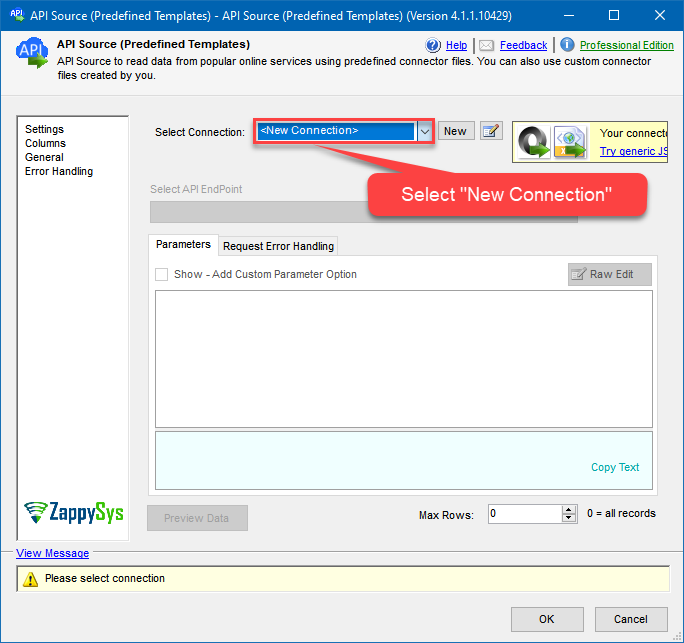
Select New Connection to create a new connection:
-
Use a preinstalled ManageEngine ServiceDesk Plus (Zoho) Connector from Popular Connector List or press Search Online radio button to download ManageEngine ServiceDesk Plus (Zoho) Connector. Once downloaded simply use it in the configuration:
ManageEngine ServiceDesk Plus (Zoho)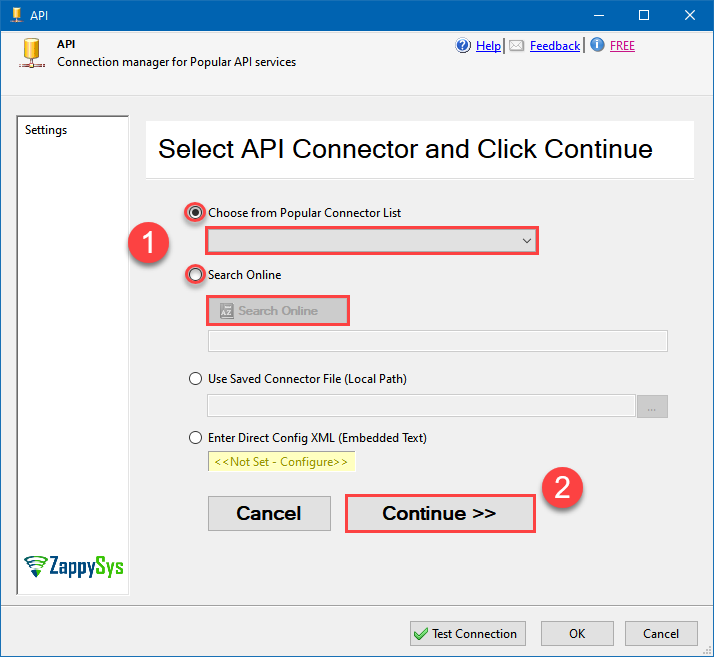
-
Select your authentication scenario below to expand connection configuration steps to:
- Configure the authentication in ManageEngine ServiceDesk Plus (Zoho).
- Enter those details into the API Connection Manager configuration.
OAuth
ManageEngine ServiceDesk Plus (Zoho) authentication
OAuth Connection for ManageEngine ServiceDesk Plus API [API reference]
To register custom App, perform the following steps (Detailed steps found in the help link at the end)- Go to Zoho API Console
- Click Add Client link
- Select Server-based Applications option
- Enter desired client name (Display purpose only)
- Enter some URL for Company homepage
- For Authorized Redirect URI enter https://zappysys.com/oauth (Or enter your own but we recommend using ZappySys one if possible). This URL must match on Zoho Connector UI.
- Click CREATE.
- Copy Client ID and Secret and paste on Zoho Connector UI.
API Connection Manager configuration
Just perform these simple steps to finish authentication configuration:
-
Set Authentication Type to
OAuth [OAuth] - Optional step. Modify API Base URL if needed (in most cases default will work).
- Fill in all the required parameters and set optional parameters if needed.
- Press Generate Token button to generate the tokens.
- Finally, hit OK button:
ManageEngine ServiceDesk Plus (Zoho)OAuth [OAuth]https://sdpondemand.manageengine.com/api/v3Optional Parameters ClientId ClientSecret Permissions SDPOnDemand.requests.ALL AccountUrl https://accounts.zoho.com RedirectUrl https://zappysys.com/oauth RetryMode RetryWhenStatusCodeMatch RetryStatusCodeList 429 RetryCountMax 5 RetryMultiplyWaitTime True 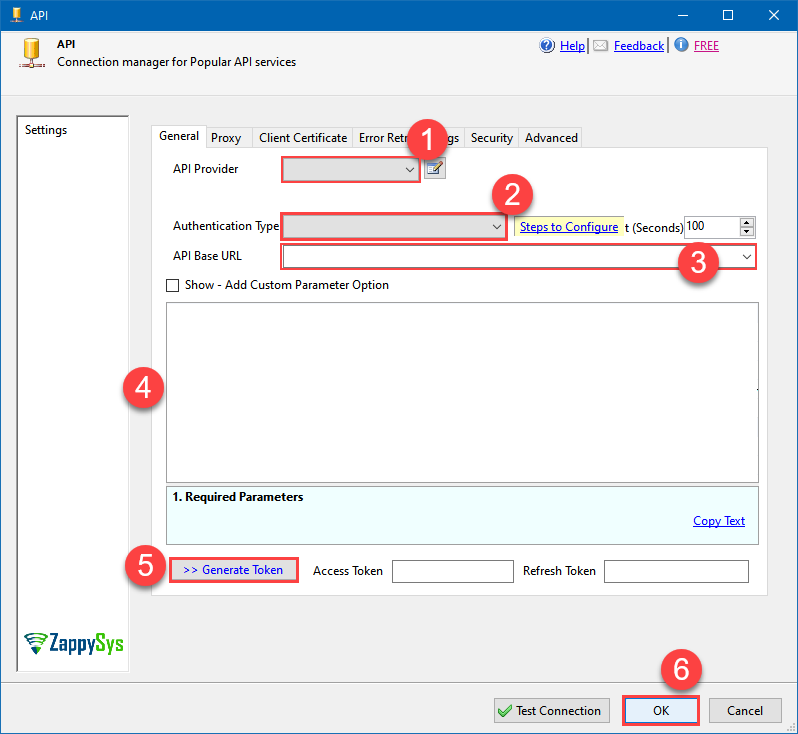 Find full details in the ManageEngine ServiceDesk Plus (Zoho) Connector authentication reference.
 -
Select Get Release Note Details endpoint from the dropdown and hit Preview Data:
 API Source - ManageEngine ServiceDesk Plus (Zoho)Read and write ServiceDesk Plus (Zoho) data effortlessly. Integrate, manage, and automate requests, tasks, comments, and worklogs — almost no coding required.ManageEngine ServiceDesk Plus (Zoho)Get Release Note Details
Required Parameters ReleaseId Fill-in the parameter... NoteId Fill-in the parameter... Optional Parameters ContineOn404Error True 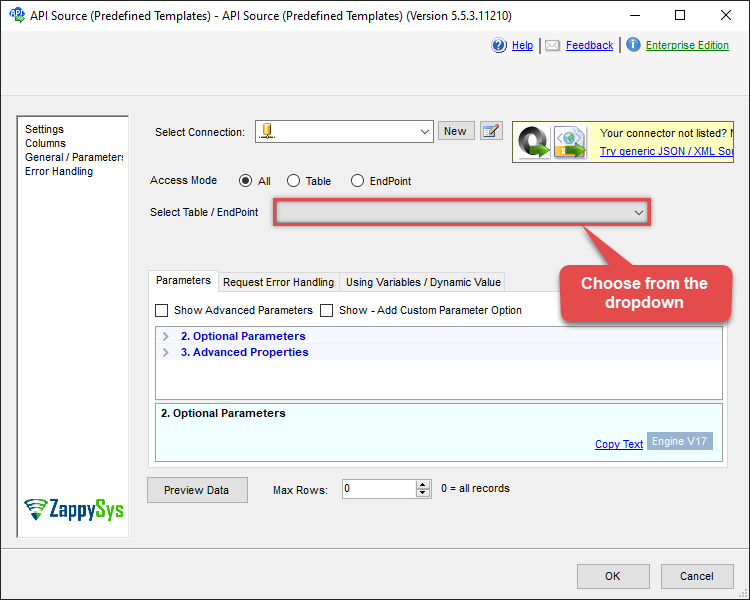
-
That's it! We are done! Just in a few clicks we configured the call to ManageEngine ServiceDesk Plus (Zoho) using ManageEngine ServiceDesk Plus (Zoho) Connector.
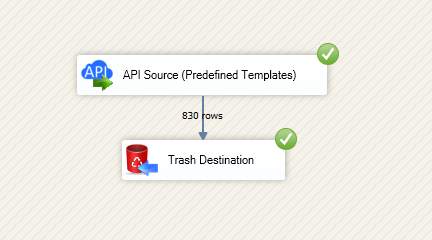
You can load the source data into your desired destination using the Upsert Destination , which supports SQL Server, PostgreSQL, and Amazon Redshift. We also offer other destinations such as CSV , Excel , Azure Table , Salesforce , and more . You can check out our SSIS PowerPack Tasks and components for more options. (*loaded in Trash Destination)
Deploy SSIS package to Azure Data Factory (ADF)
Once your SSIS package is complete,
deploy it to the
Azure-SSIS runtime
within Azure Data Factory.
The setup process requires you
to upload the
SSIS PowerPack
installer to Azure Blob Storage
and then customize the runtime configuration using the main.cmd file.
For a complete walkthrough of these steps,
see our detailed guide on the
Azure Data Factory (SSIS) and ManageEngine ServiceDesk Plus (Zoho) integration.
ManageEngine ServiceDesk Plus (Zoho) Connector actions
Need another use case? Pick the next ManageEngine ServiceDesk Plus (Zoho) action in Azure Data Factory (SSIS) below.
- Delete Request
- Get Asset Details
- Get Assets
- Get Change Details
- Get Change Note Details
- Get Change Notes
- Get Change Task Comment Details
- Get Change Task Comments
- Get Change Task Details
- Get Change Task Worklog Details
- Get Change Task Worklogs
- Get Change Tasks
- Get Change Worklog Details
- Get Change Worklogs
- Get Changes
- Get Contract Details
- Get Contracts
- Get Problem Details
- Get Problem Note Details
- Get Problem Notes
- Get Problem Task Comment Details
- Get Problem Task Comments
- Get Problem Task Details
- Get Problem Task Worklog Details
- Get Problem Task Worklogs
- Get Problem Tasks
- Get Problem Worklog Details
- Get Problem Worklogs
- Get Problems
- Get Project Details
- Get Project Members
- Get Project Milestone Tasks
- Get Project Milestones
- Get Project Note Details
- Get Project Notes
- Get Project Task Comment Details
- Get Project Task Comments
- Get Project Task Details
- Get Project Task Worklog Details
- Get Project Task Worklogs
- Get Project Tasks
- Get Project Worklog Details
- Get Project Worklogs
- Get Projects
- Get Purchase Order Details
- Get Purchase Orders
- Get Release Details
- Get Release Notes
- Get Release Task Comment Details
- Get Release Task Comments
- Get Release Task Details
- Get Release Task Worklog Details
- Get Release Task Worklogs
- Get Release Tasks
- Get Release Worklog Details
- Get Release Worklogs
- Get Releases
- Get Request Details
- Get Request Note Details
- Get Request Notes
- Get Request Task Comment Details
- Get Request Task Comments
- Get Request Task Details
- Get Request Task Worklog Details
- Get Request Task Worklogs
- Get Request Tasks
- Get Request Worklog Details
- Get Request Worklogs
- Get Requests
- Get Task Details
- Get Tasks
- Test Connection
- Make Generic REST API Request
- Make Generic REST API Request (Bulk Write)
Conclusion
You now know how to get release note details in Azure Data Factory (SSIS) without writing complex code. ManageEngine ServiceDesk Plus (Zoho) SSIS Connector handled pagination and authentication automatically.
Ready to get started? Download the trial or ping us via chat if you need help: