

Prerequisites
Before we begin, make sure the following prerequisites are met:
- SQL Server Data Tools (SSDT) designer installed for Visual Studio.
- SQL Server Integration Services Projects 2022+ Visual Studio extension installed.
- SSIS PowerPack is installed.
Test connection in SSIS
-
Open Visual Studio and click Create a new project.
-
Select Integration Services Project. Enter a name and location for your project, then click OK.
-
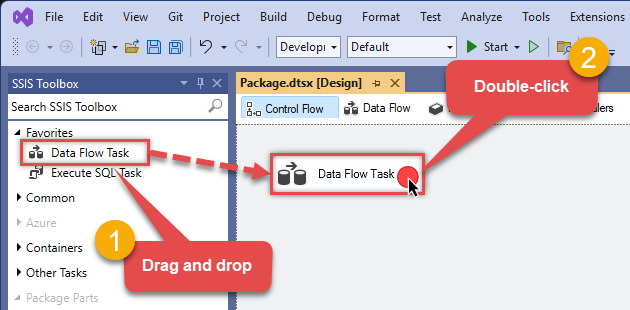
From the SSIS Toolbox, drag and drop a Data Flow Task onto the Control Flow surface, and double-click it:
-
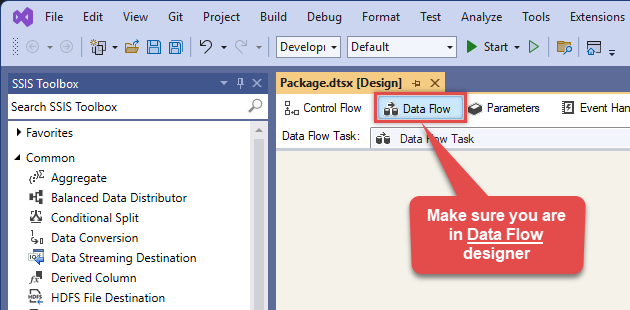
Make sure you are in the Data Flow Task designer:
-
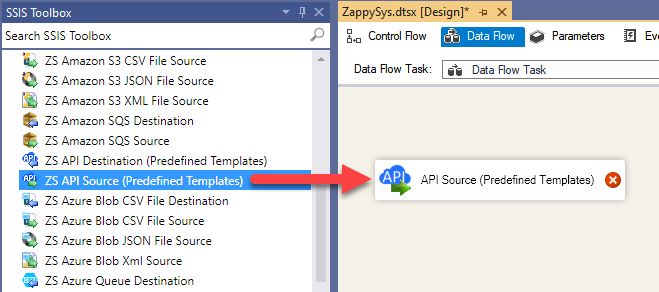
From the SSIS toolbox drag and API Source (Predefined Templates) on the data flow designer surface, and double click on it to edit it:
-
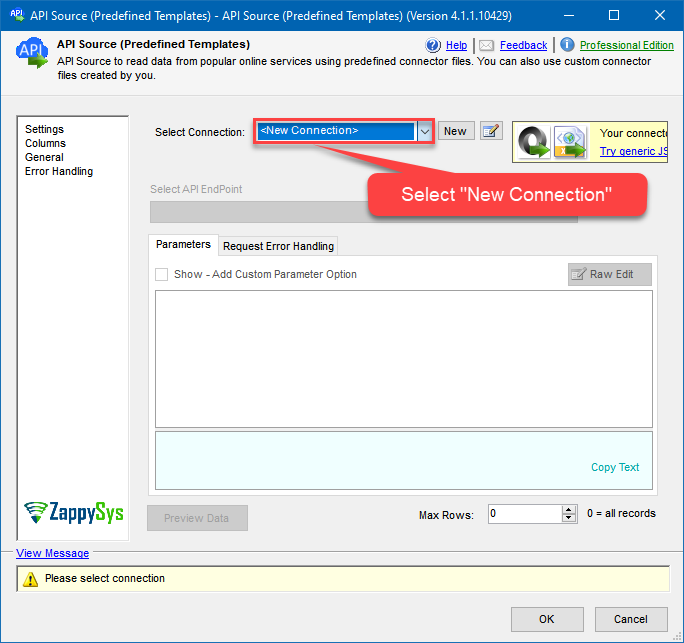
Select New Connection to create a new connection:
-
Use a preinstalled Amazon Ads Connector from Popular Connector List or press Search Online radio button to download Amazon Ads Connector. Once downloaded simply use it in the configuration:
Amazon Ads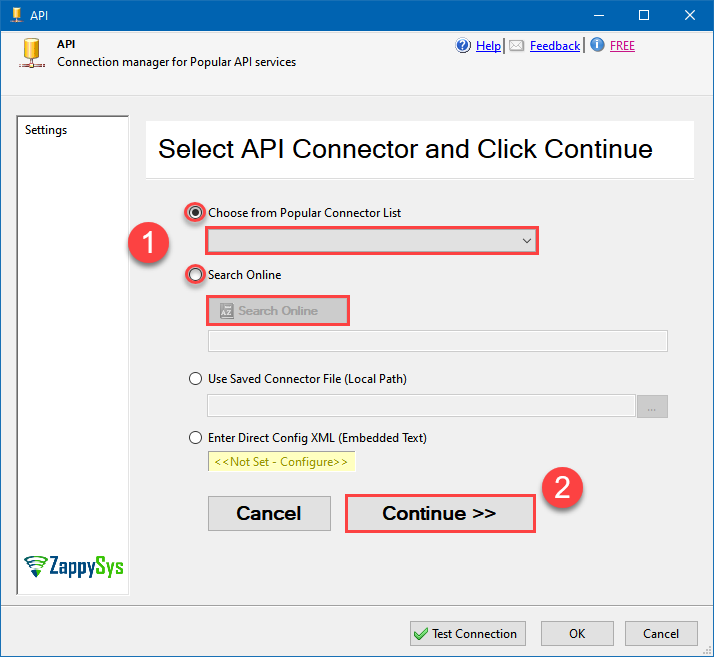
-
Select your authentication scenario below to expand connection configuration steps to:
- Configure the authentication in Amazon Ads.
- Enter those details into the API Connection Manager configuration.
OAuth Authentication
Amazon Ads authentication
Amazon OAuth Security Profile has be created in Amazon Developer portal. [API reference]
Firstly, login into Amazon Developer portal in https://developer.amazon.com.
Then click Sign in.
If you don't have an account, press Create your Amazon Developer account button to create one.
-
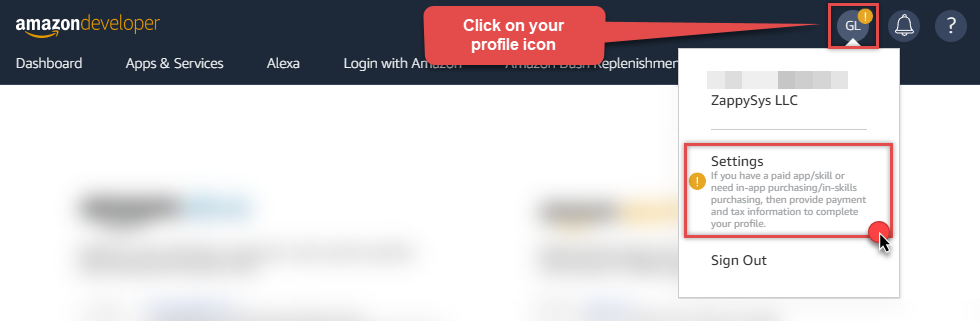
Once logged in, click on your profile icon on the right-top of the window and hit Settings:
-
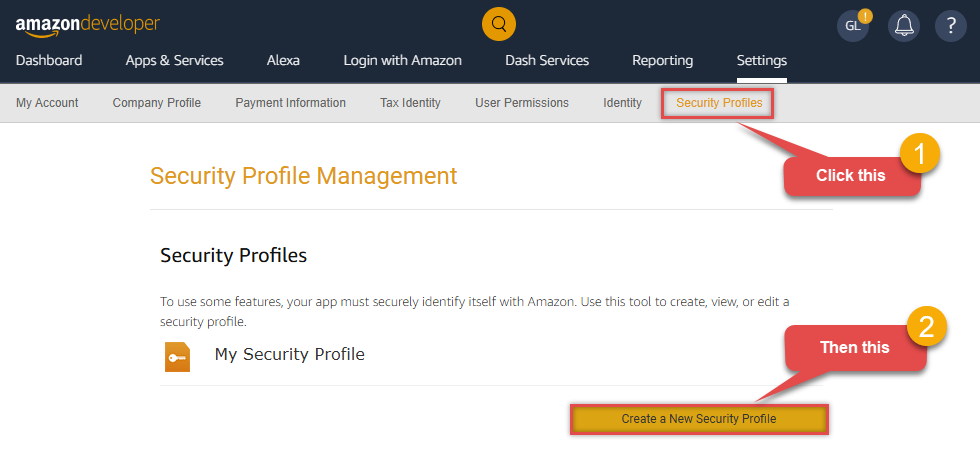
Then click Security Profiles and proceed with creating a new Security Profile:
-
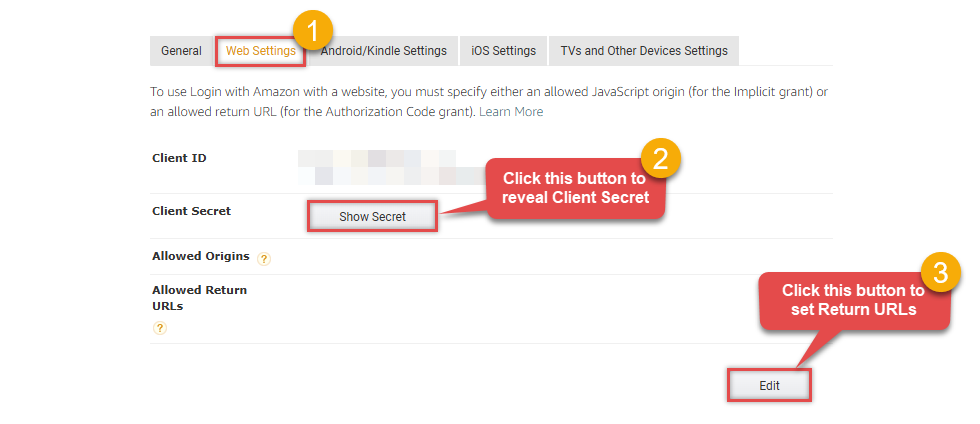
After that, click Web Settings subtab, then hit Show Secret button to reveal the Client Secret (you will need it later), and click Edit to add a Redirect URL:
-
Continue by setting Allowed Return URLs (you can have your own or use
https://zappysys.com/oauth):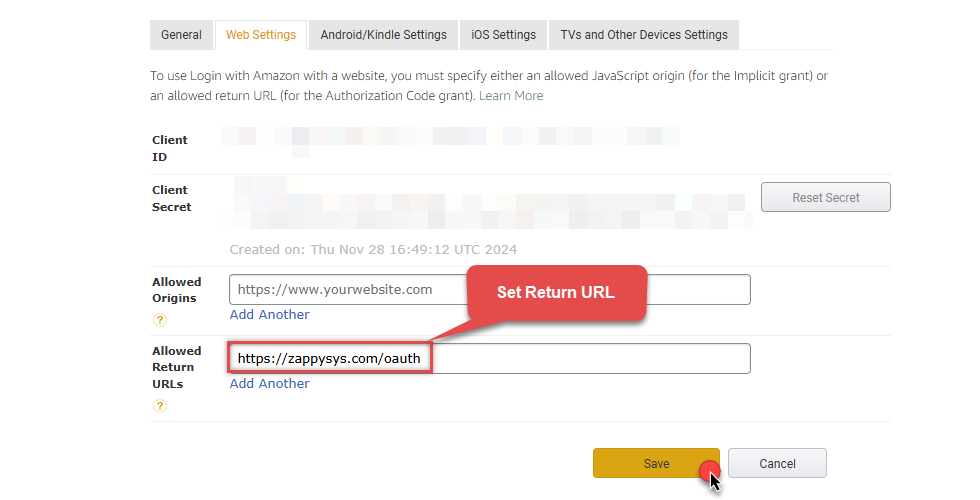
-
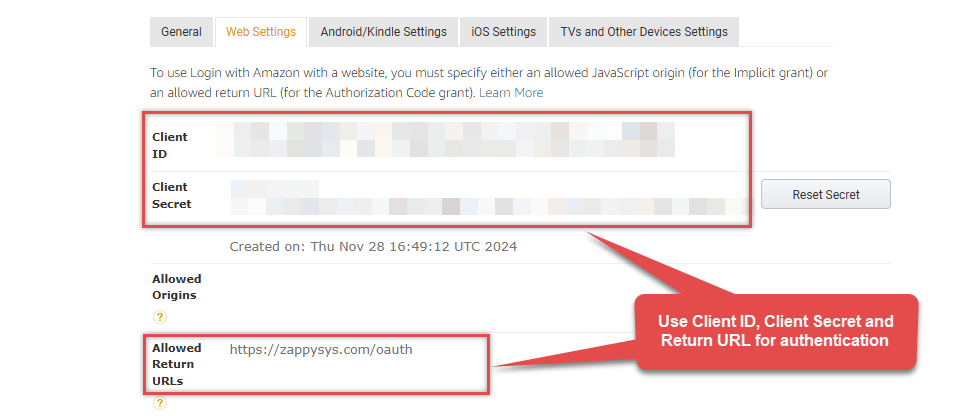
Done! Now you can use Client ID, Client Secret, and Redirect URL when configuring OAuth Authentication parameters:
API Connection Manager configuration
Just perform these simple steps to finish authentication configuration:
-
Set Authentication Type to
OAuth Authentication [OAuth] - Optional step. Modify API Base URL if needed (in most cases default will work).
- Fill in all the required parameters and set optional parameters if needed.
- Press Generate Token button to generate the tokens.
- Finally, hit OK button:
Amazon AdsOAuth Authentication [OAuth]https://advertising-api.amazon.com/v2Required Parameters ClientId Fill-in the parameter... ClientSecret Fill-in the parameter... AuthorizationUrl Fill-in the parameter... ReturnUrl Fill-in the parameter... Scope Fill-in the parameter... Profile (click 'Generate Token' before this) Fill-in the parameter... Optional Parameters RetryMode RetryWhenStatusCodeMatch RetryStatusCodeList 429 RetryCountMax 5 RetryMultiplyWaitTime True 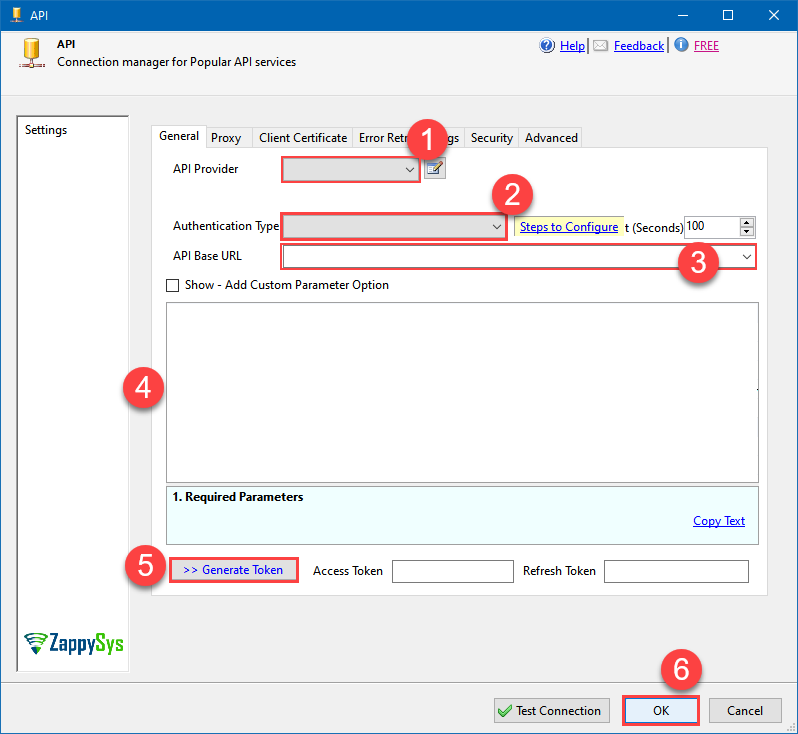 Find full details in the Amazon Ads Connector authentication reference.
 -
Select Test Connection endpoint from the dropdown and hit Preview Data:
 API Source - Amazon AdsRead and write Amazon Ads data effortlessly. Integrate, manage, and automate campaigns, ad groups, and performance metrics — almost no coding required.Amazon AdsTest Connection
There are no parameters to configure. 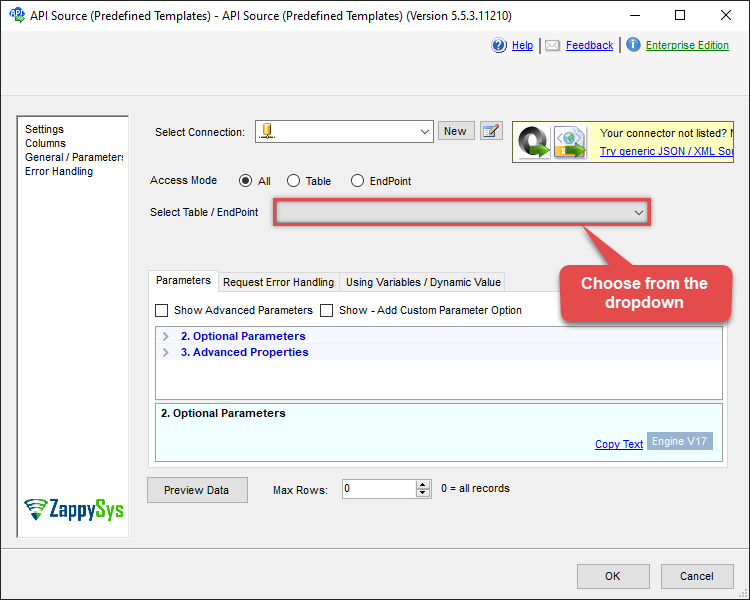
-
That's it! We are done! Just in a few clicks we configured the call to Amazon Ads using Amazon Ads Connector.
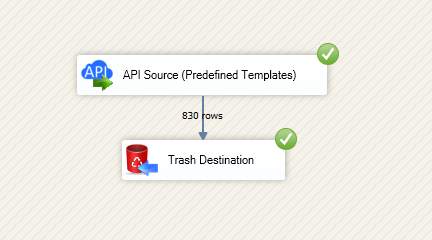
You can load the source data into your desired destination using the Upsert Destination , which supports SQL Server, PostgreSQL, and Amazon Redshift. We also offer other destinations such as CSV , Excel , Azure Table , Salesforce , and more . You can check out our SSIS PowerPack Tasks and components for more options. (*loaded in Trash Destination)
Deploy SSIS package to Azure Data Factory (ADF)
Once your SSIS package is complete,
deploy it to the
Azure-SSIS runtime
within Azure Data Factory.
The setup process requires you
to upload the
SSIS PowerPack
installer to Azure Blob Storage
and then customize the runtime configuration using the main.cmd file.
For a complete walkthrough of these steps,
see our detailed guide on the
Azure Data Factory (SSIS) and Amazon Ads integration.
Amazon Ads Connector actions
Need another use case? Pick the next Amazon Ads action in Azure Data Factory (SSIS) below.
- Get Beta Report
- Get Profiles
- Get Report
- Make Generic REST API Request
- Make Generic REST API Request (Bulk Write)
Conclusion
You now know how to test connection in Azure Data Factory (SSIS) without writing complex code. Amazon Ads SSIS Connector handled pagination and authentication automatically.
Ready to get started? Download the trial or ping us via chat if you need help: