How to integrate XML File using Talend Studio

Learn how to quickly and efficiently connect XML File with Talend Studio for smooth data access.
Read and write XML files effortlessly. Extract, filter, and sync XML from local files and strings for analytics, reporting, and data pipelines — almost no coding required. You can do it all using the high-performance XML File ODBC Driver. We'll walk you through the entire setup.
Ready to dive in? Download the product to jump right in, or follow the step-by-step guide below to see how it works.
Create data source in ZappySys Data Gateway
In this section we will create a data source for XML File in the Data Gateway. Let's follow these steps to accomplish that:
-
Download and install ODBC PowerPack (if you haven't already).
-
Search for
gatewayin the Windows Start Menu and open ZappySys Data Gateway Configuration: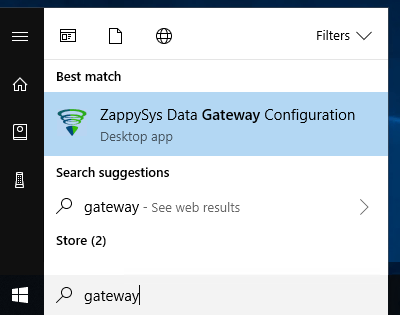
-
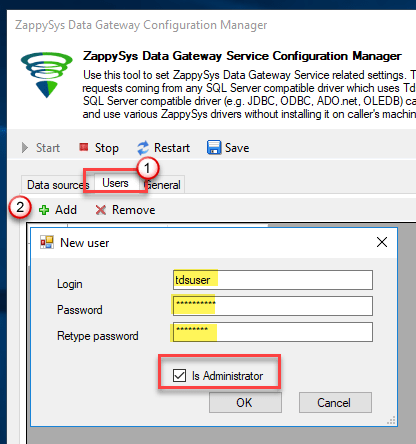
Go to the Users tab and follow these steps to add a Data Gateway user:
- Click the Add button
-
In the Login field enter a username, e.g.,
john - Then enter a Password
- Check the Is Administrator checkbox
- Click OK to save
-
Now we are ready to add a data source:
- Click the Add button
- Give the Data source a name (have it handy for later)
- Then select Native - ZappySys XML Driver
- Finally, click OK
XmlFileDSNZappySys XML Driver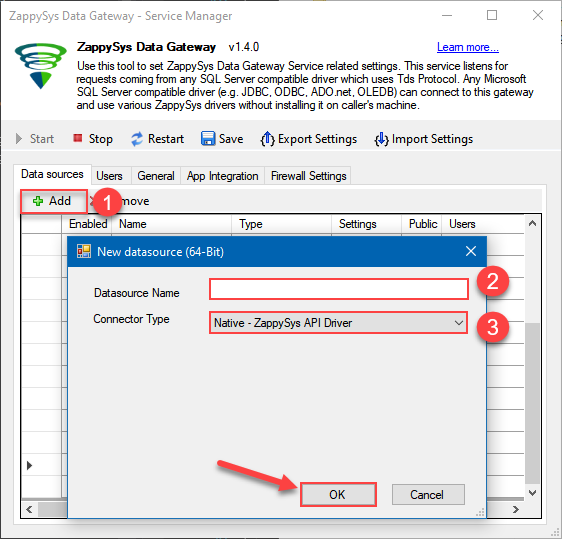
-
You can use pass single file or multiple file path using wildcard pattern in path and you can use select single file by clicking [...] path button or multiple file using wildcard pattern in path.
Note: If you want to operation with multiple files then use wild card pattern as below
(when you use wild card pattern in source path then system will treat target path as folder regardless you end with slash)

C:\SSIS\Test\reponse.xml (will read only single reponse.xml file)
C:\SSIS\Test\j*.xml (all files starting with file name j)
C:\SSIS\Test\*.xml (all files with .xml Extension and located under folder subfolder)
-
Now enter Path expression in Array Filter textbox to extract only specific part of XML file as below ($.feed.entry[*] will get content of entry attribute from XML document. Entry attribute is array of XML documents so we have to use [*] to indicate we want all records of that array)
NOTE: Here, We are using our desired filter, but you need to select your desired filter based on your requirement.
Click on Test Connection button to view whether the Test Connection is SUCCESSFUL or Not.$.feed.entry[*]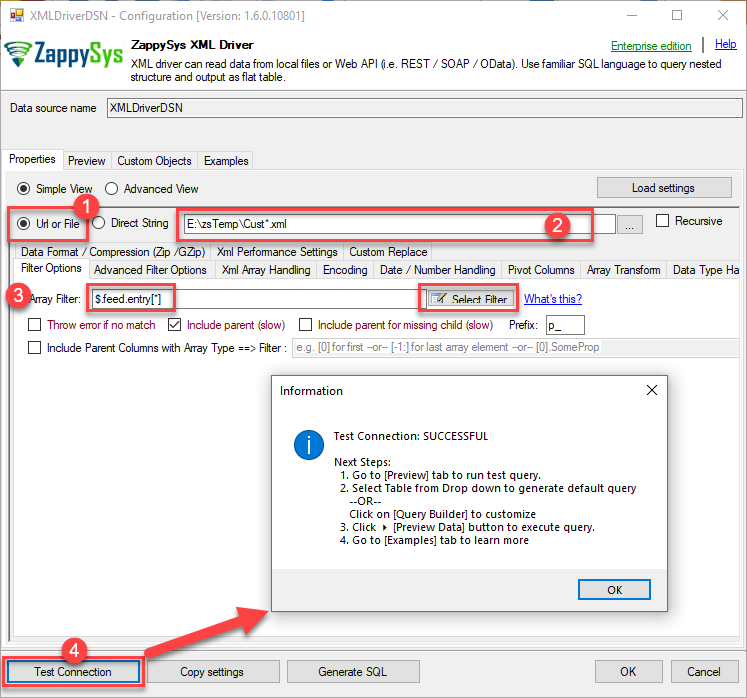
-
Once you configured a data source, you can preview data. Hit Preview tab, and use similar settings to preview data:
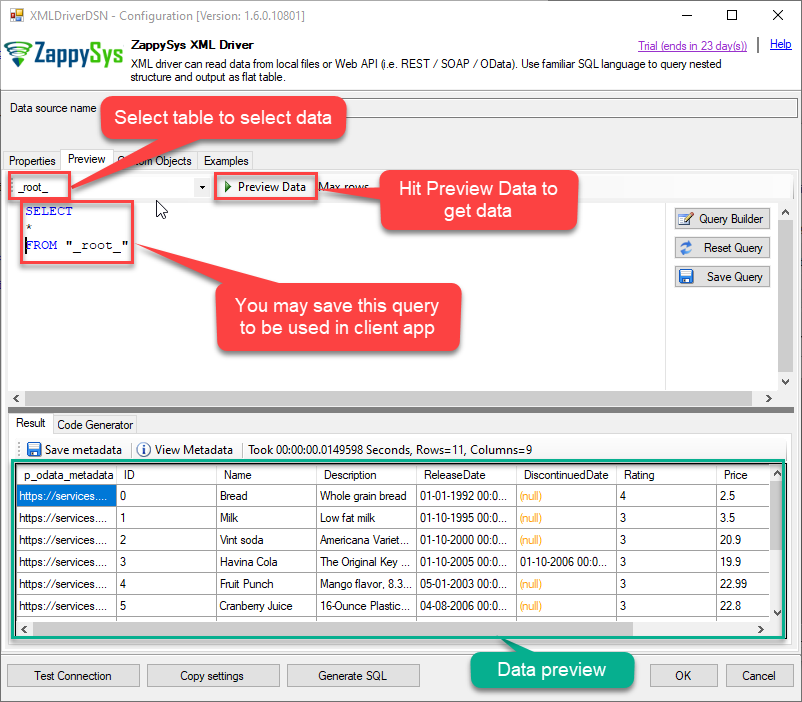
-
Click OK to finish creating the data source.
-
That's it; we are done. In a few clicks we configured the call to XML File using ZappySys XML File Connector.
-
Once done, go to the Network Settings tab and Add a firewall rule for inbound traffic:
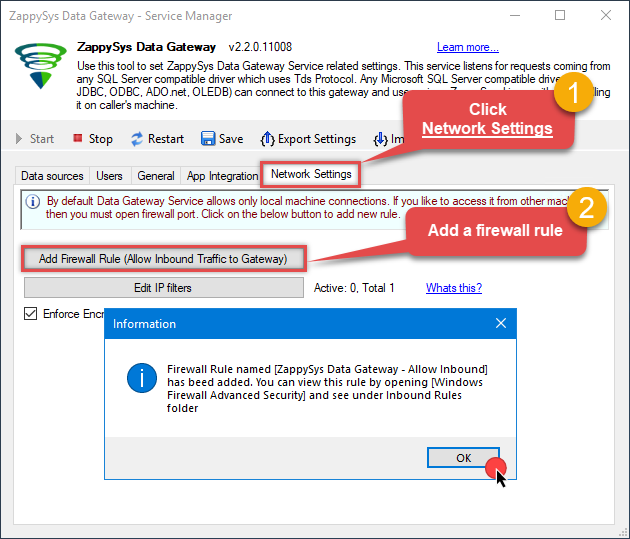
- This will initially allow all inbound traffic.
- Click Edit IP filters to restrict access to specific IP addresses or ranges.
-
Crucial Step: After creating or modifying the data source, you must:
- Click the Save button to persist your changes.
- Hit Yes when prompted to restart the Data Gateway service.
This ensures all changes are properly applied:
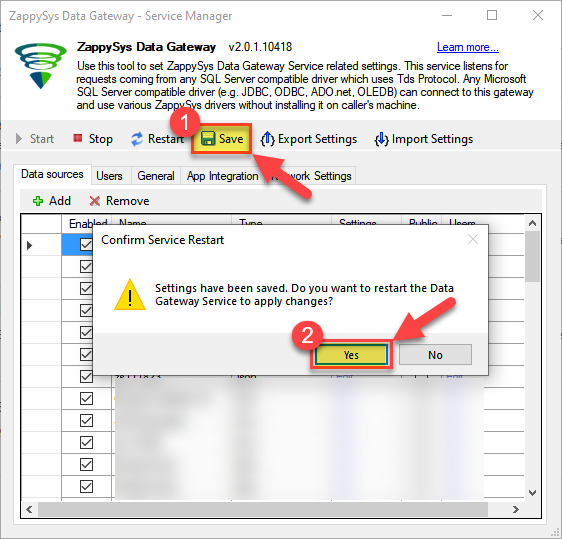 Skipping this step may cause the new settings to fail, preventing you from connecting to the data source.
Read XML File data in Talend Studio
To read XML File data in Talend Studio, we'll need to complete several steps. Let's get through them all right away!
Create connection for input
- First of all, open Talend Studio
-
Create a new connection:
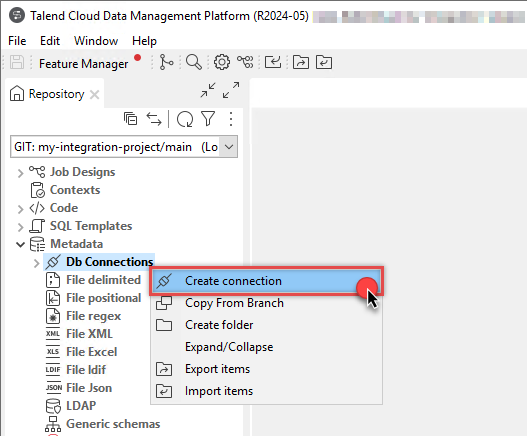
-
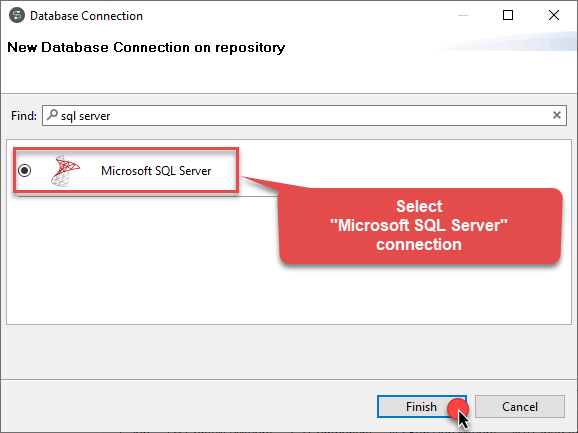
Select Microsoft SQL Server connection:
-
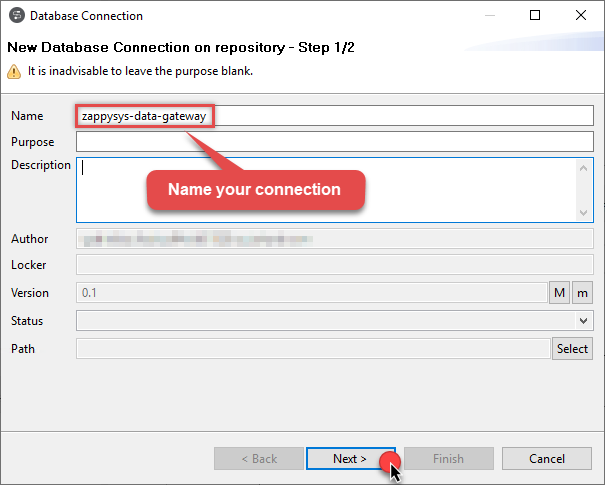
Name your connection:
-
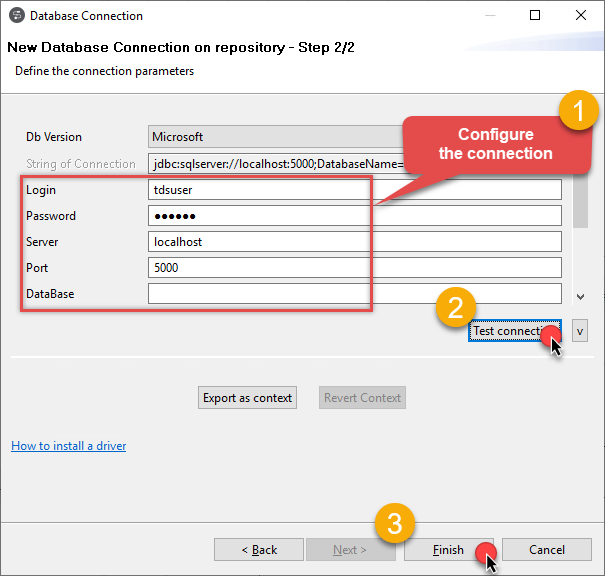
Fill-in connection parameters and then click Test connection:
XmlFileDSN
-
If the List of modules not installed for this operation window shows up, then download and install all of them:
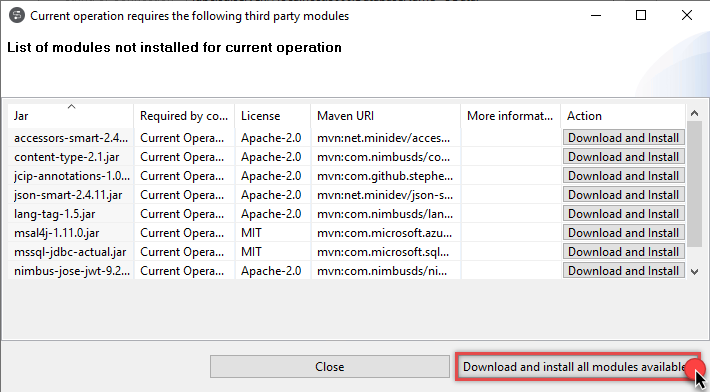 Review and accept all additional module license agreements during the process
 -
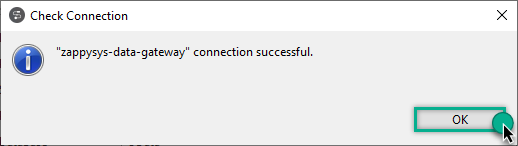
Finally, you should see a successful connection test result at the end:
Add input
-
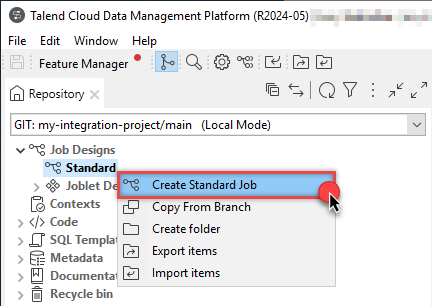
Once we have a connection to ZappySys Data Gateway created, we can proceed by creating a job:
-
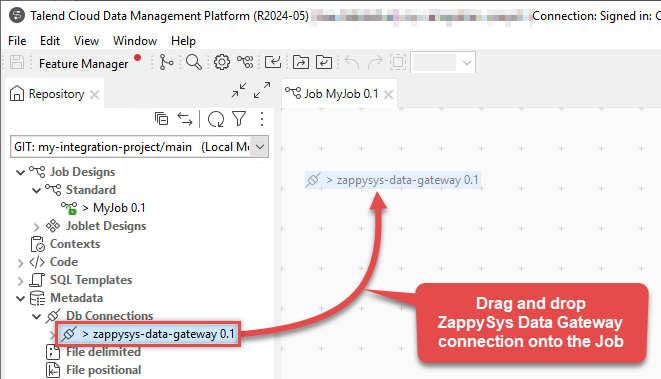
Simply drag and drop ZappySys Data Gateway connection onto the job:
-
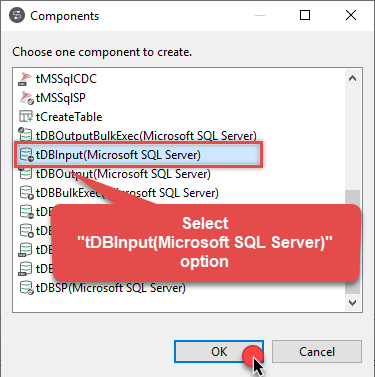
Then create an input based on ZappySys Data Gateway connection:
-
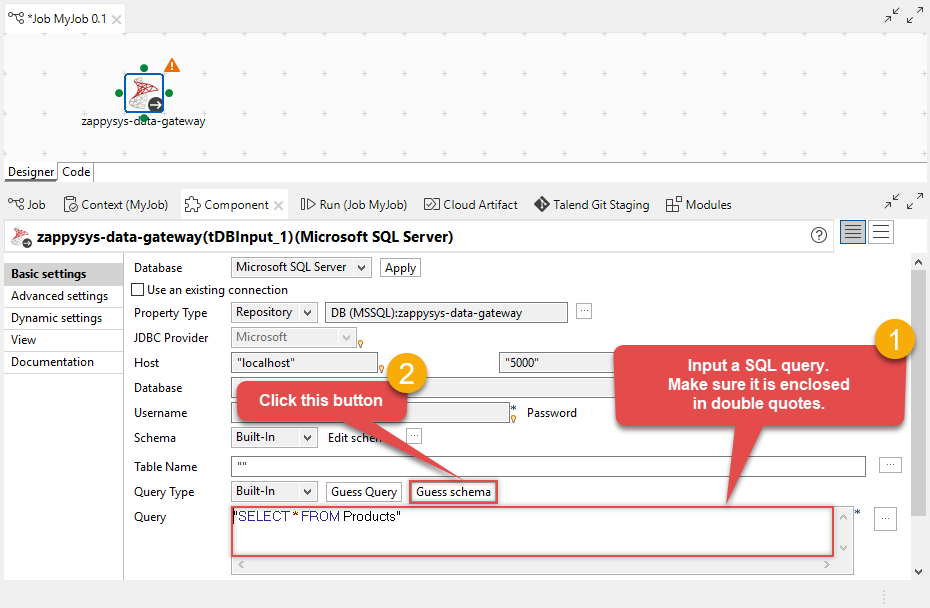
Continue by configuring a SQL query and click Guess schema button:
-
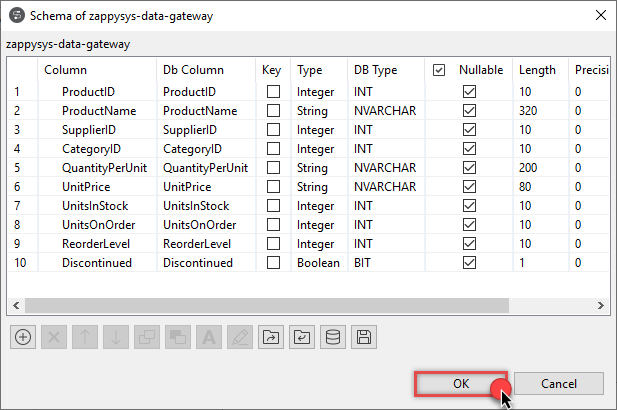
Finish by configuring the schema, for example:
Add output
We are ready to add an output. From Palette drag and drop a tFileOutputDelimited output and connect it to the input: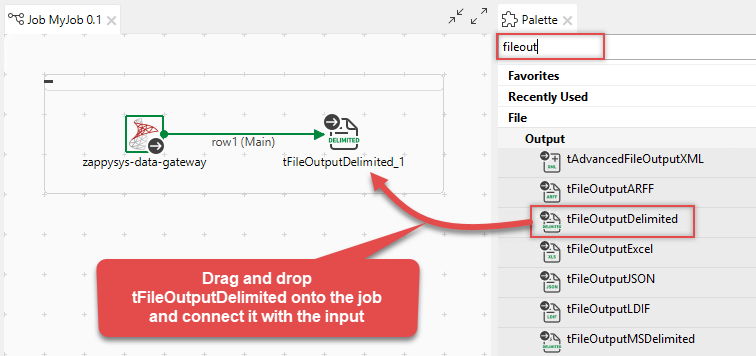
Run the job
Finally, run the job and integrate your XML File data: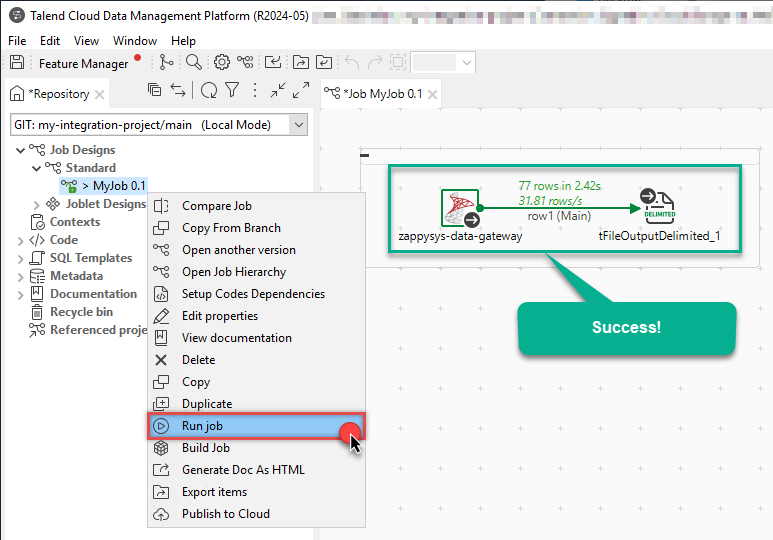
Conclusion
In this article we showed you how to connect to XML File in Talend Studio and integrate data without writing complex code — all of this was powered by XML File ODBC Driver.
Download ODBC PowerPack now or ping us via chat if you have any questions or are looking for a specific feature (you can also reach out to us by submitting a ticket):