
Introduction
You can connect to your Hubspot data from SSAS via the high-performance Hubspot ODBC Driver. We'll walk you through the entire setup.
Let's not waste time and get started!
Create data source in ZappySys Data Gateway
In this section we will create a data source for Hubspot in the Data Gateway. Let's follow these steps to accomplish that:
-
Download and install ODBC PowerPack (if you haven't already).
-
Search for
gatewayin the Windows Start Menu and open ZappySys Data Gateway Configuration: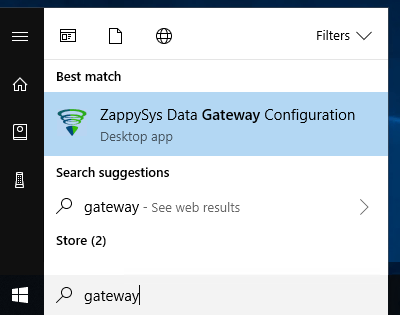
-
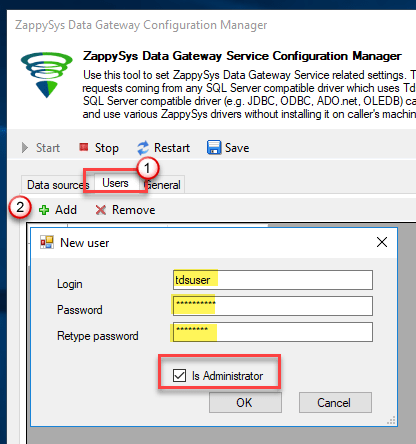
Go to the Users tab and follow these steps to add a Data Gateway user:
- Click the Add button
-
In the Login field enter a username, e.g.,
john - Then enter a Password
- Check the Is Administrator checkbox
- Click OK to save
-
Now we are ready to add a data source:
- Click the Add button
- Give the Data source a name (have it handy for later)
- Then select Native - ZappySys API Driver
- Finally, click OK
HubspotDSNZappySys API Driver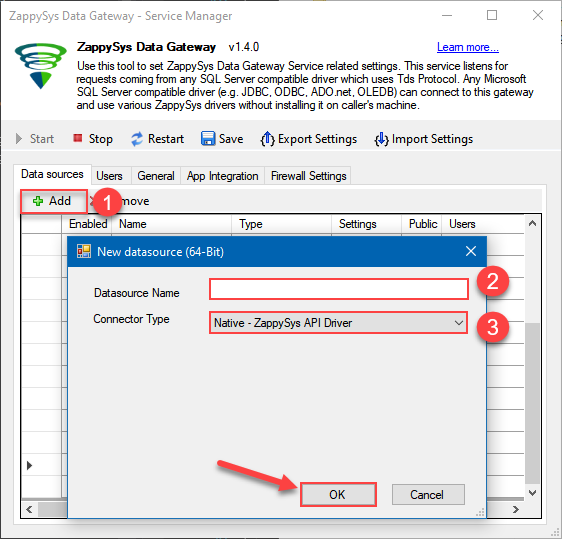
-
When the Configuration window appears give your data source a name if you haven't done that already, then select "Hubspot" from the list of Popular Connectors. If "Hubspot" is not present in the list, then click "Search Online" and download it. Then set the path to the location where you downloaded it. Finally, click Continue >> to proceed with configuring the DSN:
HubspotDSNHubspot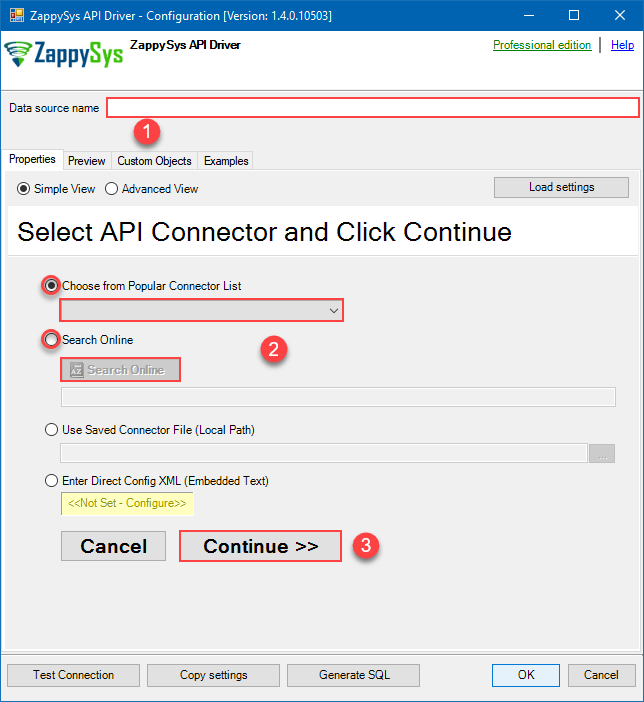
-
Select your authentication scenario below to expand connection configuration steps to:
- Configure the authentication in Hubspot.
- Enter those details into the ZappySys API Driver data source configuration.
Private app (Static Access Token)
Hubspot authentication
Private apps allow you to use HubSpot's APIs to access specific data from your HubSpot account. You can authorize what each private app can request or change in your account, which will generate an access token that's unique to your app. [API reference]
Follow these instructions to create a Private app in HubSpot and configure HubSpot authentication in SSIS package or ODBC data source:
- First of all, go to HubSpot portal.
-
Then click Data Management option on the left
and then hit Integrations menu item:
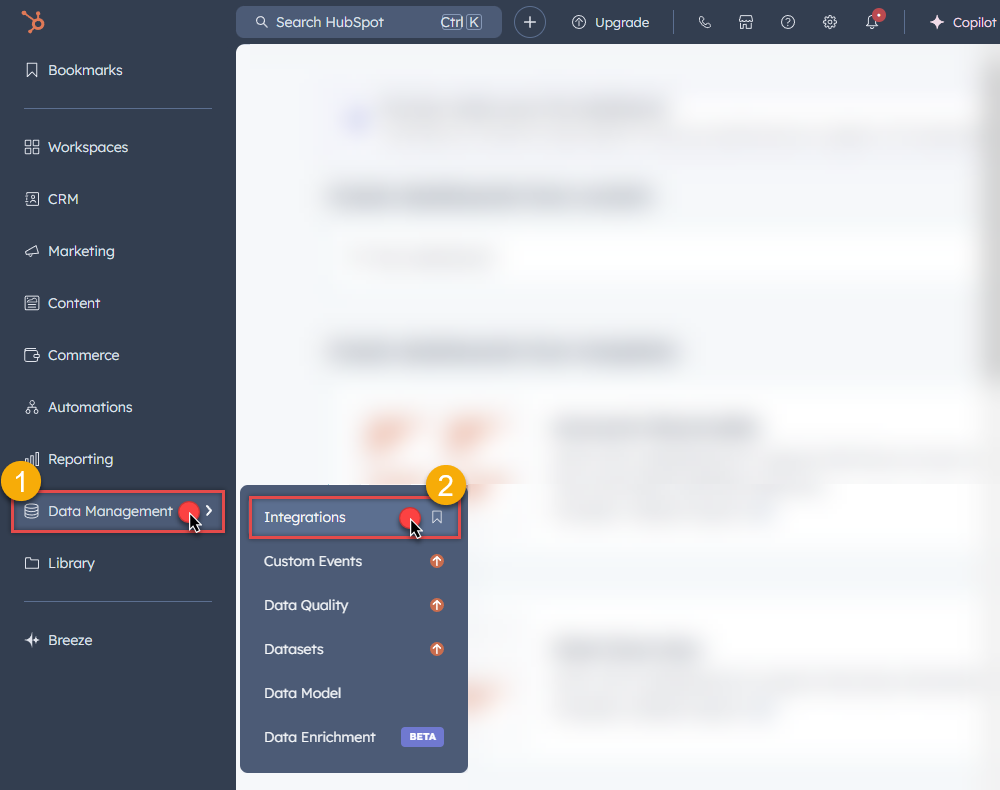
-
Move on by clicking Private Apps menu item
and then click Create a private app button to create one:
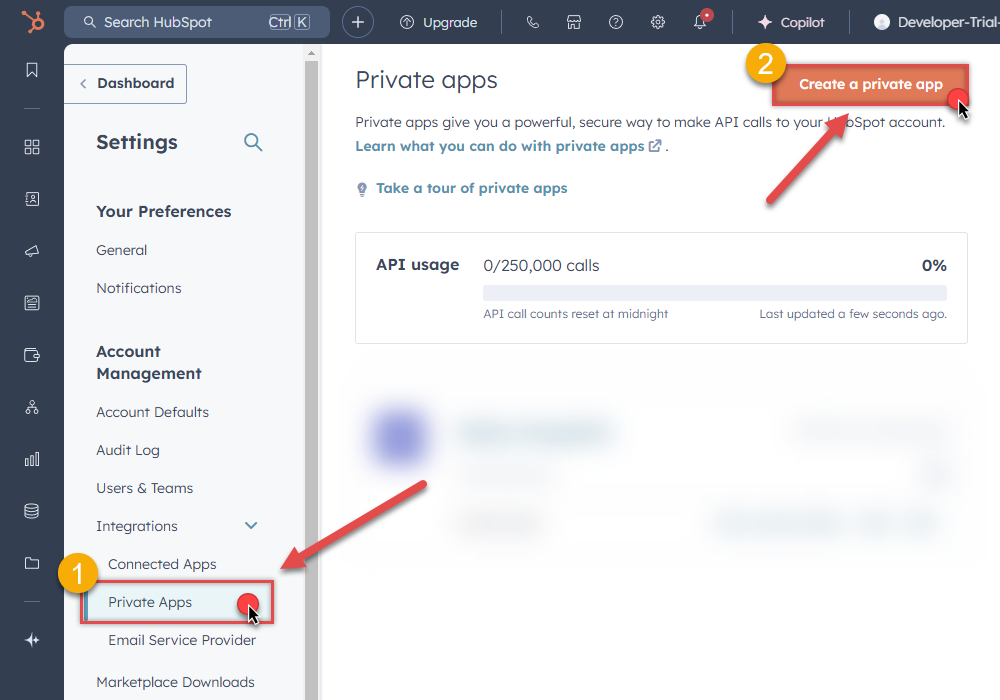
- Then continue by following the instructions on HubSpot Docs.
-
Once you create an app, go to SSIS package or ODBC data source and in Private App authentication set these parameters:
- For AccessToken field use Access token value from the Private app configuration in HubSpot.
- Done! Now you are ready to use HubSpot Connector!
API Connection Manager configuration
Just perform these simple steps to finish authentication configuration:
-
Set Authentication Type to
Private app (Static Access Token) [Http] - Optional step. Modify API Base URL if needed (in most cases default will work).
- Fill in all the required parameters and set optional parameters if needed.
- Finally, hit OK button:
HubspotDSNHubspotPrivate app (Static Access Token) [Http]https://api.hubapi.comRequired Parameters AccessToken Fill-in the parameter... Optional Parameters RetryMode RetryWhenStatusCodeMatch RetryStatusCodeList 429 RetryCountMax 5 RetryMultiplyWaitTime True 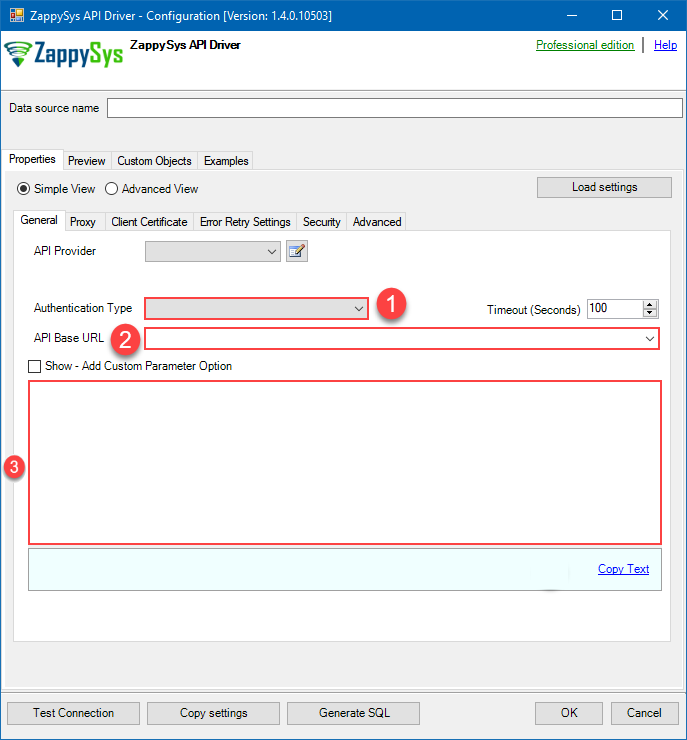 Find full details in the Hubspot Connector authentication reference.
Public app
Hubspot authentication
In HubSpot, a public app is a type of integration that can be installed on customer accounts or listed on the App Marketplace. It requires authentication via OAuth. Once a user installs your app on their HubSpot account, you’ll be able to make API calls to that account using an OAuth access token. [API reference]
Follow these instructions to create a Public app in HubSpot and configure HubSpot authentication in SSIS package or ODBC data source:
- First of all, if you don't have HubSpot Developer's account, register one.
- Go to HubSpot and select your Developer account.
-
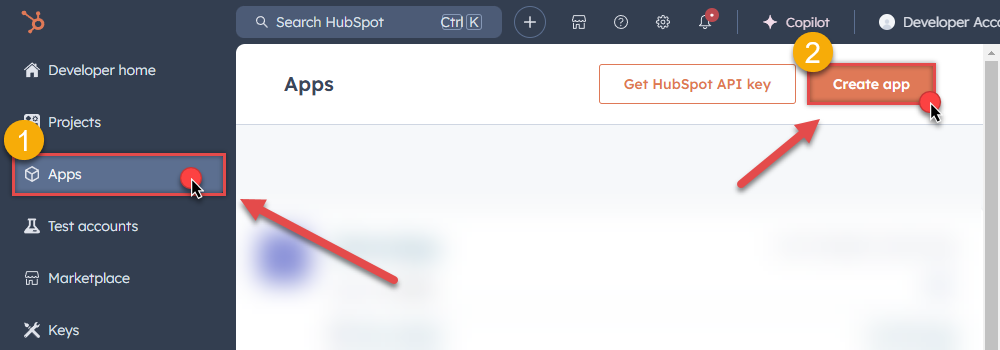
Click Apps on the left hand side and then click Create app button to create a Public app:
-
Then continue by following the instructions in HubSpot Docs.
NOTE: If you don't have a working Redirect URL, you can use
https://zappysys.com/oauth(it's safe).- Once you create an app, go to SSIS package or ODBC data source and in Public app authentication set these parameters (use values from your Public app configuration in HubSpot):
- For ClientId field use Client ID value.
- For ClientSecret field use Client secret value.
-
For Scope field use Scopes values, e.g.:
accounting
tickets
files

crm.lists.read
crm.lists.write

crm.objects.contacts.read
crm.objects.contacts.write
crm.schemas.contacts.read

crm.objects.custom.read
crm.objects.custom.write
crm.schemas.custom.read

crm.objects.companies.read
crm.objects.companies.write
crm.schemas.companies.read

crm.objects.deals.read
crm.objects.deals.write
crm.schemas.deals.read

crm.objects.quotes.read
crm.objects.quotes.write
crm.schemas.quotes.read

crm.objects.line_items.read
crm.objects.line_items.write
crm.schemas.line_items.read
NOTE: You can use other scopes too, but they must match the scopes defined in your Public app.- For ReturnUrl field use one of Redirect URLs.
- When you are done with that, click Generate Token button to generate Access and Refresh Tokens.
- Done! Now you are ready to use HubSpot Connector!
API Connection Manager configuration
Just perform these simple steps to finish authentication configuration:
-
Set Authentication Type to
Public app [OAuth] - Optional step. Modify API Base URL if needed (in most cases default will work).
- Fill in all the required parameters and set optional parameters if needed.
- Press Generate Token button to generate the tokens.
- Finally, hit OK button:
HubspotDSNHubspotPublic app [OAuth]https://api.hubapi.comRequired Parameters UseCustomApp Fill-in the parameter... Scope (Must Match with App Scopes) Fill-in the parameter... Optional Parameters Client ID Client Secret ReturnUrl Authorization URL (leave blank for default) Token URL (leave blank for default) RetryMode RetryWhenStatusCodeMatch RetryStatusCodeList 429 RetryCountMax 5 RetryMultiplyWaitTime True 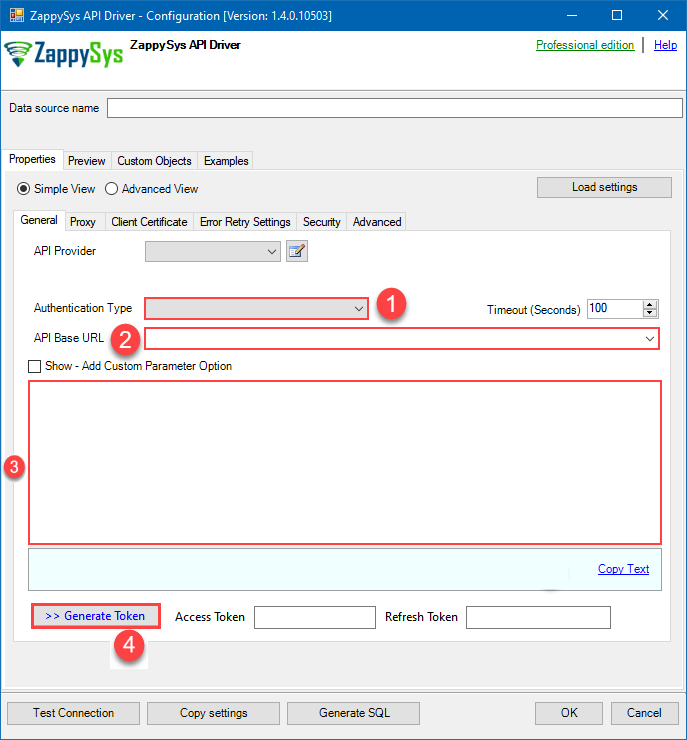 Find full details in the Hubspot Connector authentication reference.
Developer API key (Deprecated)
Hubspot authentication
Deprecated authentication method. Use [Private app] instead. [API reference]
Using HubSpot API key is deprecated method for authentication. Use Private app authentication instead. If you still need one, then follow these instructions to get HubSpot API key:
- First of all, if you don't have HubSpot Developer's account, register one.
- Go to HubSpot and select your Developer account.
-
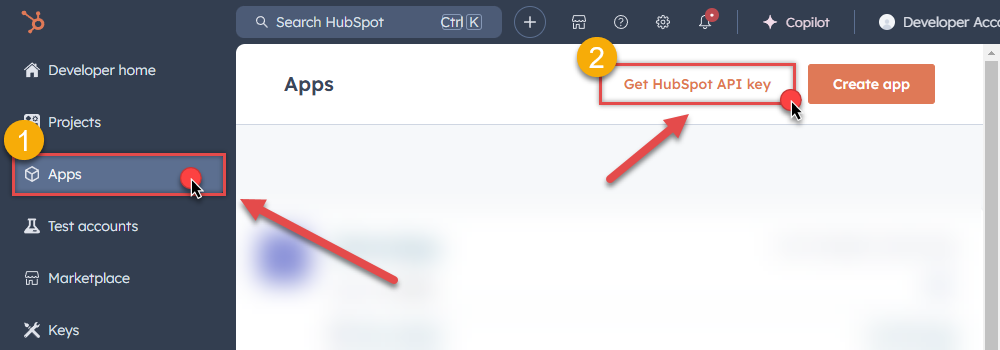
Click Apps on the left hand side and then click Get HubSpot API key button to get one:
-
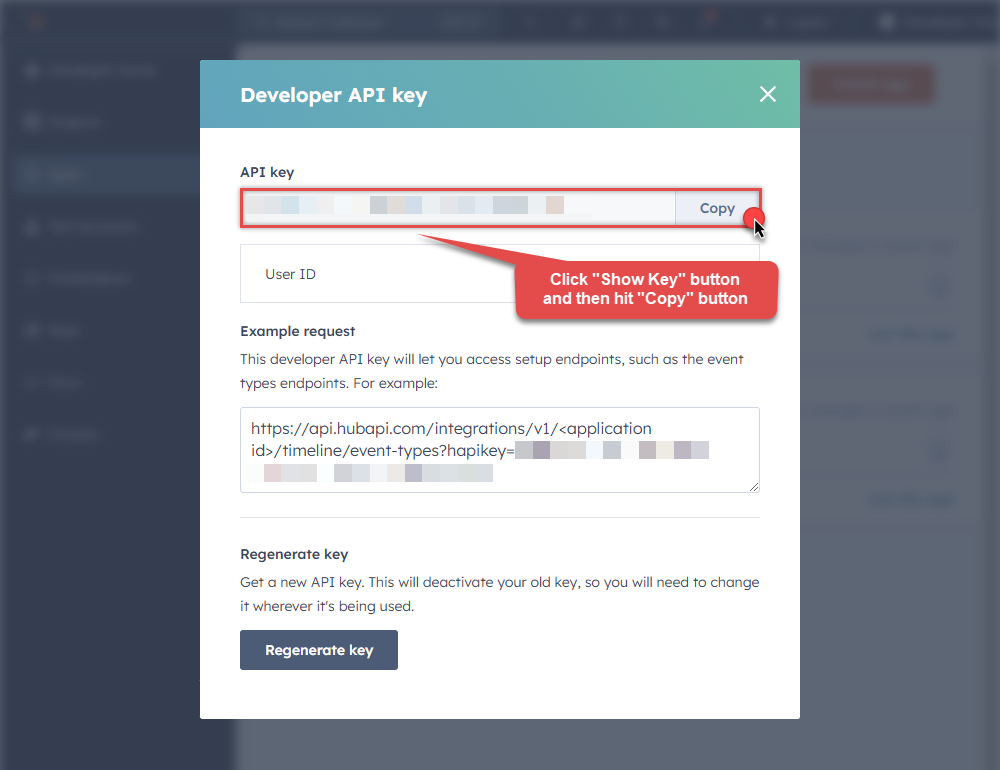
When a popup appears, click Show Key button and then hit Copy button to copy API key:
-
Once copy the API key, go to SSIS package or ODBC data source and use it in API Key authentication configuration:
- Paste it in ApiKey parameter field.
- Done! Now you are ready to use HubSpot Connector!
API Connection Manager configuration
Just perform these simple steps to finish authentication configuration:
-
Set Authentication Type to
Developer API key (Deprecated) [Http] - Optional step. Modify API Base URL if needed (in most cases default will work).
- Fill in all the required parameters and set optional parameters if needed.
- Finally, hit OK button:
HubspotDSNHubspotDeveloper API key (Deprecated) [Http]https://api.hubapi.comRequired Parameters ApiKey Fill-in the parameter... Optional Parameters RetryMode RetryWhenStatusCodeMatch RetryStatusCodeList 429 RetryCountMax 5 RetryMultiplyWaitTime True
Find full details in the Hubspot Connector authentication reference. - Once you create an app, go to SSIS package or ODBC data source and in Public app authentication set these parameters (use values from your Public app configuration in HubSpot):
Once the data source connection has been configured, it's time to configure the SQL query. Select the Preview tab and then click Query Builder button to configure the SQL query:
 ZappySys API Driver - HubspotRead and write HubSpot data effortlessly. Integrate, manage, and automate contacts, companies, deals, and tickets — almost no coding required.HubspotDSN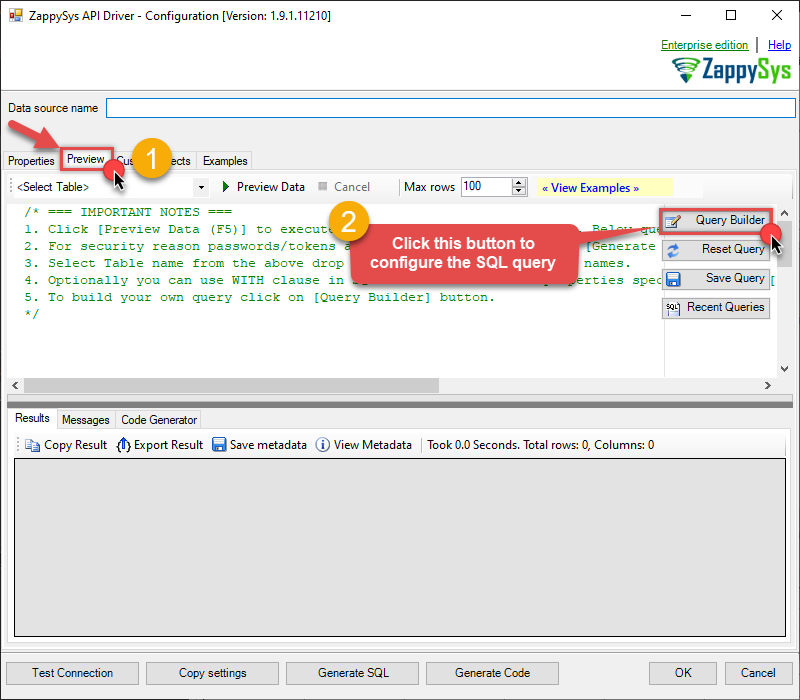
Start by selecting the Table or Endpoint you are interested in and then configure the parameters. This will generate a query that we will use in SSAS to retrieve data from Hubspot. Hit OK button to use this query in the next step.
SELECT * FROM Companies -- WHERE Id=123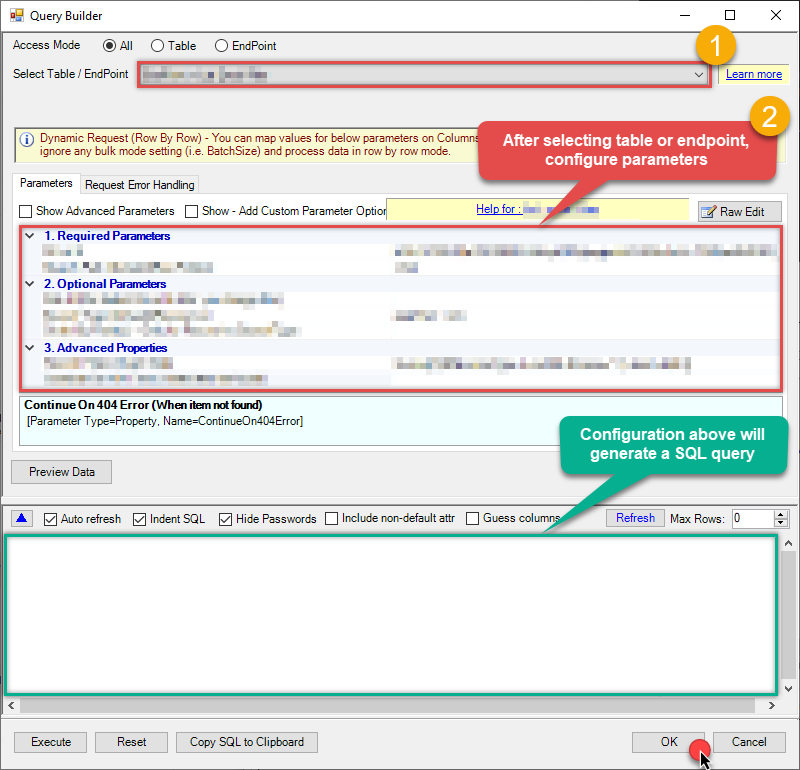 Some parameters configured in this window will be passed to the Hubspot API, e.g. filtering parameters. It means that filtering will be done on the server side (instead of the client side), enabling you to get only the meaningful data
much faster .Now hit Preview Data button to preview the data using the generated SQL query. If you are satisfied with the result, use this query in SSAS:
ZappySys API Driver - HubspotRead and write HubSpot data effortlessly. Integrate, manage, and automate contacts, companies, deals, and tickets — almost no coding required.HubspotDSNSELECT * FROM Companies -- WHERE Id=123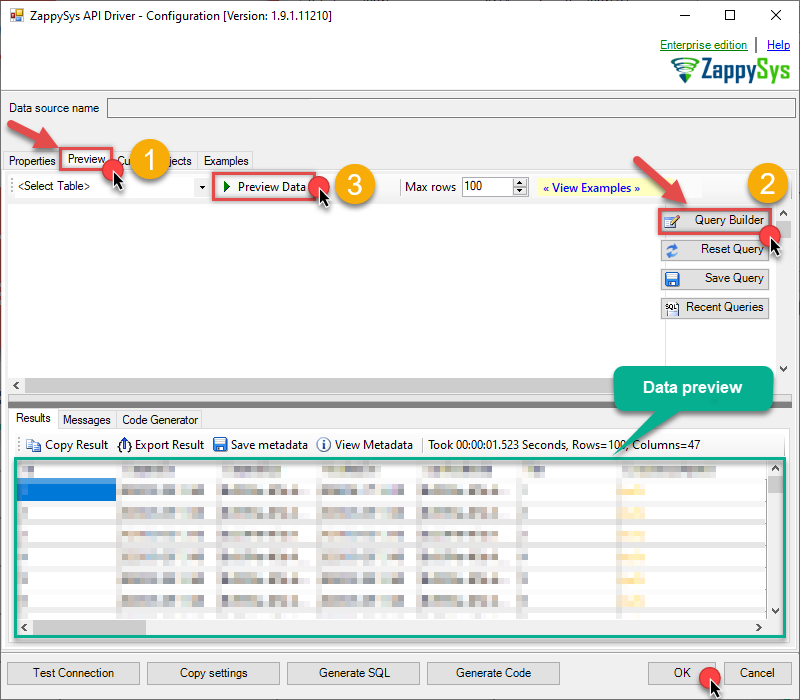 You can also access data quickly from the tables dropdown by selecting <Select table>.A
WHEREclause,LIMITkeyword will be performed on the client side, meaning that thewhole result set will be retrieved from the Hubspot API first, and only then the filtering will be applied to the data. If possible, it is recommended to use parameters in Query Builder to filter the data on the server side (in Hubspot servers).Click OK to finish creating the data source.
Once done, go to the Network Settings tab and Add a firewall rule for inbound traffic:
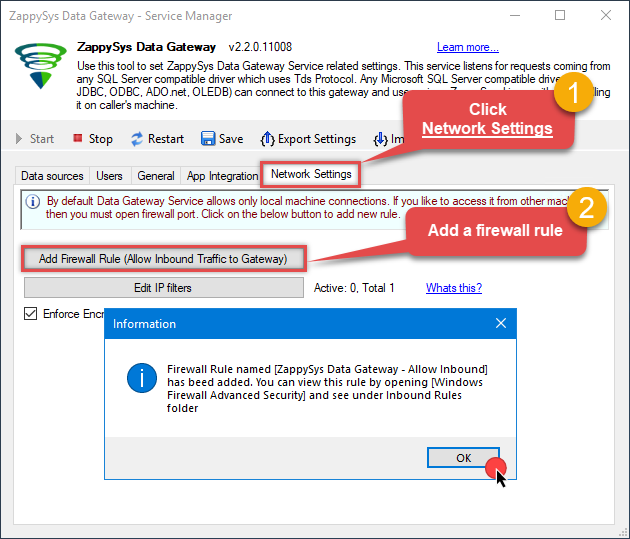
- This will initially allow all inbound traffic.
- Click Edit IP filters to restrict access to specific IP addresses or ranges.
Crucial Step: After creating or modifying the data source, you must:
- Click the Save button to persist your changes.
- Hit Yes when prompted to restart the Data Gateway service.
This ensures all changes are properly applied:
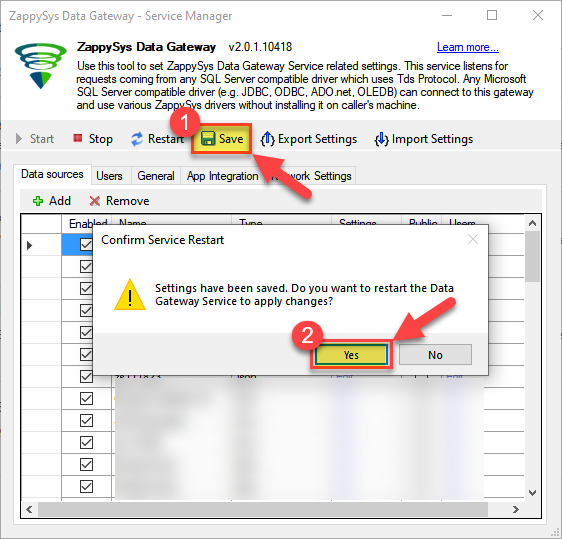 Skipping this step may cause the new settings to fail, preventing you from connecting to the data source.
Read Hubspot data in SSAS cube
With the data source created in the Data Gateway (previous step), we're now ready to read Hubspot data in an SSAS cube. Before we dive in, open Visual Studio and create a new Analysis Services project. Then, you're all set!
In the example below, we use Multidimensional and Data Mining Analysis Services project, but it should work with Tabular project too.Create data source based on ZappySys Data Gateway
Let's start by creating a data source for a cube, based on the Data Gateway's data source we created earlier. So, what are we waiting for? Let's do it!
-
Create a new data source:
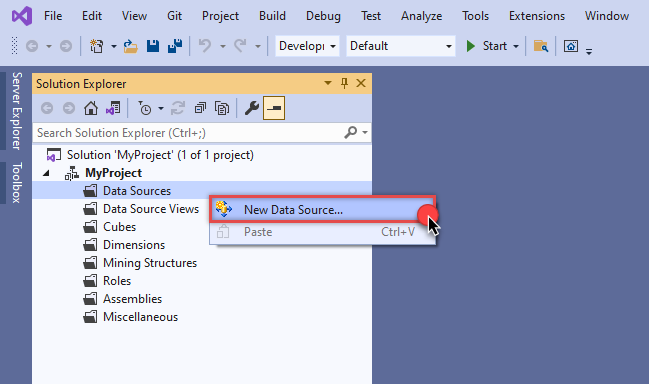
-
Once a window opens,
select Create a data source based on an existing or new connection option and
click New...:
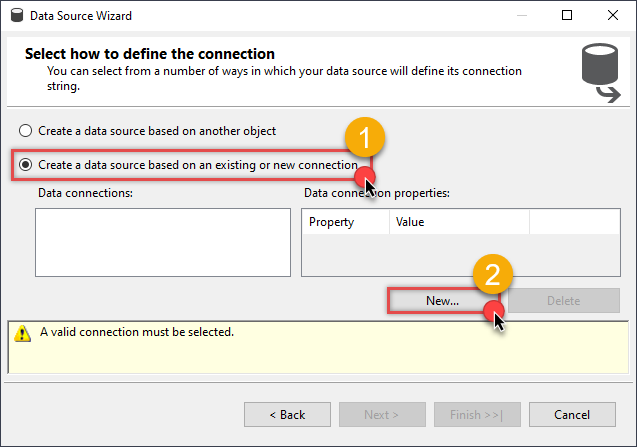
-
Here things become a little complicated, but do not despair, it's only for a little while.
Just perform these little steps:
- Select Native OLE DB\SQL Server Native Client 11.0 as provider.
- Enter your Server name (or IP address) and Port, separated by a comma.
- Select SQL Server Authentication option for authentication.
- Input User name which has admin permissions in the ZappySys Data Gateway.
- In Database name field enter the same data source name you use in the ZappySys Data Gateway.
- Hopefully, our hard work is done, when we Test Connection.
HubspotDSNHubspotDSN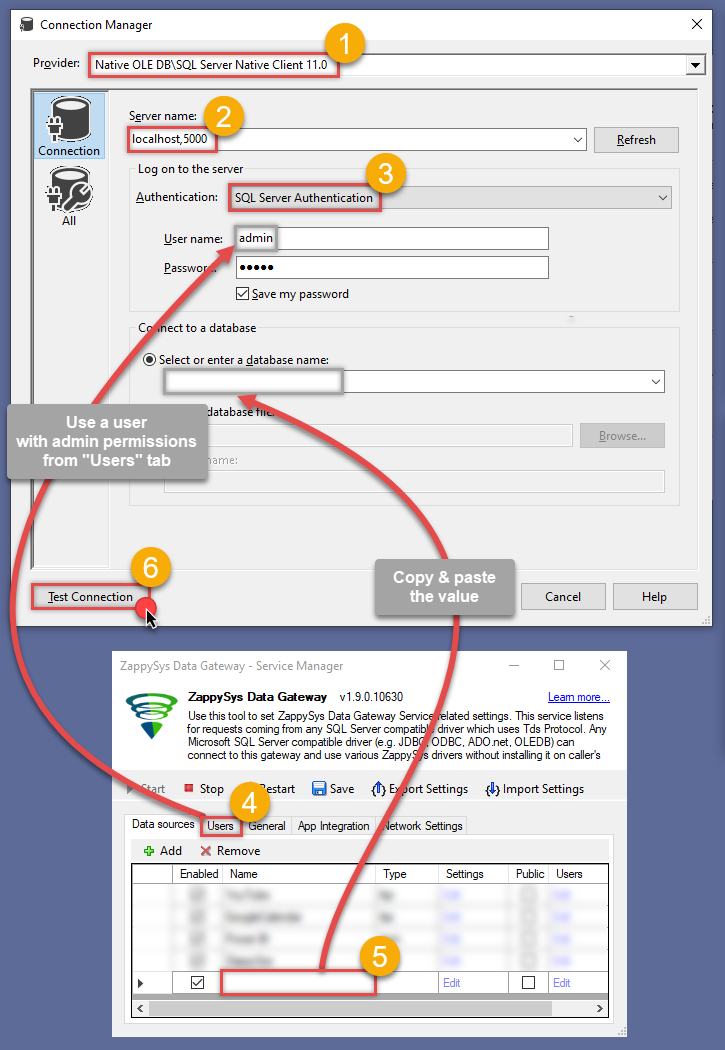 If SQL Server Native Client 11.0 is not listed as Native OLE DB provider, try using these:
- Microsoft OLE DB Driver for SQL Server
- Microsoft OLE DB Provider for SQL Server
-
Indeed, life is easy again:

Add data source view
We have data source in place, it's now time to add a data source view. Let's not waste a single second and get on to it!
-
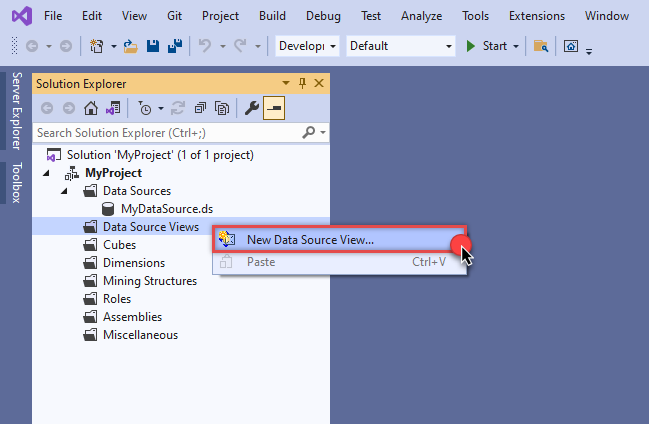
Start by right-clicking on Data Source Views and then choosing New Data Source View...:
-
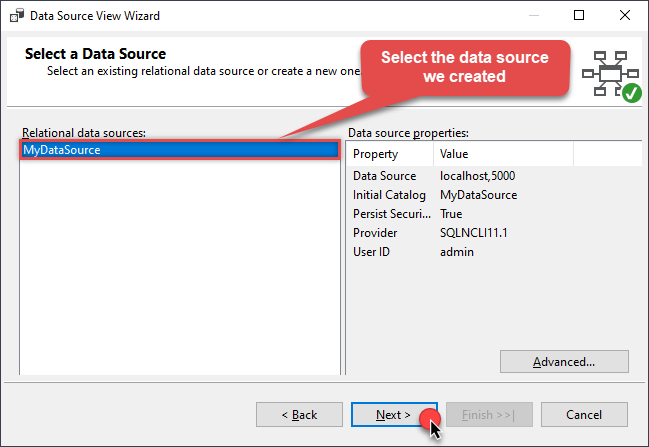
Select the previously created data source and click Next:
-
Ignore the Name Matching window and click Next.
-
Add the tables you will use in your SSAS cube:
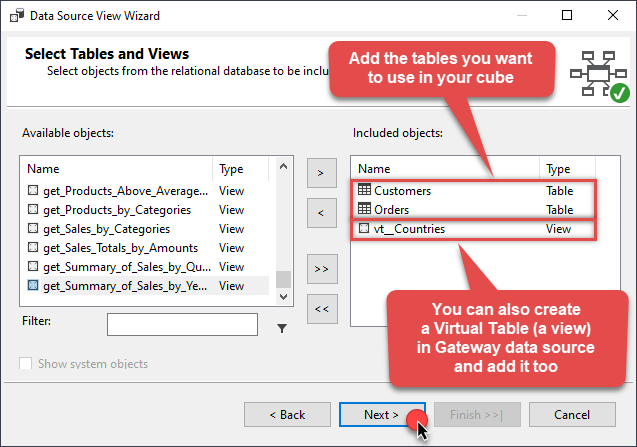 For cube dimensions, consider creating a Virtual Table in the Data Gateway's data source. Use the
DISTINCTkeyword in theSELECTstatement to get unique values from the facts table, like this:SELECT DISTINCT Country FROM CustomersFor demonstration purposes we are using sample tables which may not be available in Hubspot. -
Review your data source view and click Finish:
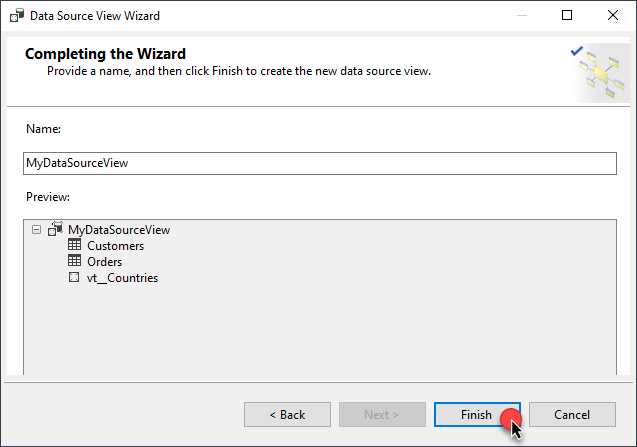
-
Add the missing table relationships and you're done!
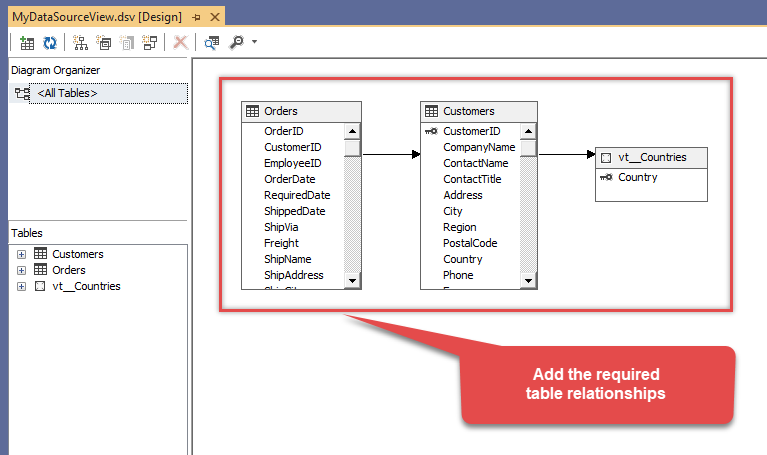
Create cube
We have a data source view ready to be used by our cube. Let's create one!
-
Start by right-clicking on Cubes and selecting New Cube... menu item:
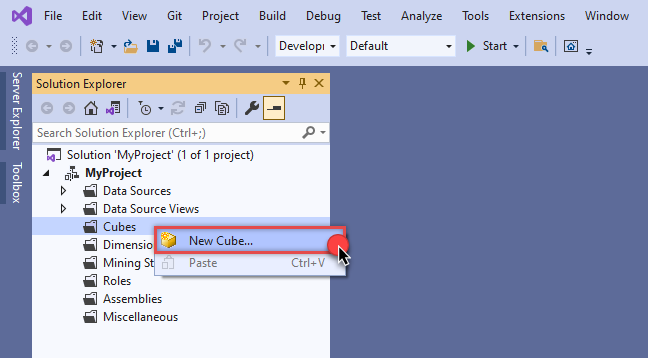
-
Select tables you will use for the measures:
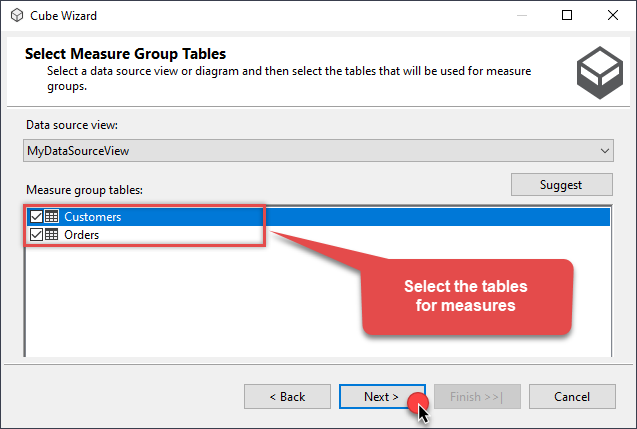
-
And then select the measures themselves:
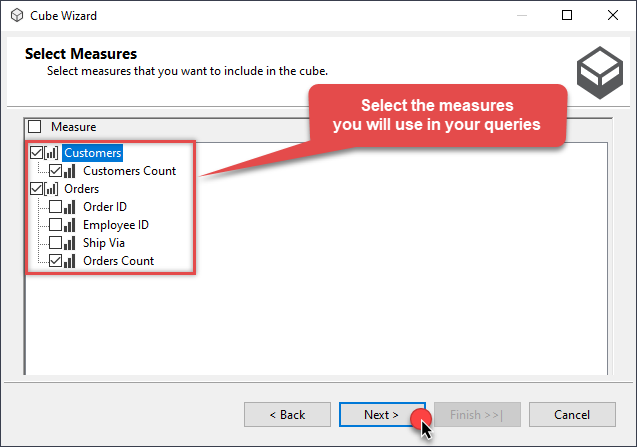
-
Don't stop and select the dimensions too:
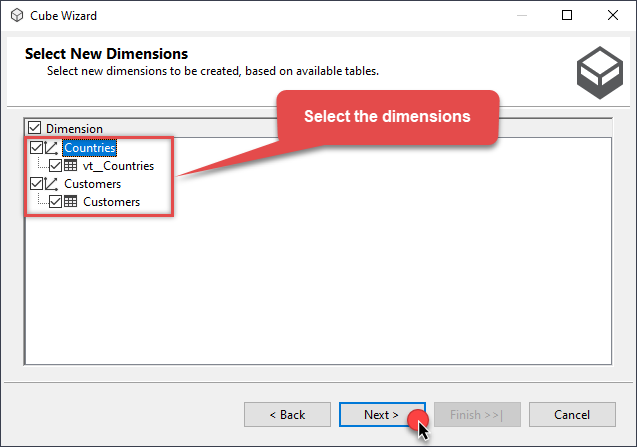
-
Move along and click Finish before the final steps:
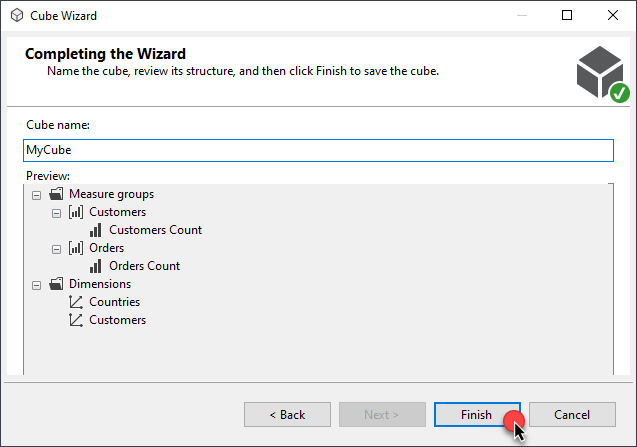
-
Review your cube before processing it:
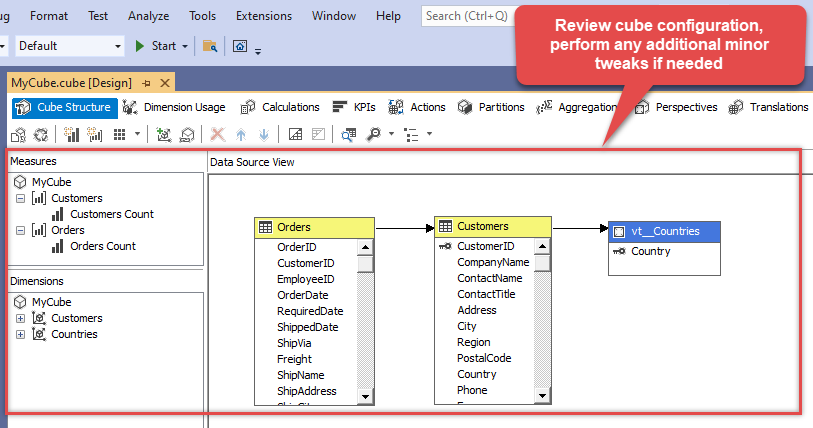
-
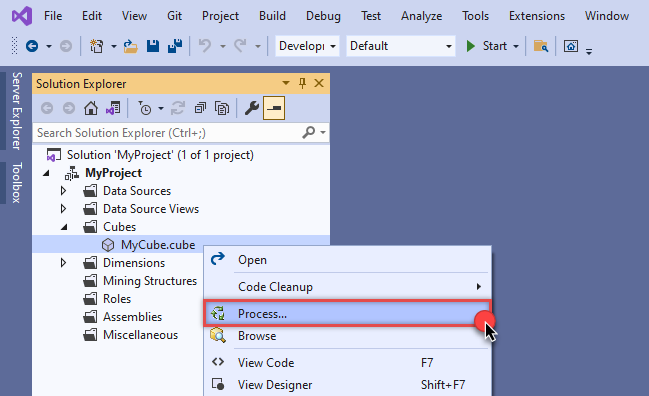
It's time for the grand finale! Hit Process... to create the cube:
-
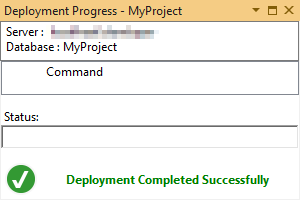
A splendid success!
Execute MDX query
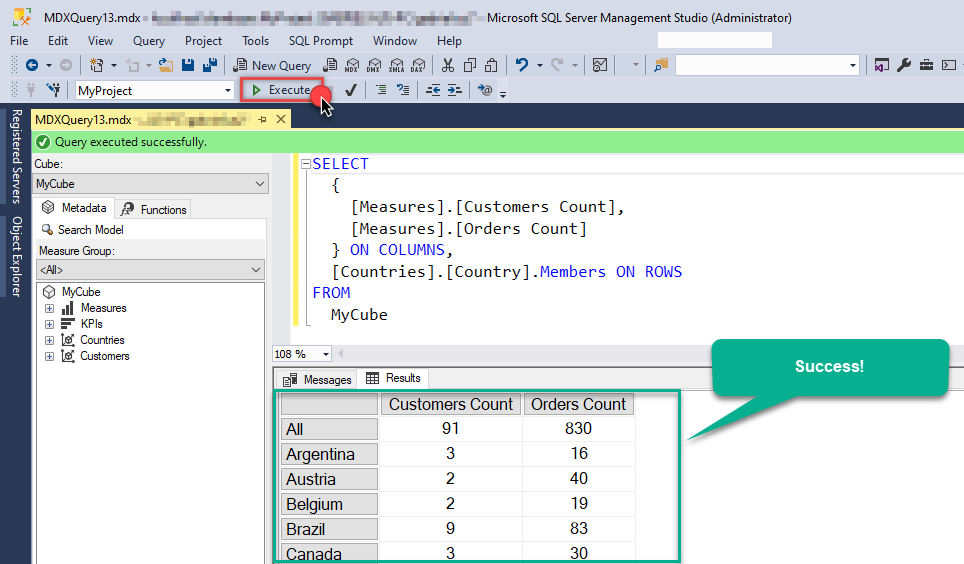
The cube is created and processed. It's time to reap what we sow! Just execute an MDX query and get Hubspot data in your SSAS cube:
Hubspot Connector actions
Got a specific use case in mind? We've mapped out exactly how to perform a variety of essential Hubspot operations directly in SSAS, so you don't have to figure out the setup from scratch. Check out the step-by-step guides below:
- Search Companies
- Search Contacts
- Search Tickets
- Search Deals
- Search Products
- Search LineItems
- Search Quotes
- Get Contacts
- Get Contact By ID
- Get Contact Properties
- Create Contacts
- Update Contacts
- Archive Contacts
- Get Deals
- Get Deal Properties
- Get Deal By ID
- Create Deals
- Archive Deals
- Update Deals
- Get Products
- Get Product By ID
- Get Product Properties
- Create Products
- Archive Products
- Update Products
- Get Companies
- Get Company By ID
- Get Company Properties
- Create Companies
- Archive Companies
- Update Companies
- Get Line Items
- Get Line Item By ID
- Get Line Item Properties
- Create Line Items
- Archive Line Items
- Update Line items
- Get Tickets
- Get Ticket By ID
- Get Tickets Properties
- Create Tickets
- Archive Tickets
- Update Tickets
- Get Quotes
- Get Quote By ID
- Get Quotes Properties
- Create Quotes
- Archive Quotes
- Update Quotes
- Get Owners
- Upload File from Local Disk
- Make Generic REST API Request
- Make Generic REST API Request (Bulk Write)
Conclusion
In this guide, we demonstrated how to connect to Hubspot in SSAS and integrate your data — all without writing complex code.
Ready to get started? Download ODBC PowerPack now or ping us via chat if you still need help:
Want more?Don't stop here. Discover more integrations. Explore all SSAS connectors
Explore all Hubspot integration scenarios
Explore all SSAS connectors
Explore all Hubspot integration scenarios