
Introduction
 Notion is a versatile workspace platform that many teams use to manage projects, tasks, documentation, and databases. However, to leverage this data for advanced analytics and business intelligence, you need to connect it to tools like Power BI. Using Zappysys ODBC Driver for Notion, you can seamlessly extract data from Notion databases and visualize it in Power BI without writing any code.
This tutorial demonstrates how to set up a connection from Notion to Power BI using the Zappysys ODBC driver, query your Notion databases, and create interactive Power BI dashboards.
Prerequisites
- A Notion workspace with at least one database and records.
- Notion API token (Personal Access Token or Integration token).
- Power BI Desktop is installed on your system.
- Basic understanding of Power BI and SQL queries.
- Finally, install the ZappySys ODBC Driver.
Steps
Create a Notion Integration and Token
- Go to Notion Integrations and sign in.
- Go to the My Integrations section and click New Integration.
- Enter a name for your integration and select the target workspace.
- Click Create connection to proceed.
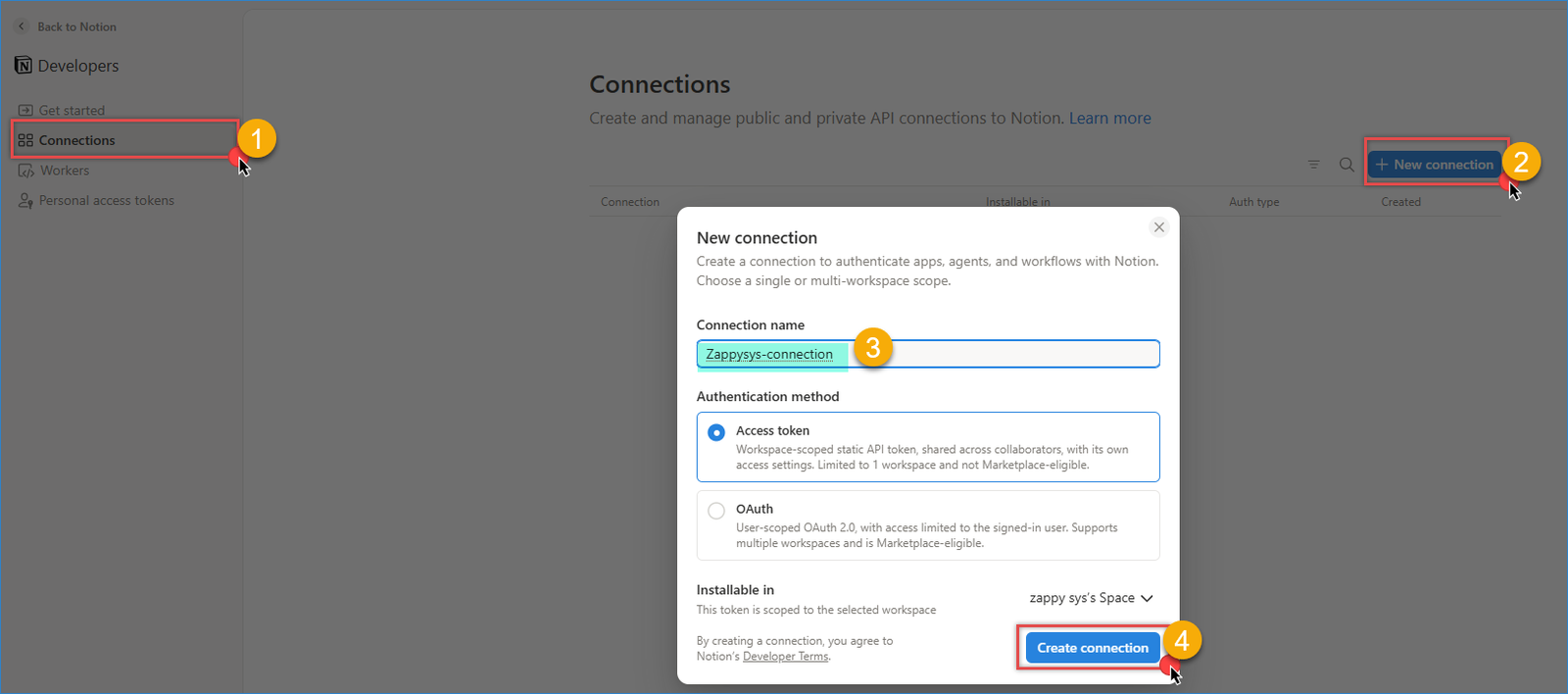
Notion – Create a new connection
- Configure the capabilities you need by checking or unchecking the relevant options.
- Copy the generated Access Token and store it securely. You’ll need this token to configure the ODBC driver.
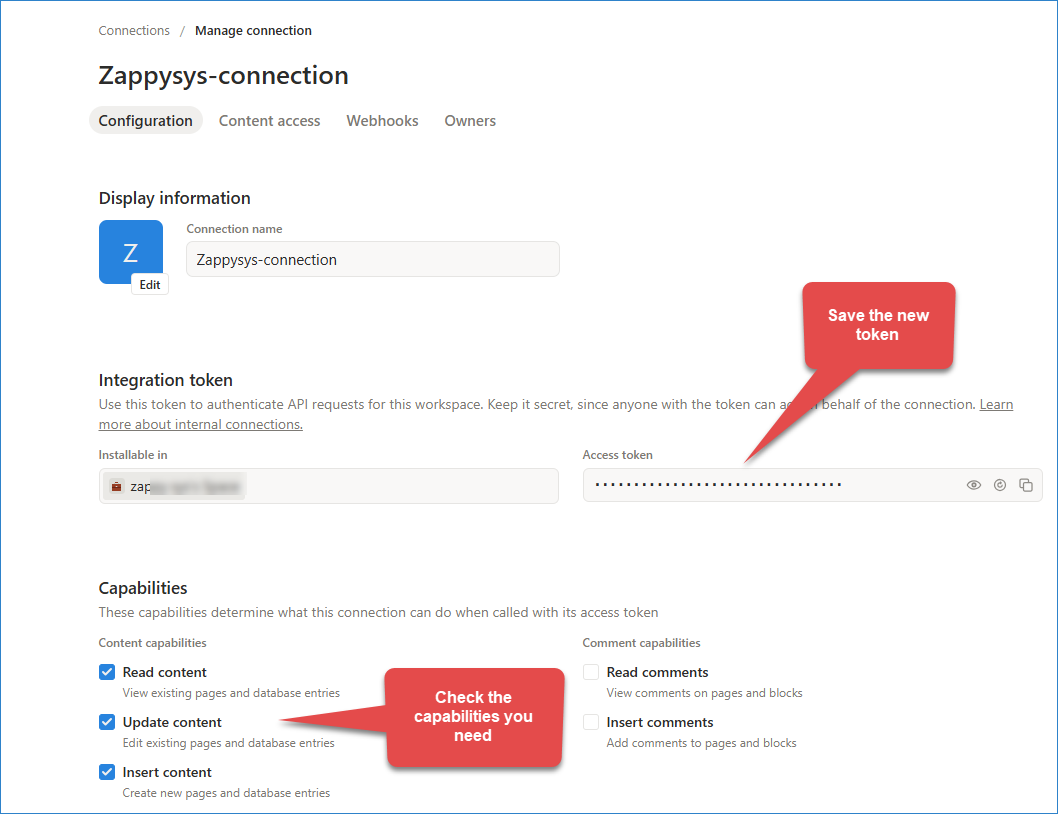
Notion – Configure new token
Connect Your Notion Database to the Integration
- Open your target Notion database page in the browser.
- Click … in the top-right corner.
- Click Connections, search for your integration, and select it.
- Confirm access to the connection.
- Copy the database ID from the URL. For example:
https://app.notion.com/p/<DATABASE_ID>?v=......................
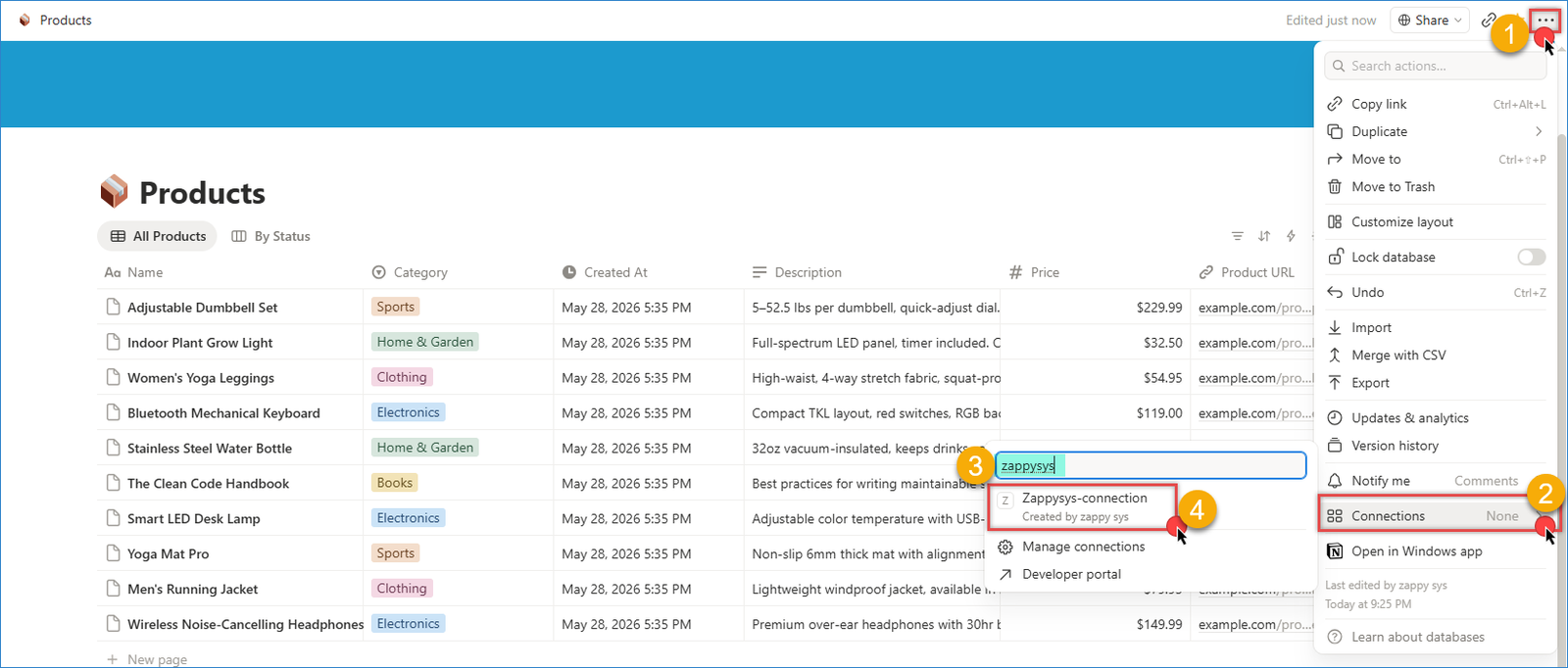
Notion – Set a connection to your table
Creating a new ODBC DSN using ZappySys JSON Driver
- Search for ODBC in the Windows Start menu and open the ODBC Data Source Administrator.
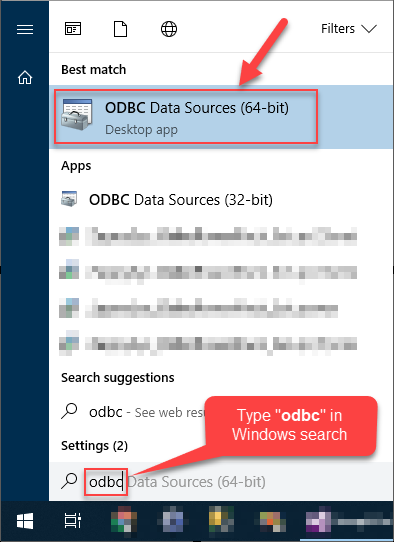
- In the User DSN or System DSN tab, click Add to create a new data source.
- In the ODBC Data Source Setup window, select the ZappySys JSON Driver and click Continue.

Configure the Connection and API Settings
- Enter the base URL for the table:
https://api.notion.com/v1/databases/{{User::DatabaseId}}/query - In Connection Type, select HTTP and click Configure.
- Select Static Token/API Key as the Credential type.
- Paste your Notion Access Token in the authentication field.
- Click OK to save the configuration.
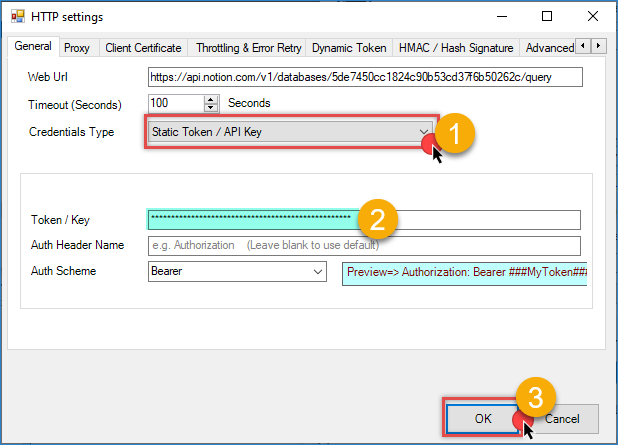
Notion – ODBC Connection configuration
- Set HTTP Request Method to POST.
- Set Body content type to JSON (application/json).
- Under headers, add: Notion-Version: {NotionVersion}. (Example: 2022-06-28)
- Set JSON Path Filter to extract the object array. Example: $.results[*]
- Click Test Connection to verify connectivity, then click OK to save the DSN
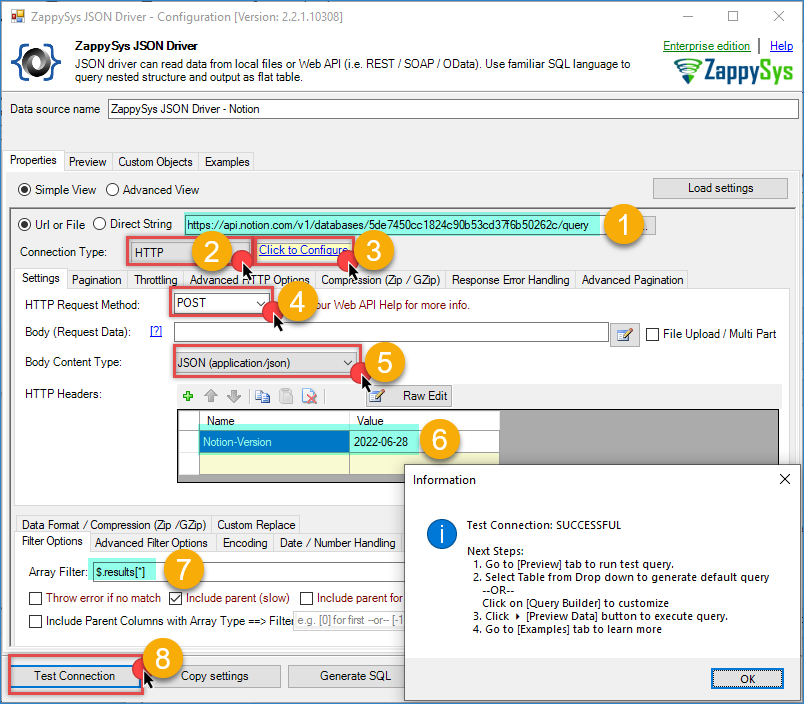
Notion – ODBC JSON driver configuration
Preview Notion table data in the ODBC Driver
- Go to the Preview tab.
- Select a table, generate a query, and then click Preview Data to confirm that database records are returned.
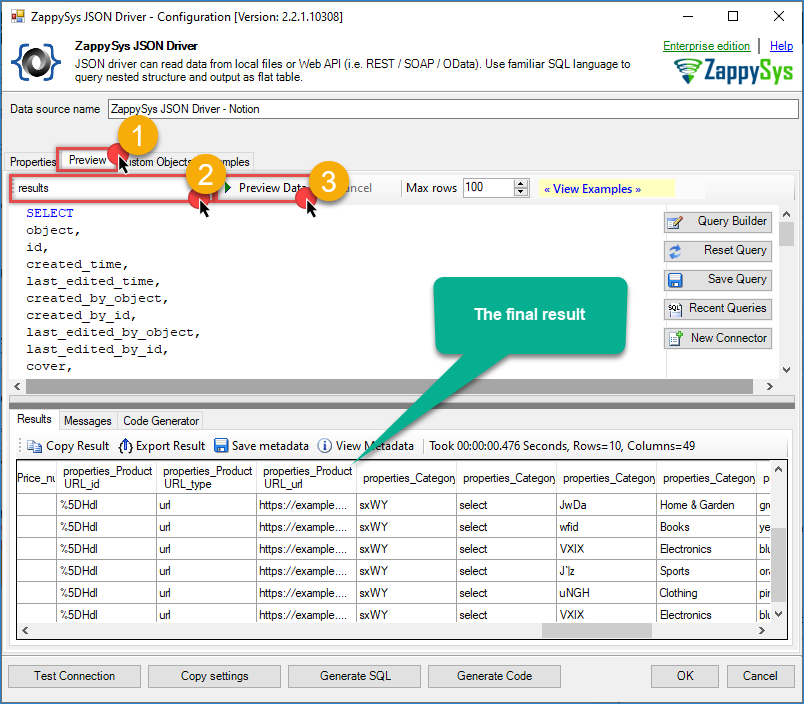
Notion – ODBC JSON driver result
Connect Power BI to Notion via ODBC
- Open Power BI Desktop.
- Click Get Data in the Home ribbon.
- Click More… and search for ODBC.
- Click Connect.
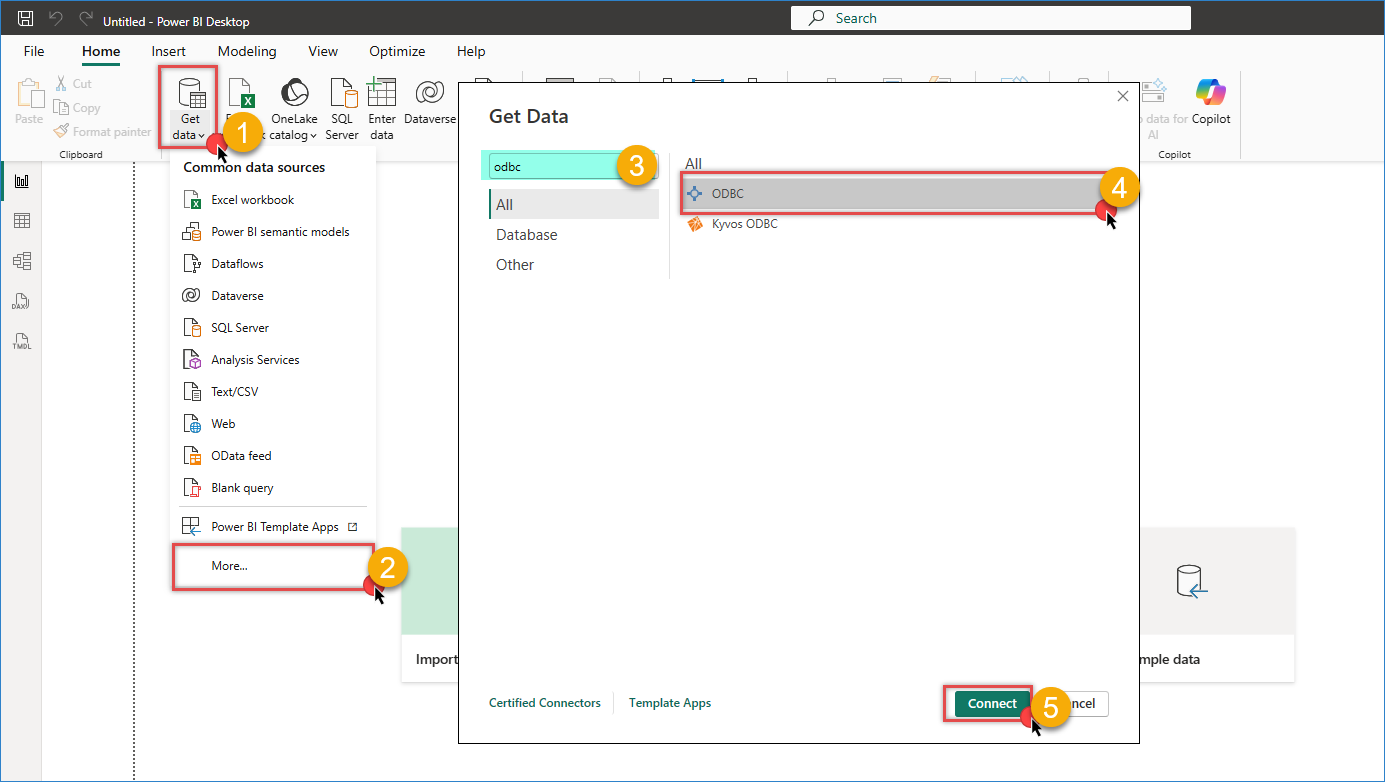
Power BI – Get data from ODBC connection
- From the dropdown, select the Notion ODBC data source you created earlier.
- You can enter a custom query that you used in the ODBC JSON driver.
- Click OK.
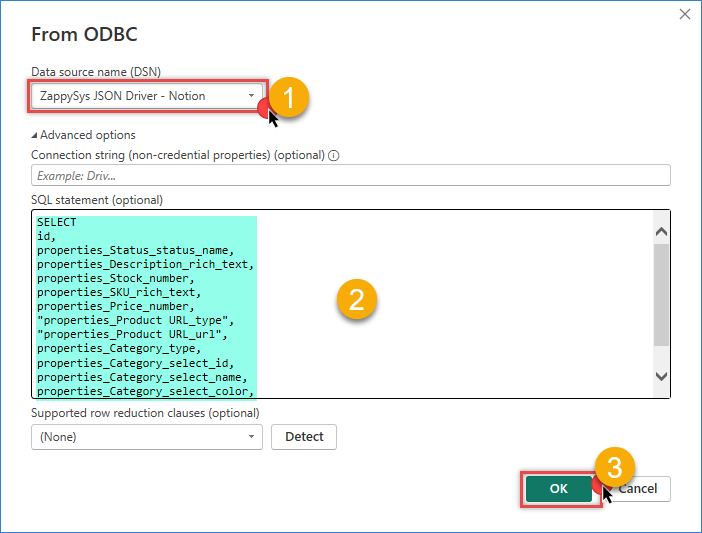
Notion – Power BI connection
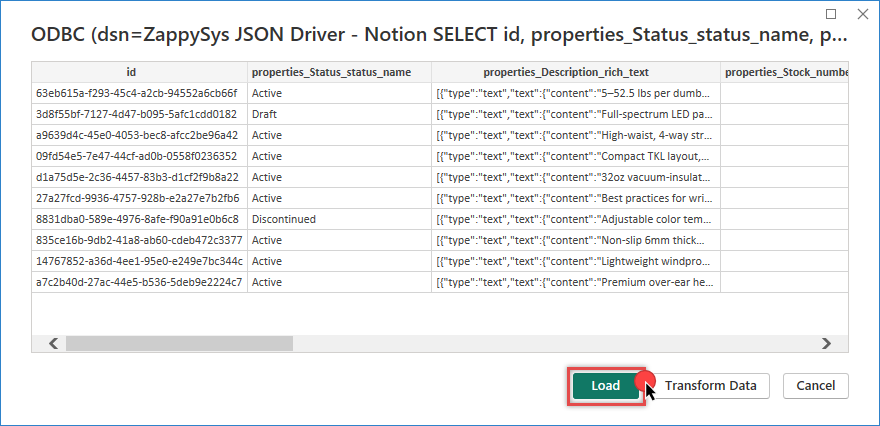
- Click Load to import the data into Power BI.
- In the Navigator window, select the Notion columns you want to load.
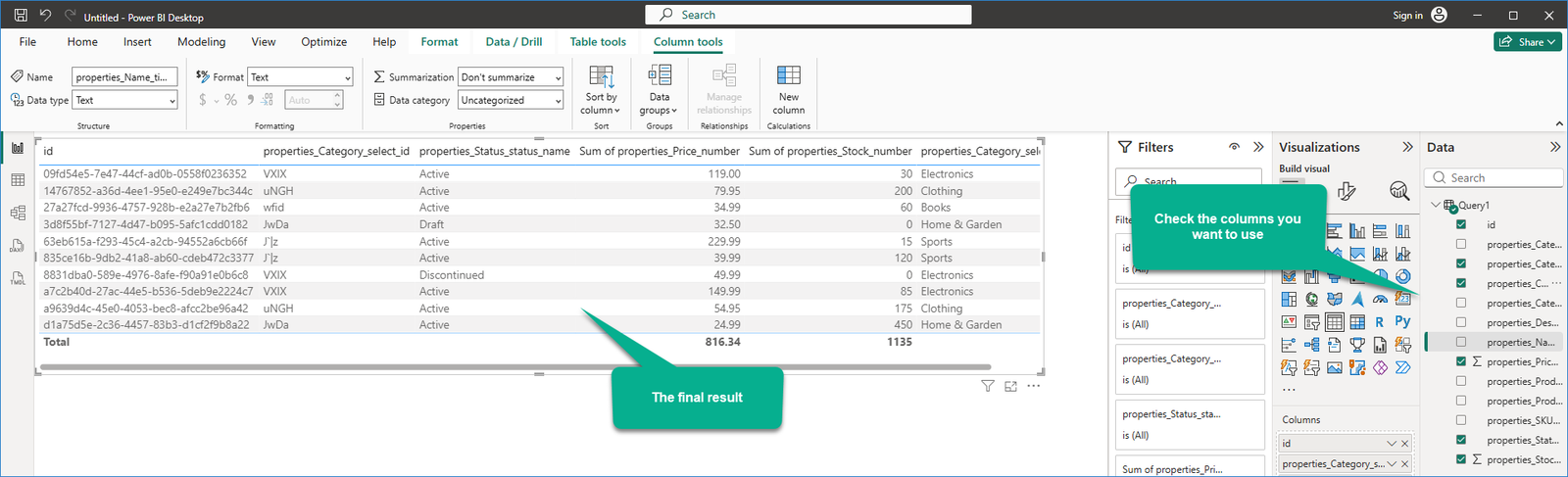
Notion – Power BI final result
Query Notion Data with SQL
For more advanced scenarios, you can write custom SQL queries to extract specific data from your Notion database. Here are some common query examples:
Example 1: Extract All Database Records
|
1 2 3 4 5 6 7 8 |
SELECT Id, Title, Status, CreatedTime, LastEditedTime FROM Databases WHERE DatabaseId = 'YOUR_DATABASE_ID' |
Example 2: Filter Records by Status
|
1 2 3 4 5 6 7 8 9 |
SELECT Id, Title, Status, Priority, DueDate FROM Databases WHERE DatabaseId = 'YOUR_DATABASE_ID' AND Status = 'In Progress' |
Example 3: Count Records by Status
|
1 2 3 4 5 6 |
SELECT Status, COUNT(*) AS RecordCount FROM Databases WHERE DatabaseId = 'YOUR_DATABASE_ID' GROUP BY Status |
Example 4: Get Recent Records (Last 30 Days)
|
1 2 3 4 5 6 7 8 |
SELECT Id, Title, Status, CreatedTime FROM Databases WHERE DatabaseId = 'YOUR_DATABASE_ID' AND CreatedTime >= DATEADD(DAY, -30, CAST(GETDATE() AS DATE)) |
Example 5: Join Multiple Database Properties
|
1 2 3 4 5 6 7 8 9 |
SELECT d.Id, d.Title, d.AssignedTo, d.Status, d.DueDate FROM Databases d WHERE d.DatabaseId = 'YOUR_DATABASE_ID' AND d.AssignedTo IS NOT NULL |
Example 6: Aggregate Data by Multiple Dimensions
|
1 2 3 4 5 6 7 8 |
SELECT Status, Priority, COUNT(*) AS TaskCount, AVG(CAST(Duration AS FLOAT)) AS AvgDuration FROM Databases WHERE DatabaseId = 'YOUR_DATABASE_ID' GROUP BY Status, Priority |
Conclusion
Connecting Notion to Power BI using the Zappysys ODBC Driver provides a seamless way to bring your workspace data into a powerful analytics platform. With SQL queries, DAX measures, and visualisations, you can unlock insights from your Notion databases and create compelling business intelligence reports.
Explore the full capabilities of the Zappysys ODBC Drivers to integrate multiple data sources and build comprehensive Power BI dashboards. By combining Notion data with other sources, you can create unified views of your operational data.
Need Help?
If you encounter any issues, our support team is here to help:
- Live Chat — Use the chat widget (bottom-right corner of this page)
- Email — support@zappysys.com
- Support Center — Visit the ZappySys Support Portal