
Create data source using Zoho SalesIQ ODBC Driver
Video instructions
Watch this quick walkthrough to see how to configure your Zoho SalesIQ ODBC data source, or scroll down for the step-by-step written guide.
Step-by-step instructions
-
Download and install ODBC PowerPack (if you haven't already).
-
Search for
odbcand open the ODBC Data Sources (64-bit):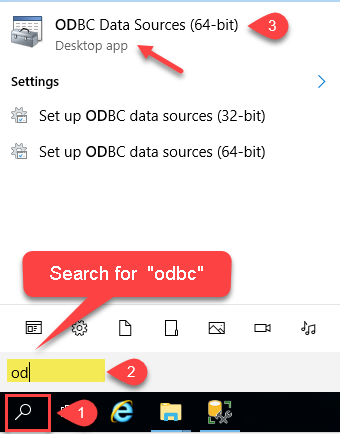
-
Create a User data source (User DSN) based on the ZappySys API Driver driver:
ZappySys API Driver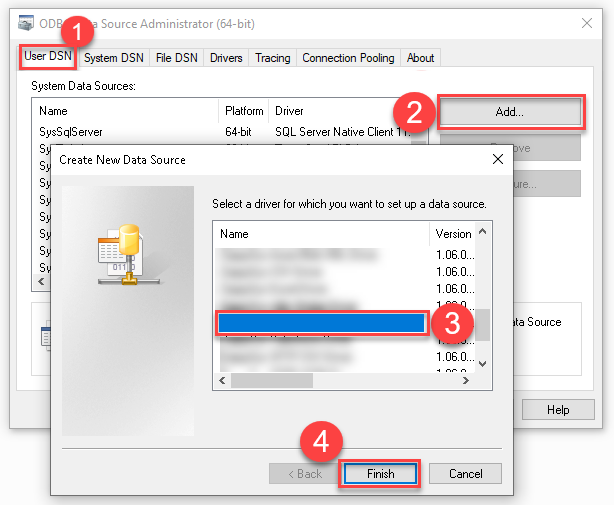
- Create and use a User DSN if the client application runs under a User Account. This is the ideal option at design time (e.g., when developing in Visual Studio). Use it for both types of applications (64-bit and 32-bit).
- Create and use a System DSN if the client application runs under a System Account (e.g., as a Windows Service). This is usually the required option in a production environment. If your Windows Service is a 32-bit application, you must use the 32-bit ODBC Data Source Administrator to configure this
-
When the Configuration window appears give your data source a name if you haven't done that already, then select "Zoho SalesIQ" from the list of Popular Connectors. If "Zoho SalesIQ" is not present in the list, then click "Search Online" and download it. Then set the path to the location where you downloaded it. Finally, click Continue >> to proceed with configuring the DSN:
ZohoSalesiqDSNZoho SalesIQ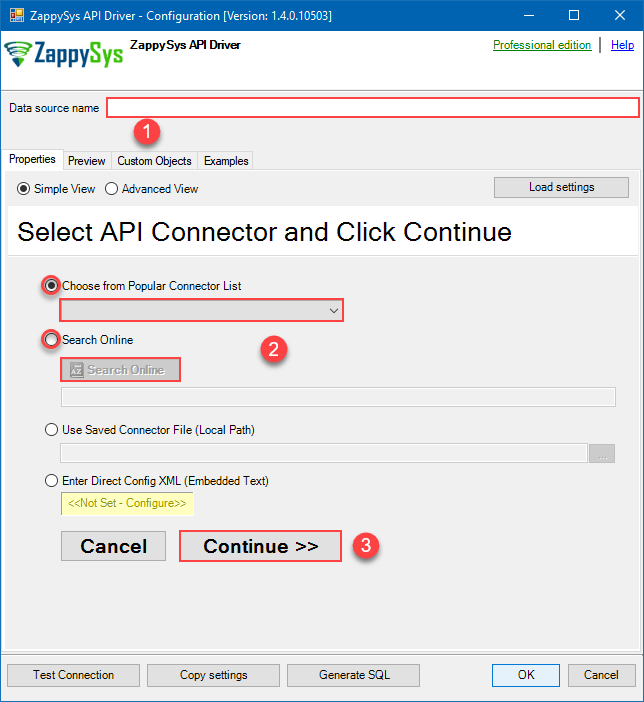
-
Select your authentication scenario below to expand connection configuration steps to:
- Configure the authentication in Zoho SalesIQ.
- Enter those details into the ZappySys API Driver data source configuration.
OAuth
Zoho SalesIQ authentication
OAuth Connection for Zoho CRM API [API reference]
To register custom App, perform the following steps (Detailed steps found in the help link at the end)- Go to Zoho API Console
- Click Add Client link
- Select Server-based Applications option
- Enter desired client name (Display purpose only)
- Enter some URL for Company homepage
- For Authorized Redirect URI enter https://zappysys.com/oauth (Or enter your own but we recommend using ZappySys one if possible). This URL must match on Zoho Connector UI.
- Click CREATE.
- Copy Client ID and Secret and paste on Zoho Connector UI.
API Connection Manager configuration
Just perform these simple steps to finish authentication configuration:
-
Set Authentication Type to
OAuth [OAuth] - Optional step. Modify API Base URL if needed (in most cases default will work).
- Fill in all the required parameters and set optional parameters if needed.
- Press Generate Token button to generate the tokens.
- Finally, hit OK button:
ZohoSalesiqDSNZoho SalesIQOAuth [OAuth]https://salesiq.zoho.com/api/v2/[$Compnay$]Optional Parameters Company Screen Name for URL (e.g. mycompany) ClientId ClientSecret Permissions SalesIQ.operators.READ SalesIQ.conversations.READ SalesIQ.feedbacks.READ SalesIQ.departments.READ AccountUrl https://accounts.zoho.com RedirectUrl https://zappysys.com/oauth RetryMode RetryWhenStatusCodeMatch RetryStatusCodeList 429 RetryCountMax 5 RetryMultiplyWaitTime True 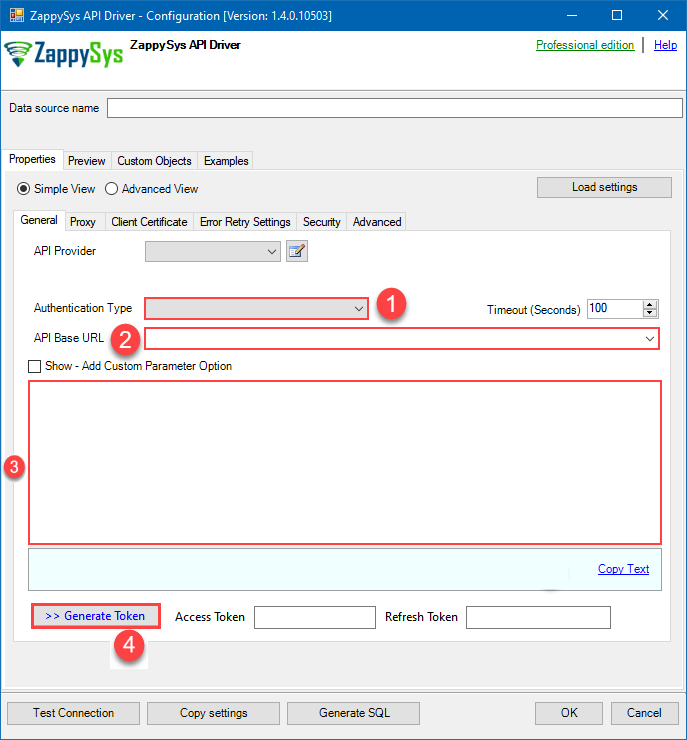 Find full details in the Zoho SalesIQ Connector authentication reference.
 -
Then go to Preview tab to start building a SQL query.
-
Once you do that, proceed by opening Query Builder:
 ZappySys API Driver - Zoho SalesIQRead and write Zoho SalesIQ data effortlessly. Integrate, manage, and automate chats and visits — almost no coding required.ZohoSalesiqDSN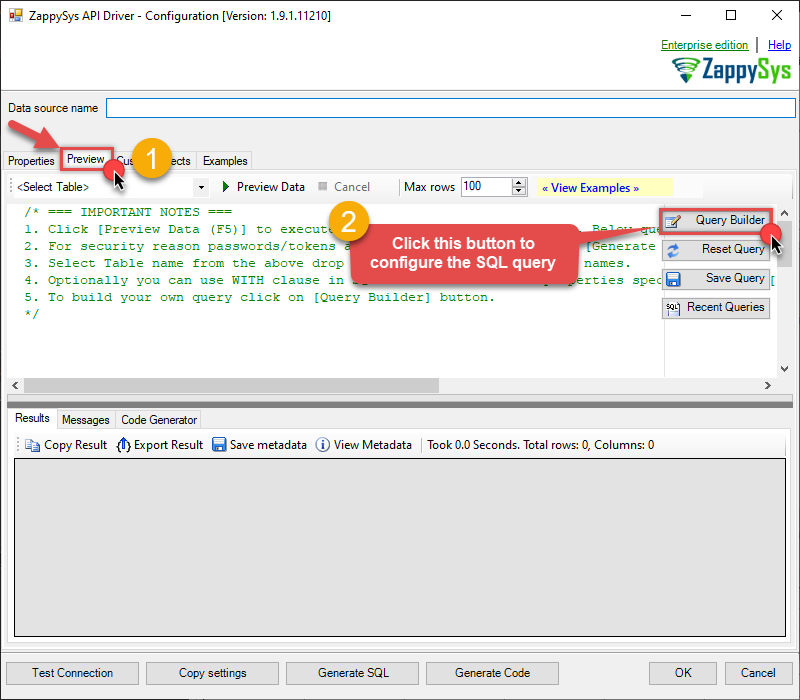
-
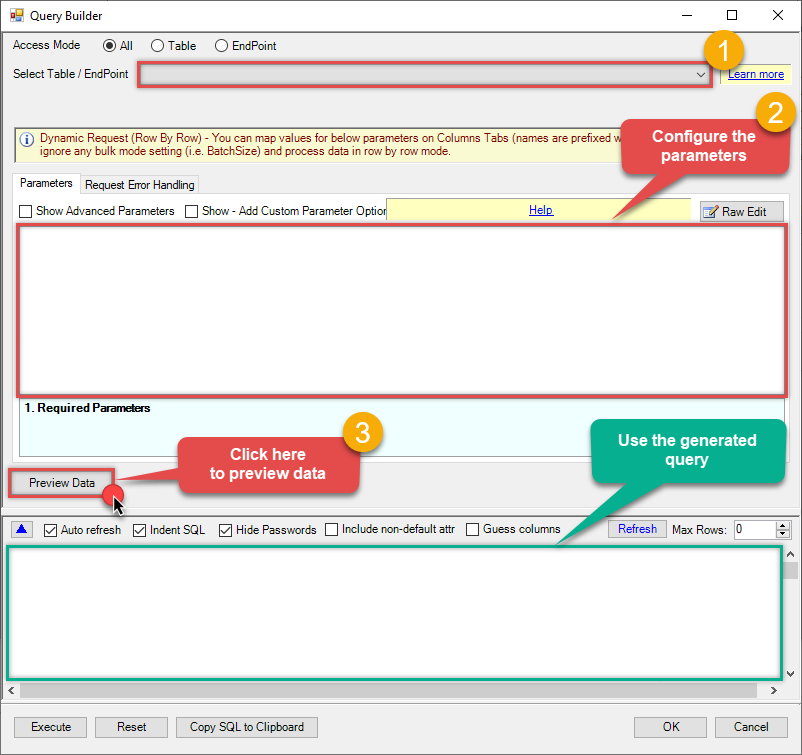
Then simply select the Get Feedbacks endpoint (action).
-
Continue by configuring the Required parameters. You can also set optional parameters too.
-
Move on by hitting Preview Data button to preview the results.
-
If you see the results you need, simply copy the generated query:
-
Click OK to use built SQL query and close the Query Builder.
-
Now hit Preview Data button to preview the data using the generated SQL query. If you are satisfied with the result, use this query in Alteryx:
 ZappySys API Driver - Zoho SalesIQRead and write Zoho SalesIQ data effortlessly. Integrate, manage, and automate chats and visits — almost no coding required.ZohoSalesiqDSN
SELECT * FROM Feedbacks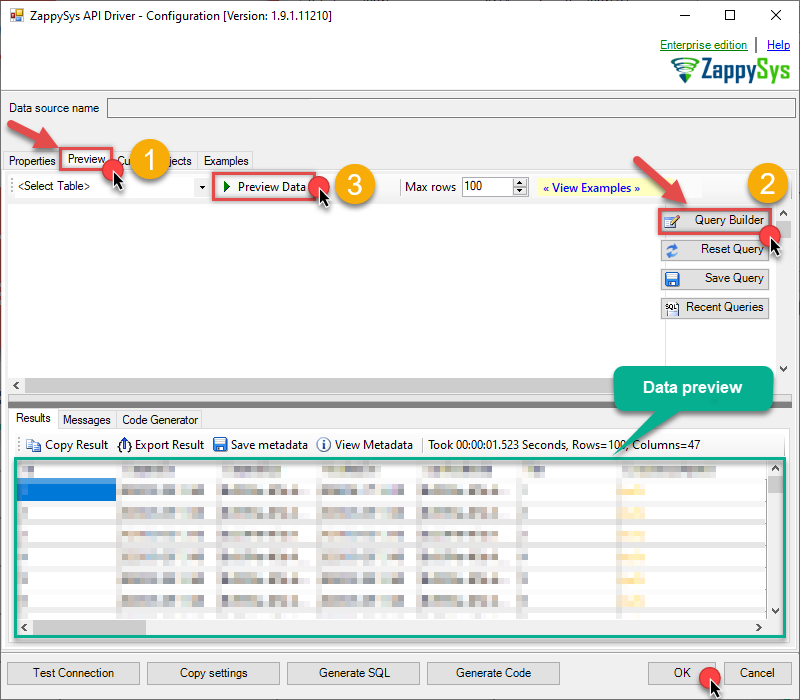 You can also access data quickly from the tables dropdown by selecting <Select table>.A
WHEREclause,LIMITkeyword will be performed on the client side, meaning that thewhole result set will be retrieved from the Zoho SalesIQ API first, and only then the filtering will be applied to the data. If possible, it is recommended to use parameters in Query Builder to filter the data on the server side (in Zoho SalesIQ servers).
Let's not stop here and explore SQL query examples, including how to use them in Stored Procedures and Views (virtual tables) in the next steps.
Zoho SalesIQ SQL query examples
Use these SQL queries in your Alteryx data source:
Read feedbacks
Reads visitor feedback and ratings submitted after chat sessions. This data helps in evaluating operator performance and customer satisfaction.
The Feedbacks table contains ratings and comments provided by visitors.
SELECT * FROM FeedbacksRead feedbacks with manual pagination
Reads feedback records in batches to overcome API pagination limits. This example demonstrates how to retrieve data month-by-month and combine the results using UNION to get a complete dataset for a longer period.
This approach is necessary when the total number of records exceeds the API's single-request limit, ensuring all data is captured by iterating through date ranges.
SELECT * INTO #t1 FROM Feedbacks WITH(OperatorIds='81565000003048017', StartTime='2023-01-01', EndTime='2023-02-01');
SELECT * INTO #t2 FROM Feedbacks WITH(OperatorIds='81565000003048017', StartTime='2023-02-01', EndTime='2023-03-01');
SELECT * INTO #t3 FROM Feedbacks WITH(OperatorIds='81565000003048017', StartTime='2023-03-01', EndTime='2023-04-01');
SELECT * INTO #t4 FROM Feedbacks WITH(OperatorIds='81565000003048017', StartTime='2023-04-01', EndTime='2023-05-01');
SELECT * INTO #t5 FROM Feedbacks WITH(OperatorIds='81565000003048017', StartTime='2023-05-01', EndTime='2023-06-01');
SELECT * INTO #t6 FROM Feedbacks WITH(OperatorIds='81565000003048017', StartTime='2023-06-01', EndTime='2023-07-01');
SELECT * INTO #t7 FROM Feedbacks WITH(OperatorIds='81565000003048017', StartTime='2023-07-01', EndTime='2023-08-01');
SELECT * INTO #t8 FROM Feedbacks WITH(OperatorIds='81565000003048017', StartTime='2023-08-01', EndTime='2023-09-01');
SELECT * INTO #t9 FROM Feedbacks WITH(OperatorIds='81565000003048017', StartTime='2023-09-01', EndTime='2023-10-01');
SELECT * INTO #t10 FROM Feedbacks WITH(OperatorIds='81565000003048017', StartTime='2023-10-01', EndTime='2023-11-01');
SELECT * INTO #t11 FROM Feedbacks WITH(OperatorIds='81565000003048017', StartTime='2023-11-01', EndTime='2023-12-01');
SELECT * INTO #t12 FROM Feedbacks WITH(OperatorIds='81565000003048017', StartTime='2023-12-01', EndTime='2024-01-01');

SELECT * FROM #t1 UNION
SELECT * FROM #t2 UNION
SELECT * FROM #t3 UNION
SELECT * FROM #t4 UNION
SELECT * FROM #t5 UNION
SELECT * FROM #t6 UNION
SELECT * FROM #t7 UNION
SELECT * FROM #t8 UNION
SELECT * FROM #t9 UNION
SELECT * FROM #t10 UNION
SELECT * FROM #t11 UNION
SELECT * FROM #t12;
get_feedbacks endpoint belongs to
Feedbacks
table(s), and can therefore be used via those table(s).
Create SQL view in ODBC data source
ZappySys API Drivers support flexible Query language so you can override Default Properties you configured on Data Source such as URL, Body. This way you don't have to create multiple Data Sources if you like to read data from multiple EndPoints. However not every application support supplying custom SQL to driver so you can only select Table from list returned from driver.
If you're dealing with Microsoft Access and need to import data from an SQL query, it's important to note that Access doesn't allow direct import of SQL queries. Instead, you can create custom objects (Virtual Tables) to handle the import process.
Many applications like MS Access, Informatica Designer wont give you option to specify custom SQL when you import Objects. In such case Virtual Table is very useful. You can create many Virtual Tables on the same Data Source (e.g. If you have 50 URLs with slight variations you can create virtual tables with just URL as Parameter setting.
-
Go to Custom Objects Tab and Click on Add button and Select Add Table:
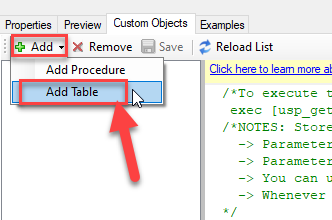
-
Enter the desired Table name and click on OK:
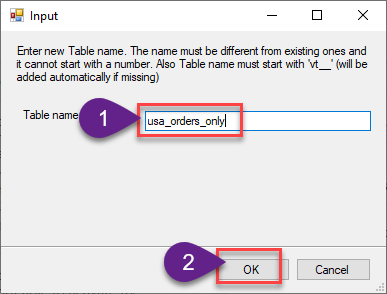
-
And it will open the New Query Window Click on Cancel to close that window and go to Custom Objects Tab.
-
Select the created table, Select Text Type AS SQL and write the your desired SQL Query and Save it and it will create the custom table in the ZappySys Driver:
Here is an example SQL query for ZappySys Driver. You can insert Placeholders also. Read more about placeholders here
SELECT
  "ShipCountry",
  "OrderID",
  "CustomerID",
  "EmployeeID",
  "OrderDate",
  "RequiredDate",
  "ShippedDate",
  "ShipVia",
  "Freight",
  "ShipName",
  "ShipAddress",
  "ShipCity",
  "ShipRegion",
  "ShipPostalCode"
FROM "Orders"
Where "ShipCountry"='USA'
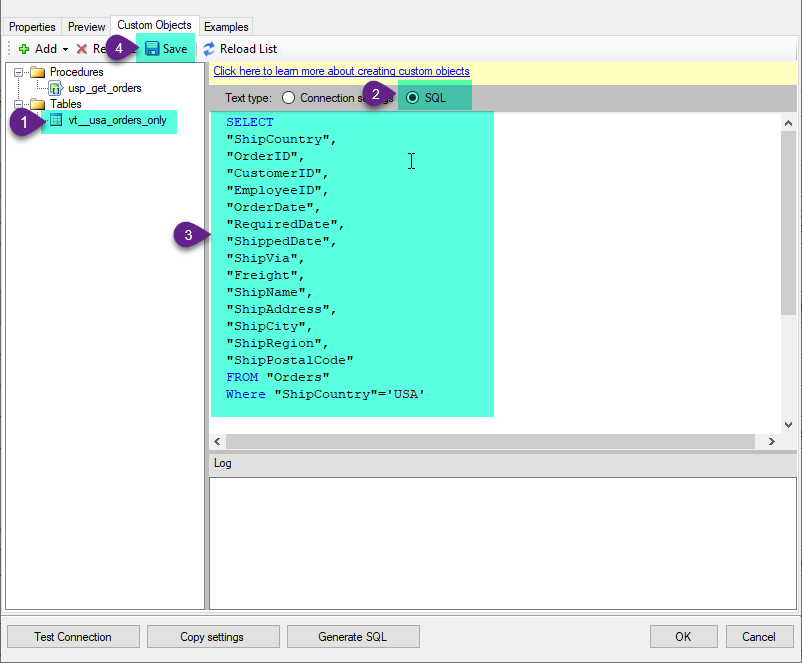
-
That's it now go to Preview Tab and Execute your custom virtual table query. In this example it will extract the orders for the USA Shipping Country only:
SELECT * FROM "vt__usa_orders_only"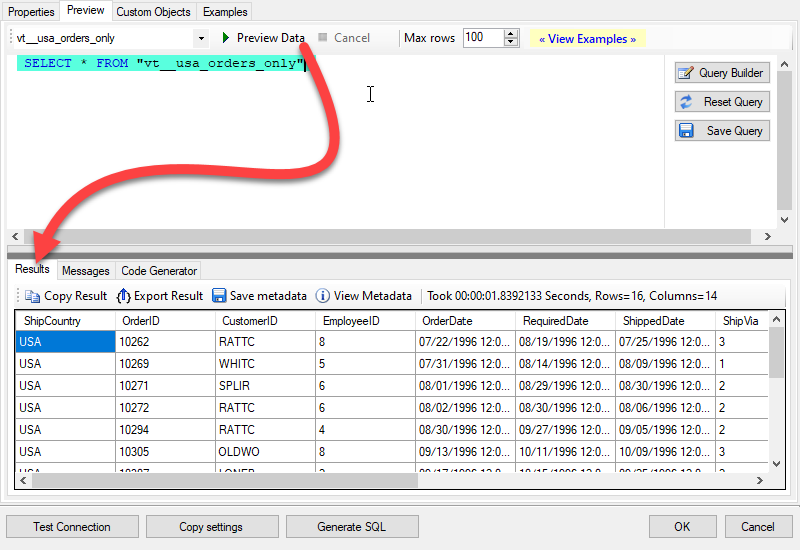
Get feedbacks in Alteryx via SQL view
-
Open Alteryx Designer.
-
First, verify your DCM Settings to ensure you can access ODBC drivers. Go to Options > User Settings > Edit User Settings.
If DCM Mode is set to DCM Only, change it to DCM Optional if you would like to access the legacy Generic ODBC Connection.
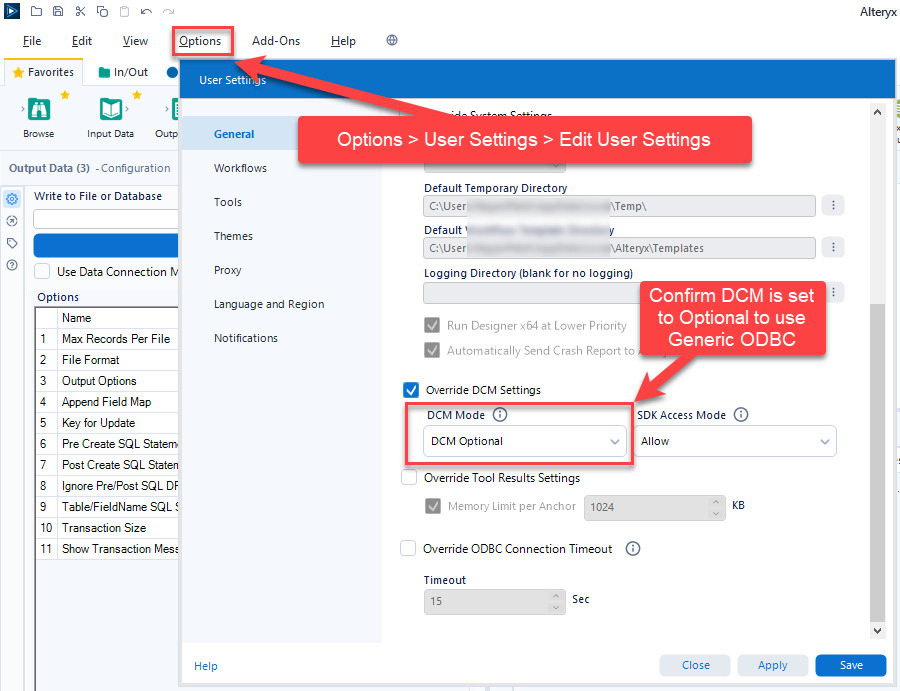 After changing this setting, you may need to click Save and restart the connection window for the "Generic ODBC" icon to appear.
 -
Drag an Input Data tool onto your Alteryx canvas.
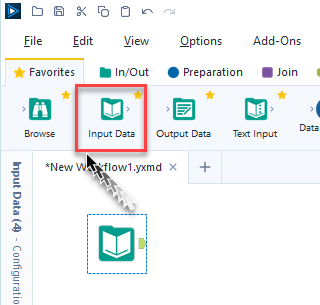
-
In the Configuration pane, click Set Up a Connection.
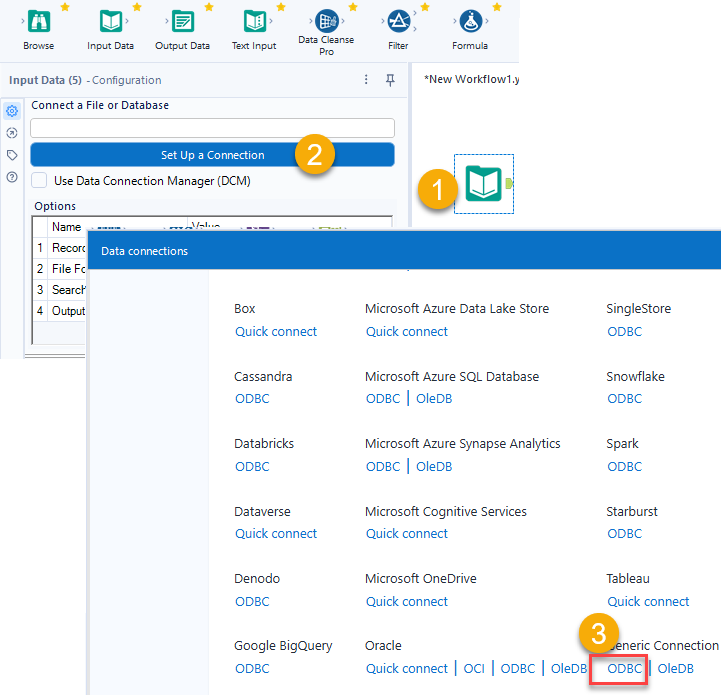
-
Note for DCM Users: If your environment has DCM (Data Connection Manager) enabled, the classic "Generic ODBC" icon may be hidden. To find it, select Data sources on the left and type "ODBC" in the search bar.
-
Once the ODBC window opens, click Connect Asset and select your ZohoSalesiqDSN DSN from the list.
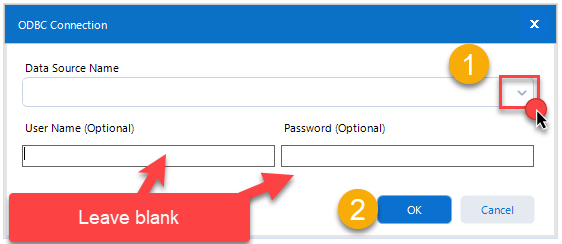 Ensure you have configured a 64-bit System DSN in the Windows ODBC Data Source Administrator before this step.
 -
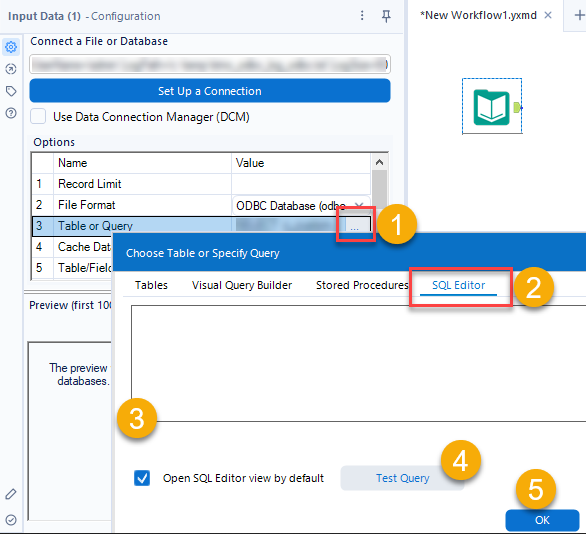
After selecting your DSN, configure your SQL Query in the Input Data tool configuration:
-
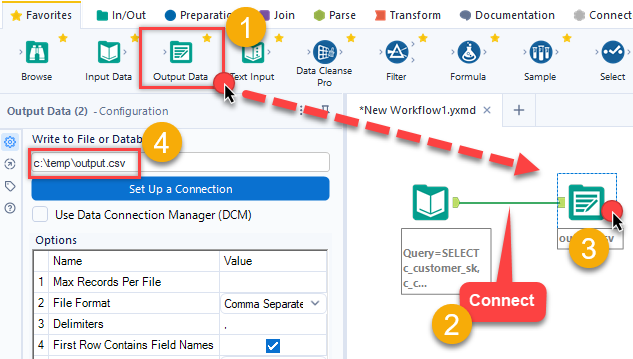
To save your data, drag an Output Data tool and connect it to the Input Data tool.
-
Configure the Output Data tool to write to a CSV file:
-
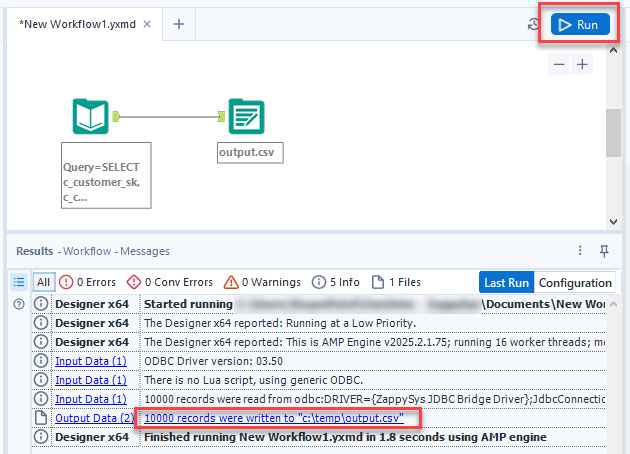
Press Run (Ctrl+R) to execute the workflow. Verify the results in the Results Window at the bottom.
Advanced topics
Creating SQL stored procedures
You can create procedures to encapsulate custom logic and then only pass handful parameters rather than long SQL to execute your API call.
Steps to create Custom Stored Procedure in ZappySys Driver. You can insert Placeholders anywhere inside Procedure Body. Read more about placeholders here
-
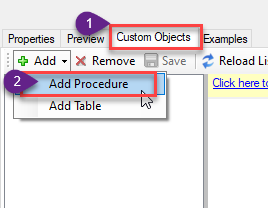
Go to Custom Objects Tab and Click on Add button and Select Add Procedure:
-
Enter the desired Procedure name and click on OK:
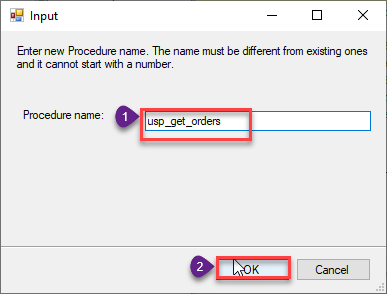
-
Select the created Stored Procedure and write the your desired stored procedure and Save it and it will create the custom stored procedure in the ZappySys Driver. Here is an example stored procedure for ZappySys Driver. You can insert Placeholders anywhere inside Procedure Body. Read more about placeholders here
CREATE PROCEDURE [usp_get_orders]
    @fromdate = '<<yyyy-MM-dd,FUN_TODAY>>'
 AS
    SELECT * FROM Orders where OrderDate >= '<@fromdate>';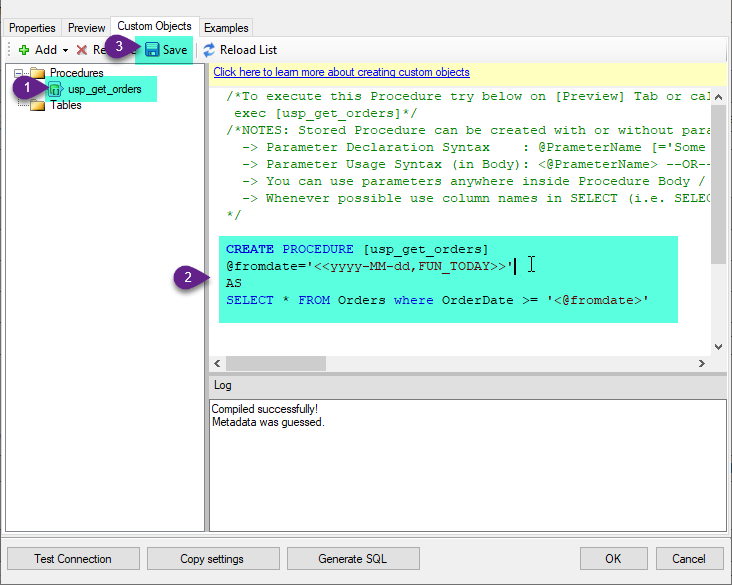
-
That's it now go to Preview Tab and Execute your Stored Procedure using Exec Command. In this example it will extract the orders from the date 1996-01-01:
Exec usp_get_orders '1996-01-01';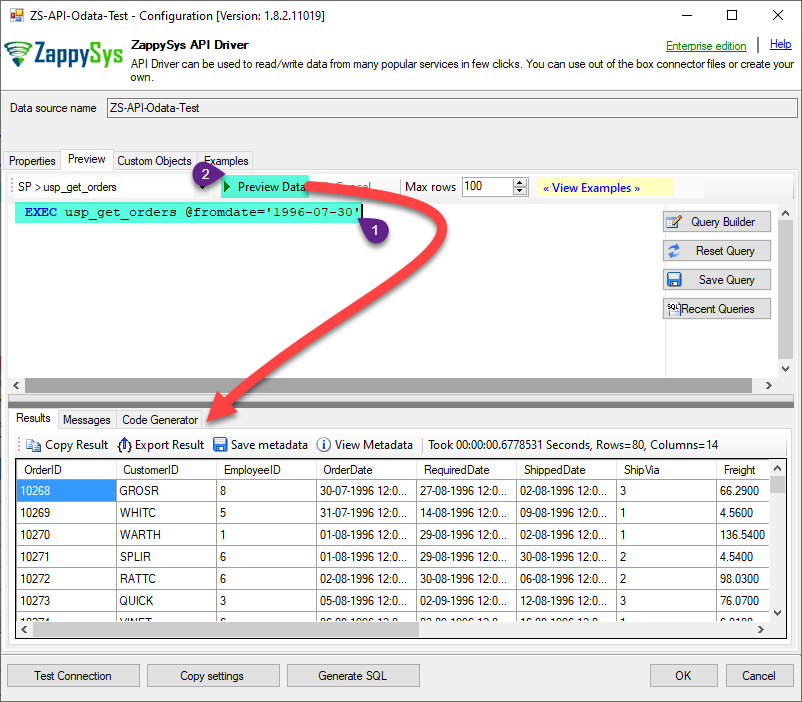
Zoho SalesIQ Connector actions
Need another use case? Pick the next Zoho SalesIQ action in Alteryx below.
- Get Conversations
- Get Departments
- Get Operators
- Make Generic REST API Request
- Make Generic REST API Request (Bulk Write)
Conclusion
You now know how to get feedbacks in Alteryx without writing complex code. Zoho SalesIQ ODBC Driver handled pagination and authentication automatically.
Ready to get started? Download the trial or ping us via chat if you need help: