
Introduction
You can connect to your Outlook Mail (Office 365) data from Qlik Cloud via the high-performance Outlook Mail (Office 365) ODBC Driver. We'll walk you through the entire setup.
Let's not waste time and get started!
Create data source using Outlook Mail (Office 365) ODBC Driver
Video instructions
Watch this quick walkthrough to see how to configure your Outlook Mail (Office 365) ODBC data source, or scroll down for the step-by-step written guide.
Step-by-step instructions
To get data from Outlook Mail (Office 365) using Qlik Cloud, we first need to create an ODBC data source. We will later read this data in Qlik Cloud. Perform these steps:
-
Download and install ODBC PowerPack (if you haven't already).
-
Search for
odbcand open the ODBC Data Sources (64-bit):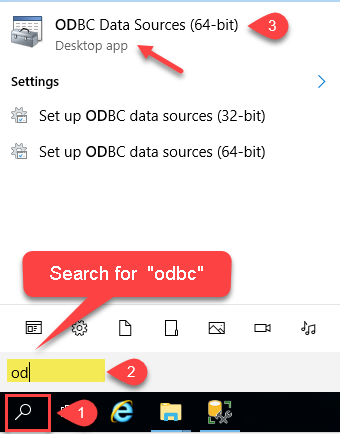
-
Create a User data source (User DSN) based on the ZappySys API Driver driver:
ZappySys API Driver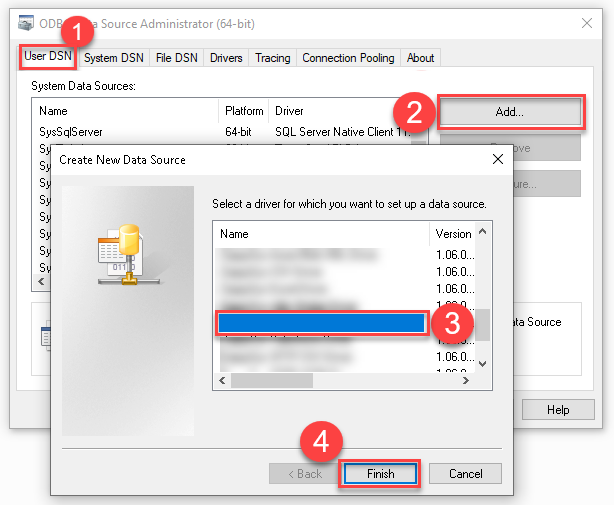
- Create and use a User DSN if the client application runs under a User Account. This is the ideal option at design time (e.g., when developing in Visual Studio). Use it for both types of applications (64-bit and 32-bit).
- Create and use a System DSN if the client application runs under a System Account (e.g., as a Windows Service). This is usually the required option in a production environment. If your Windows Service is a 32-bit application, you must use the 32-bit ODBC Data Source Administrator to configure this
-
When the Configuration window appears give your data source a name if you haven't done that already, then select "Outlook Mail (Office 365)" from the list of Popular Connectors. If "Outlook Mail (Office 365)" is not present in the list, then click "Search Online" and download it. Then set the path to the location where you downloaded it. Finally, click Continue >> to proceed with configuring the DSN:
OutlookMailOffice365DSNOutlook Mail (Office 365)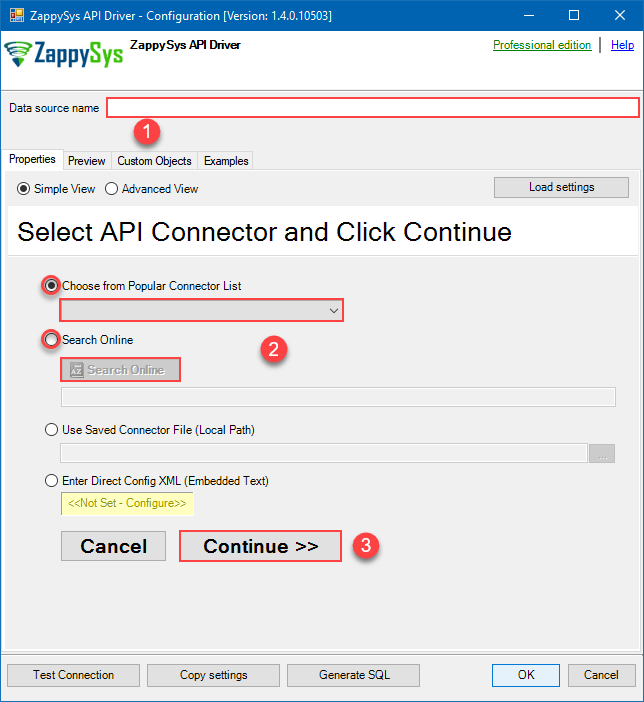
-
Select your authentication scenario below to expand connection configuration steps to:
- Configure the authentication in Outlook Mail (Office 365).
- Enter those details into the ZappySys API Driver data source configuration.
User Credentials
Outlook Mail (Office 365) authentication
Use delegated access (User Credentials) whenever you want to let a signed-in user work with their own resources or resources they can access. Whether it's an admin setting up policies for their entire organization or a user deleting an email in their inbox, all scenarios involving user actions should use delegated access. [API reference]
Follow these simple steps below to create Microsoft Entra ID application with delegated access:
WARNING: If you are planning to automate processes, we recommend that you use a Application Credentials authentication method. In case, you still need to use User Credentials, then make sure you use a system/generic account (e.g.automation@my-company.com). When you use a personal account which is tied to a specific employee profile and that employee leaves the company, the token may become invalid and any automated processes using that token will start to fail.- Navigate to the Azure Portal and log in using your credentials.
- Access Microsoft Entra ID.
-
Register a new application by going to App registrations and clicking on New registration button:
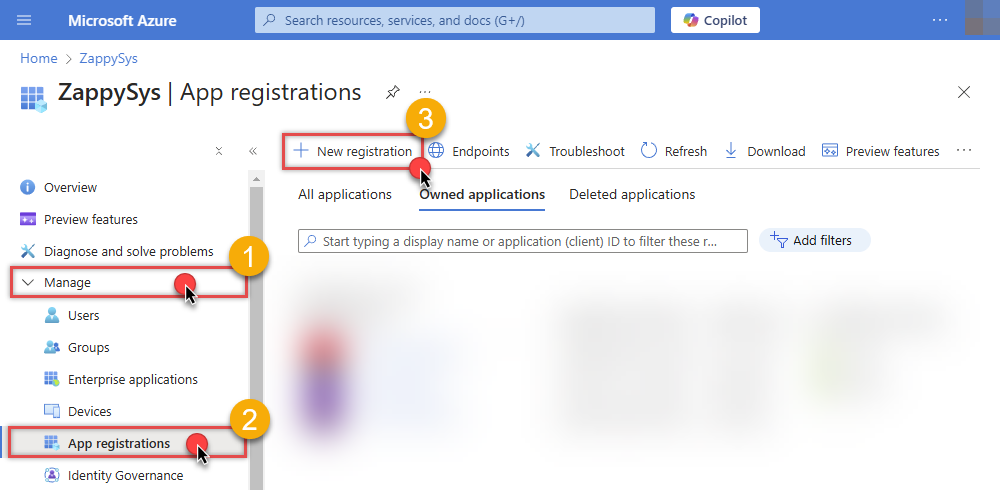 INFO: Find more information on how to register an application in Graph API reference.
 -
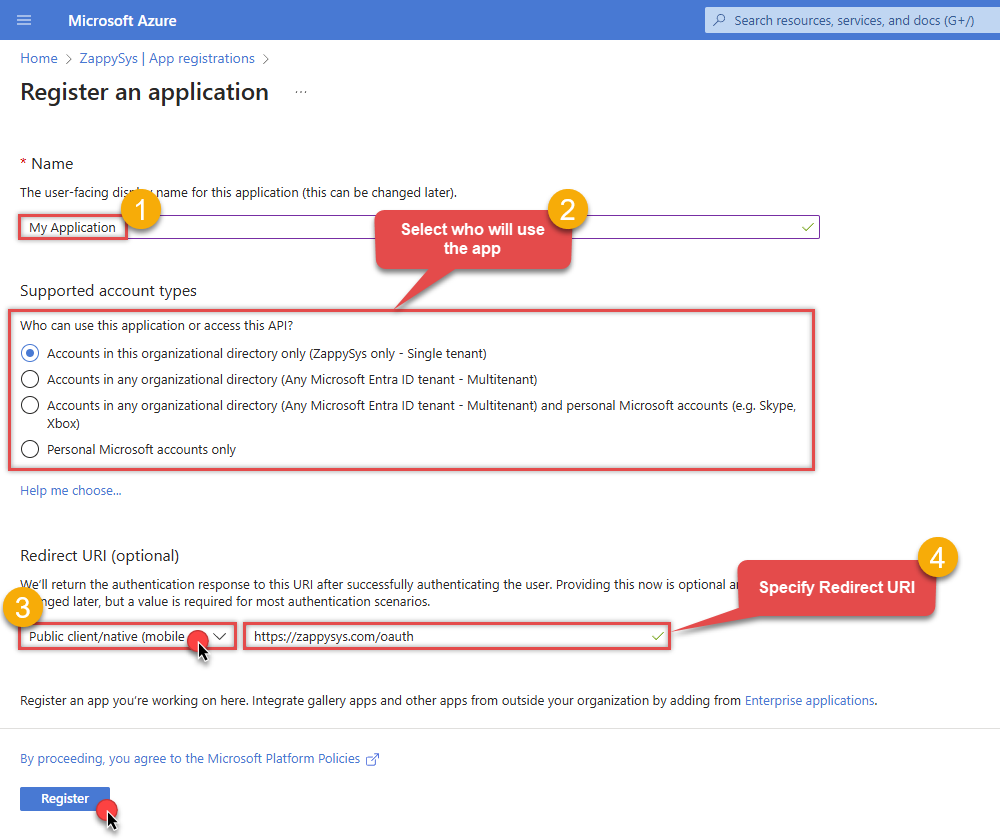
When configuration window opens, configure these fields:
-
Supported account type
- Use
Accounts in this organizational directory only, if you need access to data in your organization only.
- Use
-
Redirect URI:
- Set the type to
Public client/native (mobile & desktop). - Use
https://zappysys.com/oauthas the URL.
- Set the type to
-
Supported account type
-
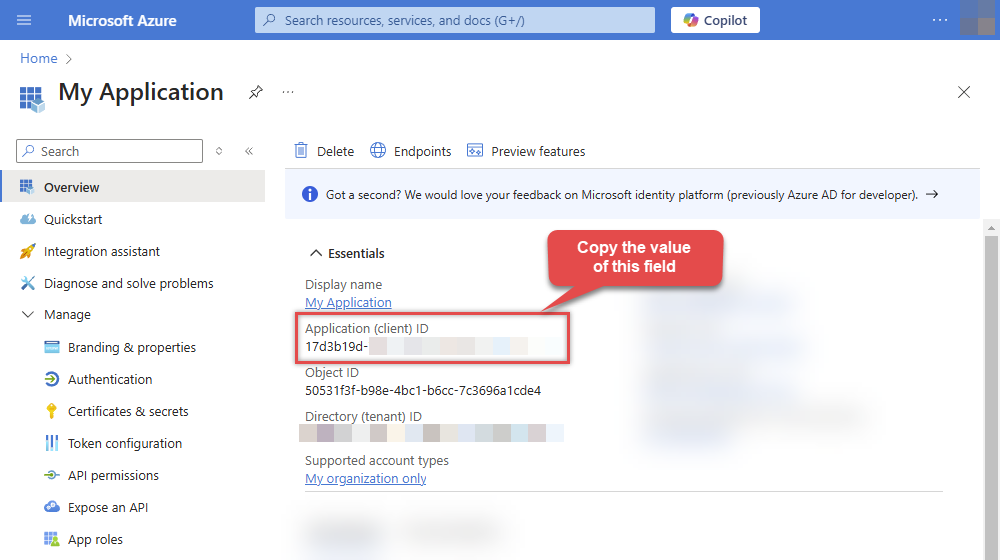
After registering the app, copy the Application (client) ID for later:
-
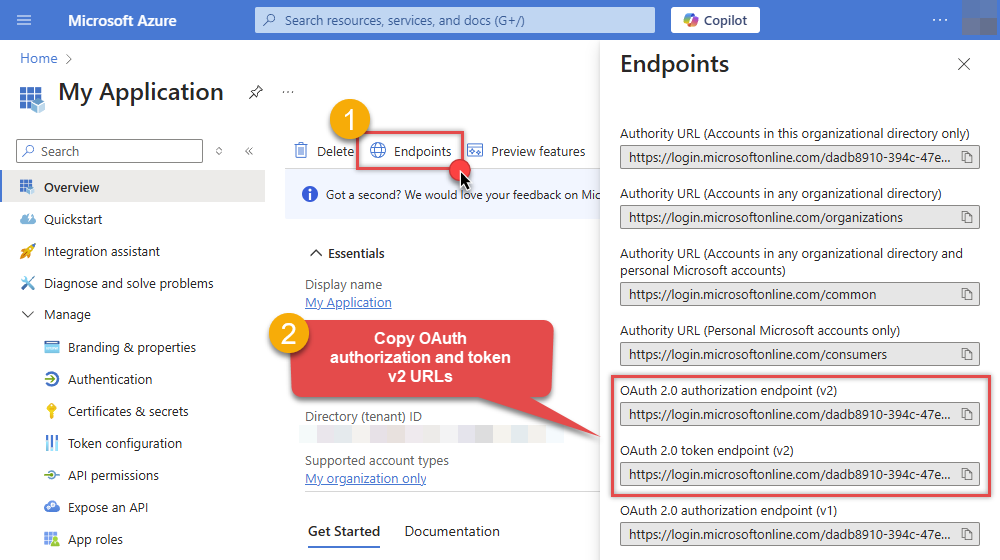
Then copy OAuth authorization endpoint (v2) & OAuth token endpoint (v2) URLs to use later in the configuration:
-
Now go to SSIS package or ODBC data source and use the copied values in User Credentials authentication configuration:
- In the Authorization URL field paste the OAuth authorization endpoint (v2) URL value you copied in the previous step.
- In the Token URL field paste the OAuth token endpoint (v2) URL value you copied in the previous step.
- In the Client ID field paste the Application (client) ID value you copied in the previous step.
-
In the Permissions (Scope) field use the default or pick labeled permissions. [System] covers sign-in and refresh token. [User] is the signed-in user’s mailbox (use
Mail.ReadBasicorMail.Readfor read-only). [Shared] adds shared or delegated mail folders. [Tenant] entries (User.ReadBasic.All,User.Read.All,Group.Read.All) are broad directory permissions that usually need an administrator to approve the app. The default includesUser.ReadBasic.Allfor the Default User Id drop down; addUser.Read.Allonly if you need full user profiles (not required for listing users).-
offline_access,openid,profile,email -
User.Read,Mail.ReadBasic,Mail.Read,Mail.ReadWrite,Mail.Send -
Mail.Read.Shared,Mail.ReadBasic.Shared,Mail.ReadWrite.Shared,Mail.Send.Shared -
User.ReadBasic.All,Group.Read.All(often admin consent; user drop down / group lookups) -
User.Read.All(optional — full user profiles; broader than needed for user drop down)
Admin consent note:- Token generation can still ask for admin approval, even when delegated scopes are listed in API permissions.
- A Global Administrator can allow user consent for selected low-impact delegated permissions.
- Broad mail or directory scopes such as
Mail.ReadWrite,User.ReadBasic.All,User.Read.All, andGroup.Read.Allmay still require admin consent.
-
- Press Generate Token button to generate Access and Refresh Tokens.
-
Choose Default User Id from the drop down menu after token generation. This calls
GET /usersand requiresUser.ReadBasic.Allin your token (included in the default scope list). Regenerate the token if you add or remove this scope later. Keepmefor your own mailbox, or pick another user when accessing a shared or delegated mailbox. You can also type a user id or email manually if listing fails. - Click Test Connection to confirm the connection is working.
- Done! Now you are ready to use the API Connector!
API Connection Manager configuration
Just perform these simple steps to finish authentication configuration:
-
Set Authentication Type to
User Credentials [OAuth] - Optional step. Modify API Base URL if needed (in most cases default will work).
- Fill in all the required parameters and set optional parameters if needed.
- Press Generate Token button to generate the tokens.
- Finally, hit OK button:
OutlookMailOffice365DSNOutlook Mail (Office 365)User Credentials [OAuth]https://graph.microsoft.com/v1.0Required Parameters Authorization URL Fill-in the parameter... Token URL Fill-in the parameter... Application (client) ID Fill-in the parameter... Permissions (Scope) Fill-in the parameter... Return URL Fill-in the parameter... Optional Parameters Client Secret Refresh Token File Path Login Prompt Option Default User Id (Select after clicking **Generate Token**) me RetryMode RetryWhenStatusCodeMatch RetryStatusCodeList 429|503 RetryCountMax 5 RetryMultiplyWaitTime True 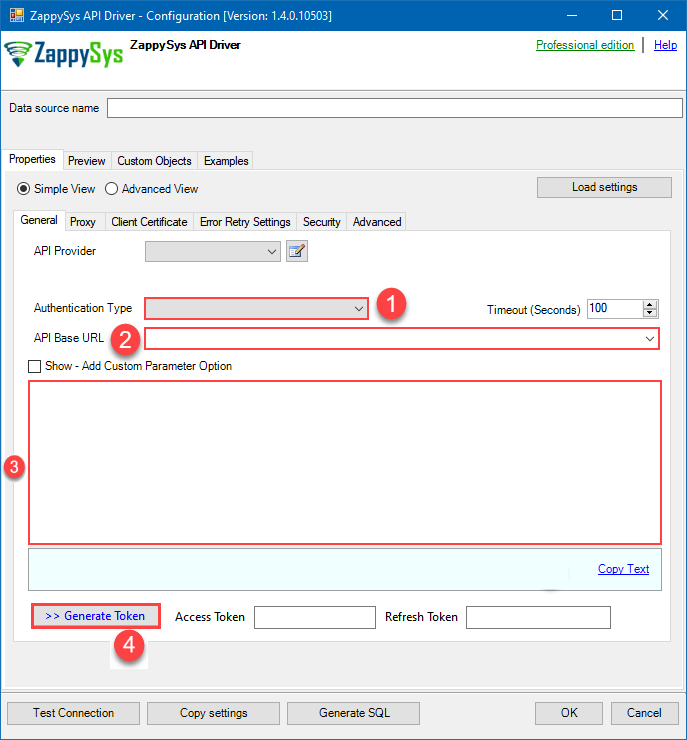 Find full details in the Outlook Mail (Office 365) Connector authentication reference.
Application Credentials
Outlook Mail (Office 365) authentication
Application-only access is broader and more powerful than delegated access (User Credentials), so you should only use app-only access where needed. Use it when: 1. The application needs to run in an automated way, without user input (for example, a daily script that checks emails from certain contacts and sends automated responses). 2. The application needs to access resources belonging to multiple different users (for example, a backup or data loss prevention app might need to retrieve messages from many different chat channels, each with different participants). 3. You find yourself tempted to store credentials locally and allow the app to sign in 'as' the user or admin. [API reference]
Follow these simple steps below to create Microsoft Entra ID application with application access permissions.
- Navigate to the Azure Portal and log in using your credentials.
- Access Microsoft Entra ID.
-
Register a new application by going to App registrations and clicking on New registration button:
INFO: Find more information on how to register an application in Graph API reference. -
When configuration window opens, configure these fields:
-
Supported account type
- e.g. select
Accounts in this organizational directory onlyif you need access to data in your organization only.
- e.g. select
-
Redirect URI:
- Set the type to
Public client/native (mobile & desktop). - Leave the URL field empty.
- Set the type to
-
Supported account type
-
After registering the app, copy the Application (client) ID for later:
-
Then copy OAuth authorization endpoint (v2) & OAuth token endpoint (v2) URLs:
-
Continue and create Client secret:
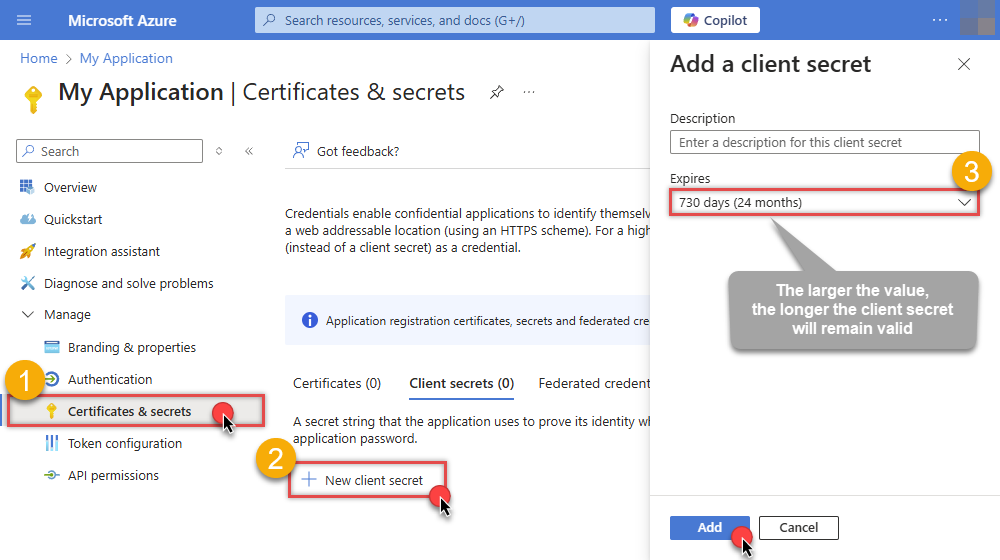
-
Then copy the Client secret for later steps:
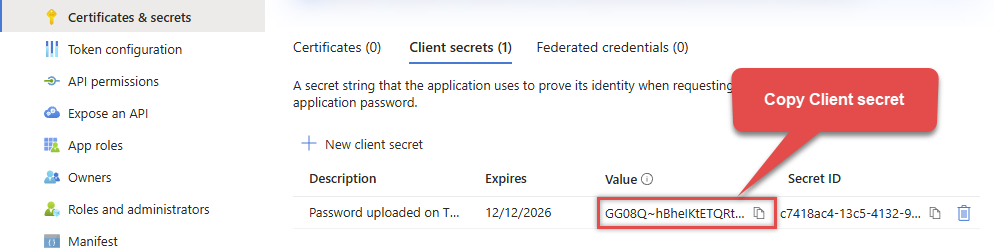
-
Continue by adding permissions for the app by going to the API permissions section, and clicking on Add a permission:
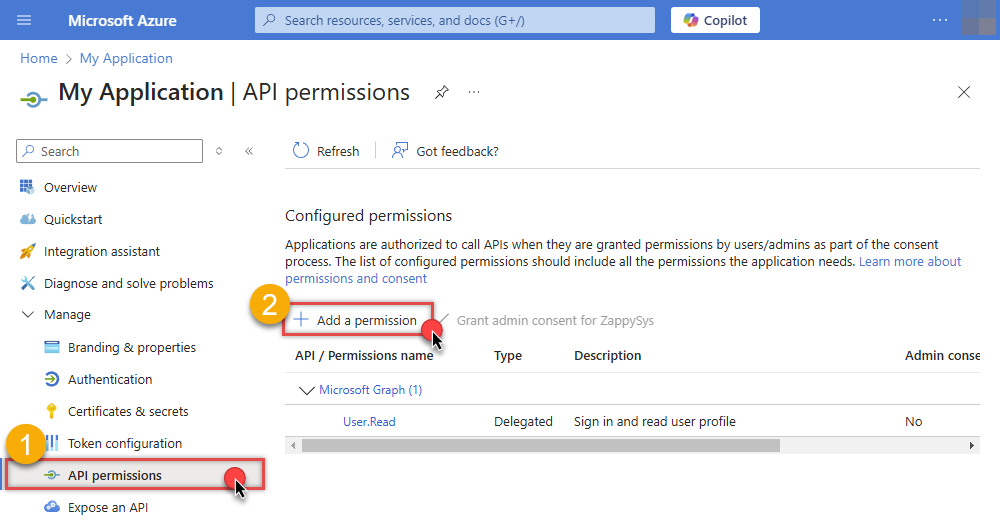
-
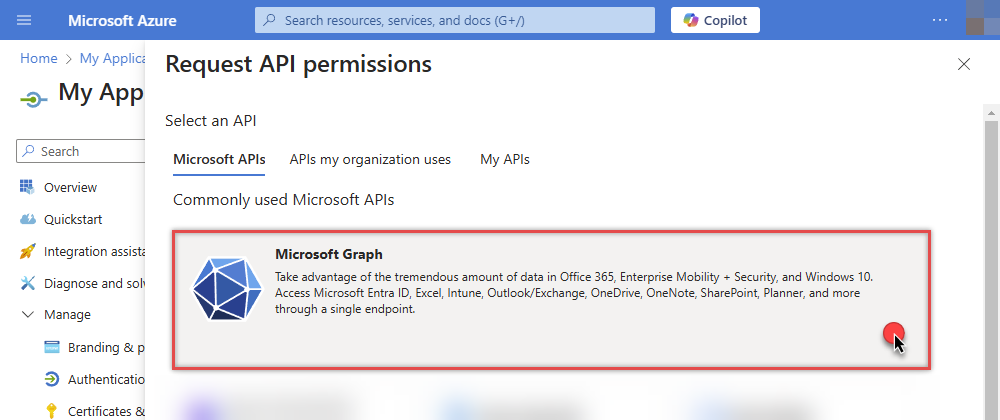
Select Microsoft Graph:
-
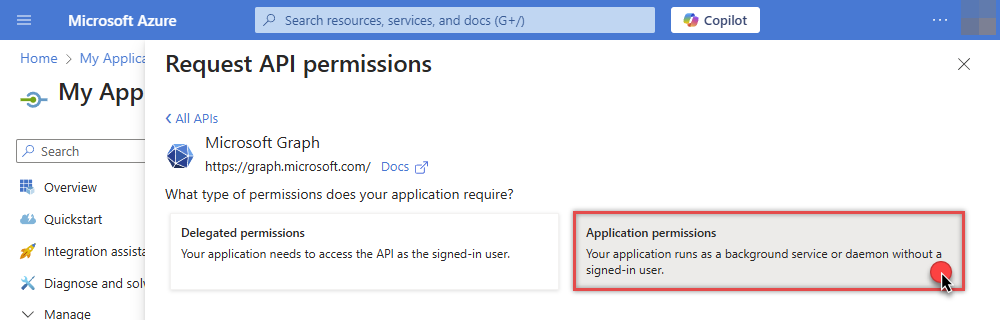
Then choose Application permissions option:
-
Continue by adding these Mail (Outlook) application permissions (for example
Mail.Read,Mail.ReadWrite, orMail.Senddepending on your needs):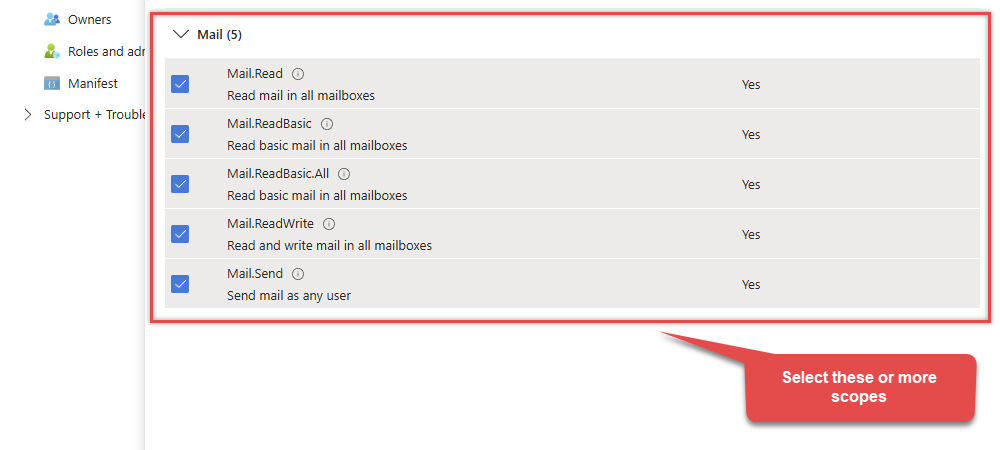
-
If you want the Default User Id drop down to list organization users (calls
GET /users), repeat Add a permission and also add the User.Read.All application permission. Add Group.Read.All if you need group lookups. Search forUserunder Application permissions, select User.Read.All, then click Add permissions. -
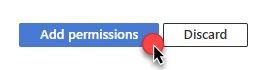
Finish by clicking Add permissions button:
-
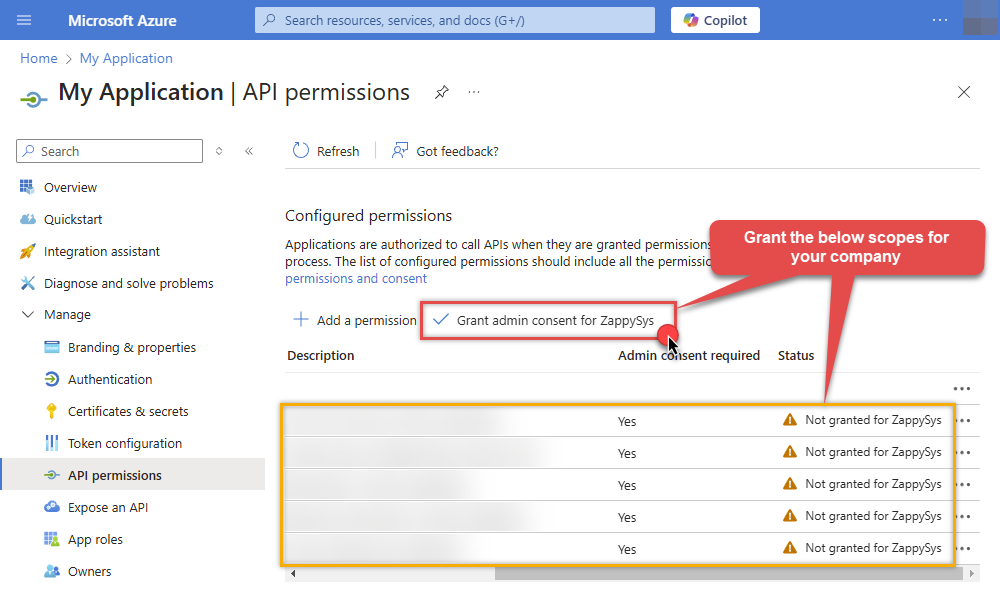
Now it's time to Grant admin consent for your application:
-
Confirm all the permissions are granted (Mail scopes plus
User.Read.Allwhen using the user drop down):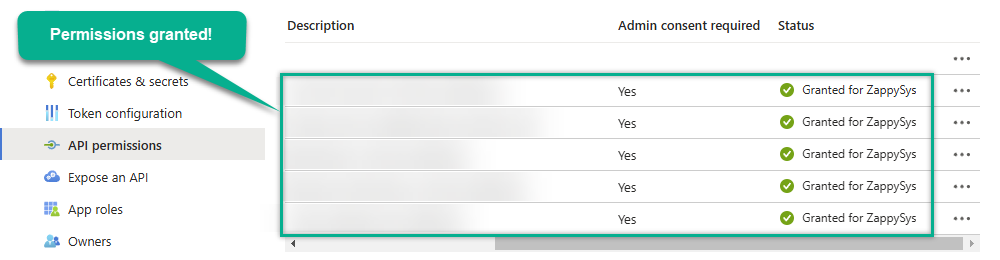
-
Now go to SSIS package or ODBC data source and use the copied values in Application Credentials authentication configuration:
- In the Token URL field paste the OAuth token endpoint (v2) URL value you copied in the previous step.
- In the Client ID field paste the Application (client) ID value you copied in the previous step.
- In the Client Secret field paste the Client secret value you copied in the previous step.
- Choose Default User Id from the drop down menu (requires
User.Read.Allapplication permission and admin consent), or type a user id or email manually.
- Click Test Connection to confirm the connection is working.
- That's it! Now you can use the connector.
API Connection Manager configuration
Just perform these simple steps to finish authentication configuration:
-
Set Authentication Type to
Application Credentials [OAuth] - Optional step. Modify API Base URL if needed (in most cases default will work).
- Fill in all the required parameters and set optional parameters if needed.
- Finally, hit OK button:
OutlookMailOffice365DSNOutlook Mail (Office 365)Application Credentials [OAuth]https://graph.microsoft.com/v1.0Required Parameters Token URL Fill-in the parameter... Application (client) ID Fill-in the parameter... Client Secret Fill-in the parameter... Scope Fill-in the parameter... Default User Id Fill-in the parameter... Optional Parameters RetryMode RetryWhenStatusCodeMatch RetryStatusCodeList 429|503 RetryCountMax 5 RetryMultiplyWaitTime True 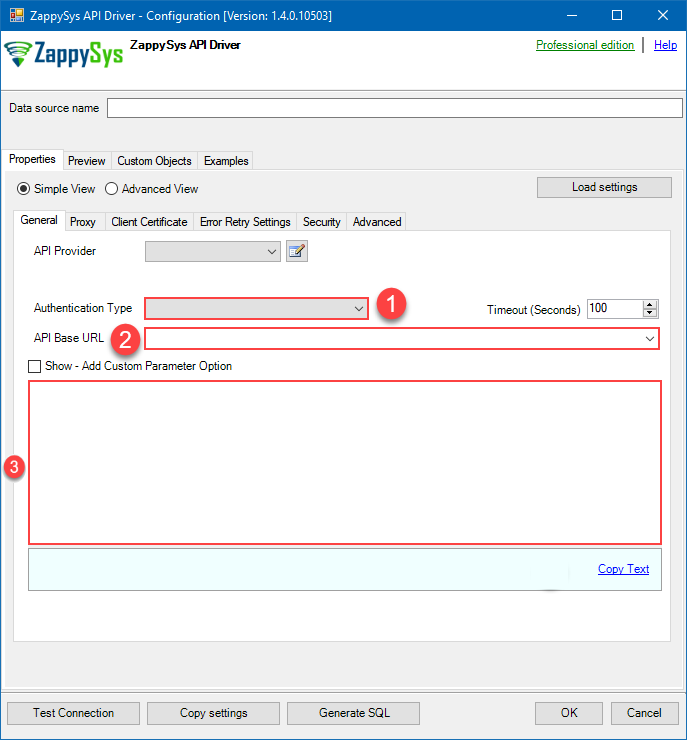 Find full details in the Outlook Mail (Office 365) Connector authentication reference.
 -
Once the data source connection has been configured, it's time to configure the SQL query. Select the Preview tab and then click Query Builder button to configure the SQL query:
 ZappySys API Driver - Outlook Mail (Office 365)Read and write Microsoft Outlook Mail (Office 365) data effortlessly. Send, manage, and sync messages, attachments, and folders — almost no coding required.OutlookMailOffice365DSN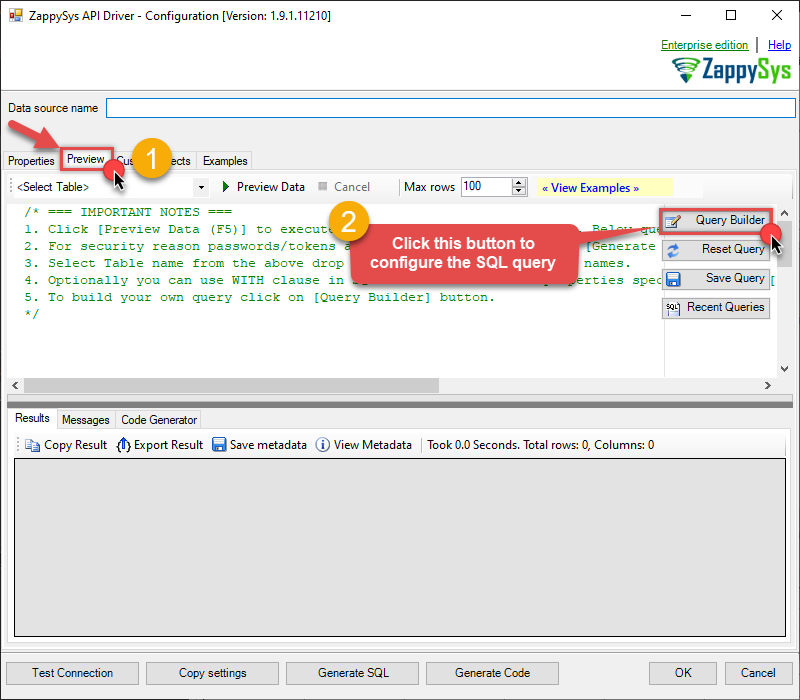
-
Start by selecting the Table or Endpoint you are interested in and then configure the parameters. This will generate a query that we will use in Qlik Cloud to retrieve data from Outlook Mail (Office 365). Hit OK button to use this query in the next step.
SELECT * FROM MyMessages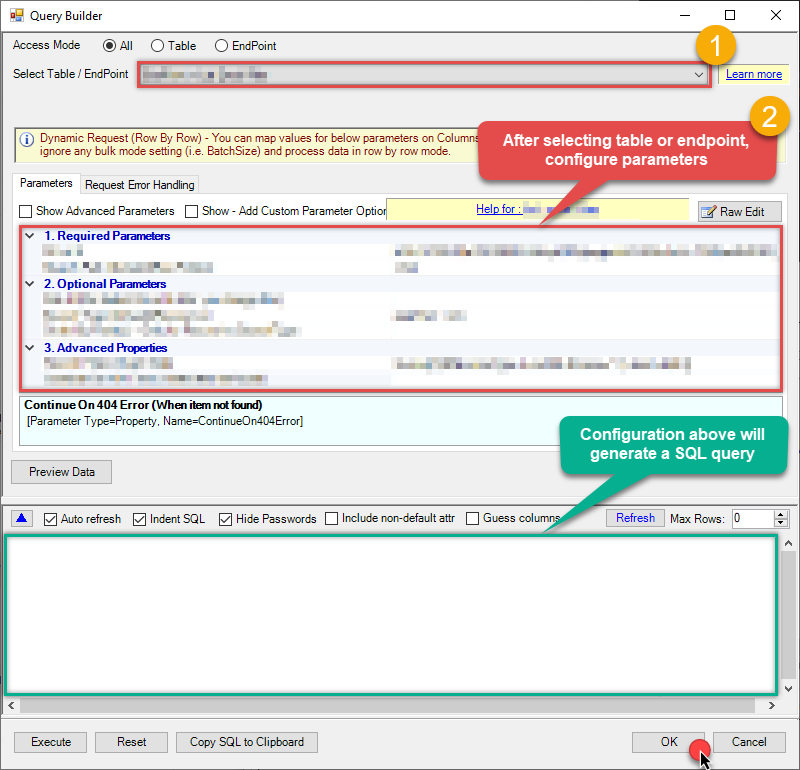 Some parameters configured in this window will be passed to the Outlook Mail (Office 365) API, e.g. filtering parameters. It means that filtering will be done on the server side (instead of the client side), enabling you to get only the meaningful data
much faster . -
Now hit Preview Data button to preview the data using the generated SQL query. If you are satisfied with the result, use this query in Qlik Cloud:
ZappySys API Driver - Outlook Mail (Office 365)Read and write Microsoft Outlook Mail (Office 365) data effortlessly. Send, manage, and sync messages, attachments, and folders — almost no coding required.OutlookMailOffice365DSNSELECT * FROM MyMessages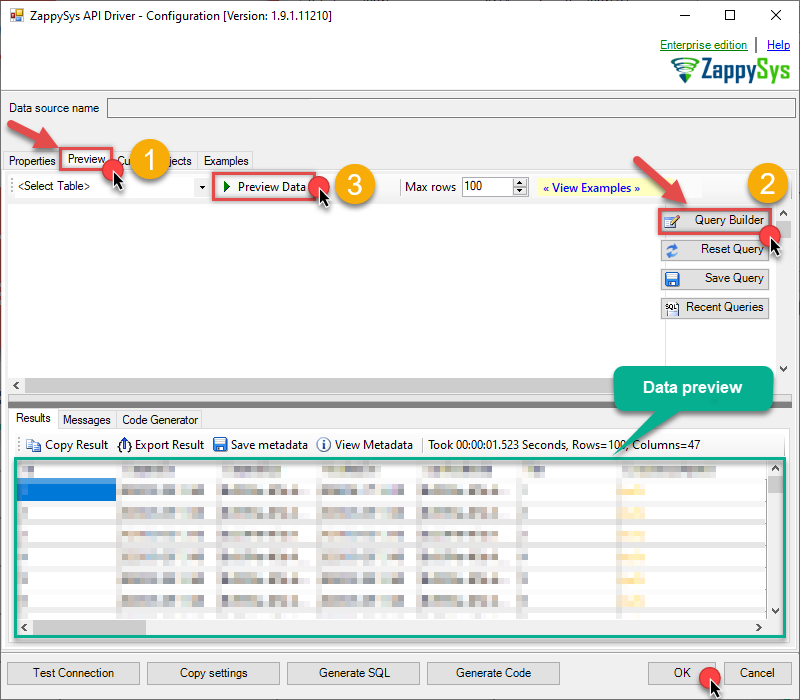 You can also access data quickly from the tables dropdown by selecting <Select table>.A
WHEREclause,LIMITkeyword will be performed on the client side, meaning that thewhole result set will be retrieved from the Outlook Mail (Office 365) API first, and only then the filtering will be applied to the data. If possible, it is recommended to use parameters in Query Builder to filter the data on the server side (in Outlook Mail (Office 365) servers). -
Click OK to finish creating the data source.
Set up Qlik Direct Access data gateway
To connect to the Outlook Mail (Office 365) data, you need a secure pipeline between your Qlik Cloud tenant and the Outlook Mail (Office 365) ODBC DSN. Let's download, deploy, and register the Qlik data gateway to make this happen.
-
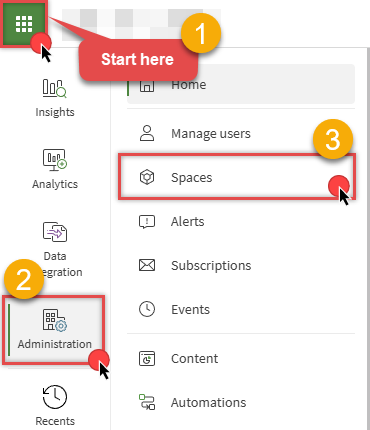
First, log into your My Qlik tenants portal and choose your tenant:
-
Navigate to Administration.
-
Select Spaces.
-
-
Create a shared space if you do not have one yet:
-
Click Create new.
-
Name shared space and confirm.
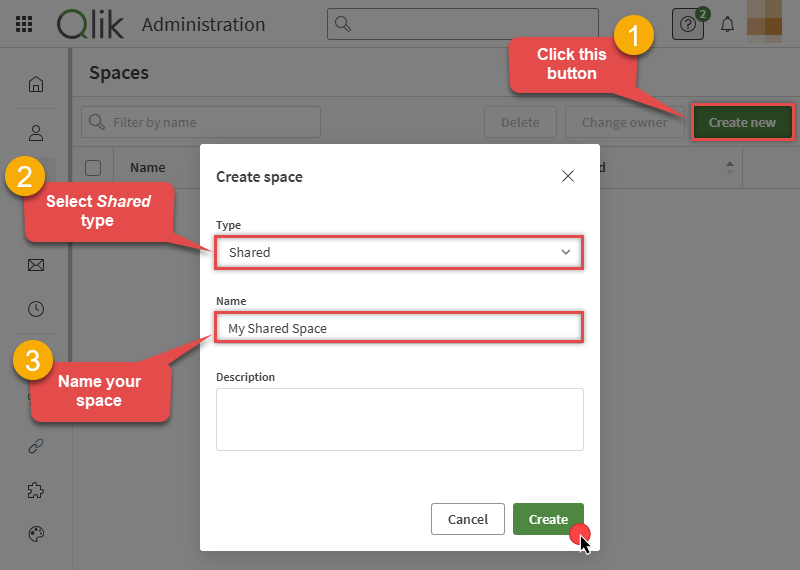
-
-
Next, let's grab the gateway installer:
-
Navigate to Administration.
-
Select Data gateways.
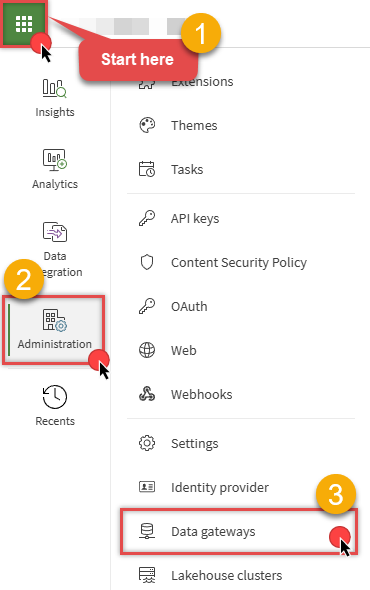
-
-
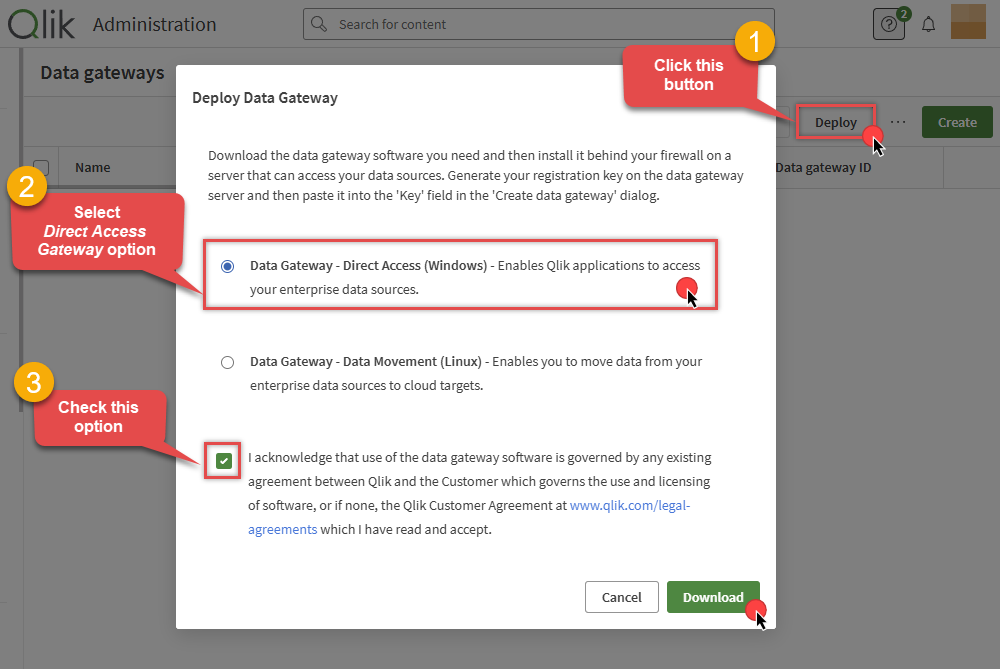
Download the gateway:
-
Click Deploy.
-
Select Data Gateway - Direct Access (Windows).
-
Check acknowledgement box.
-
Click Download.
-
-
If you are not running this locally, copy the installer to your target machine.
The ODBC PowerPack and the Qlik Direct Access gateway must be installed on the exact same machine. -
Install the Qlik Direct Access gateway.
-
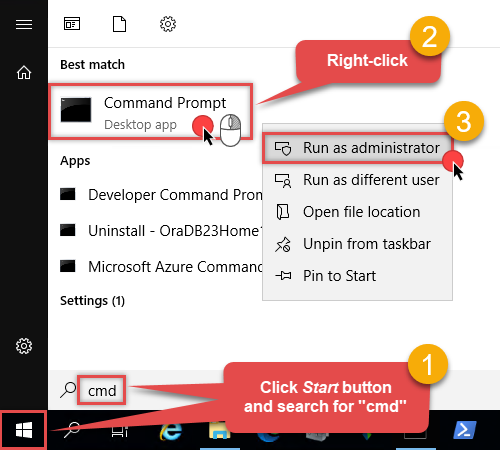
Once installed, open an elevated Command Prompt on the gateway machine:
-
Link the gateway to your tenant:
-
Navigate to ConnectorAgent directory.
-
Run tenant URL setup command.
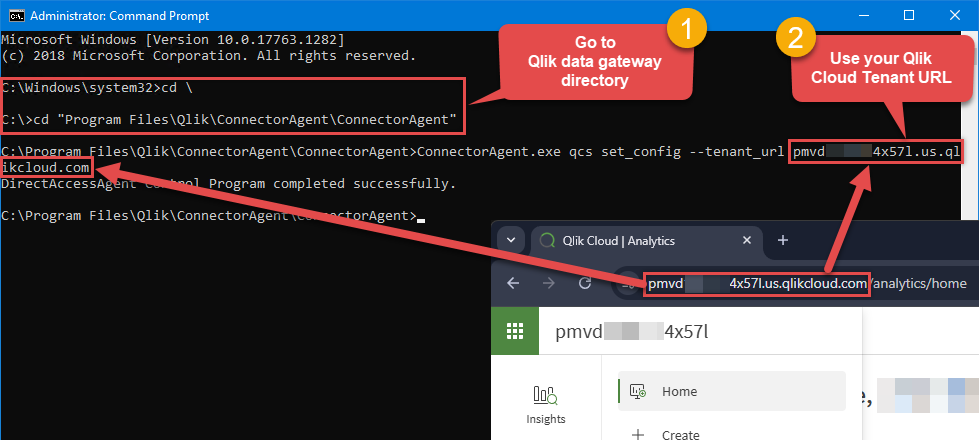
cd \ cd "Program Files\Qlik\ConnectorAgent\ConnectorAgent" ConnectorAgent.exe qcs set_config --tenant_url https://<tenant>.qlikcloud.com -
-
Generate your data gateway key:
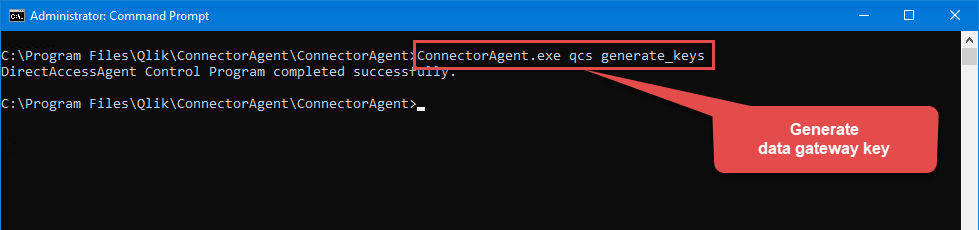
ConnectorAgent.exe qcs generate_keys -
Start the gateway service:
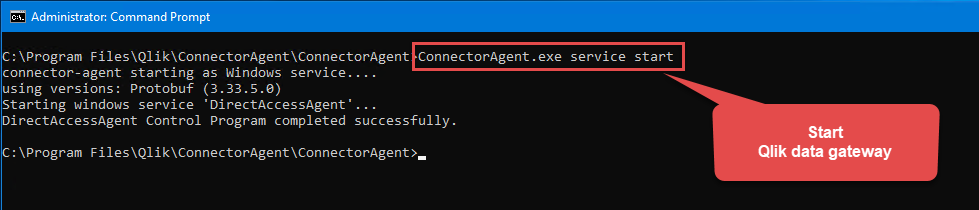
ConnectorAgent.exe service start -
Generate and copy the registration payload:
-
Run registration command.
-
Copy output text.
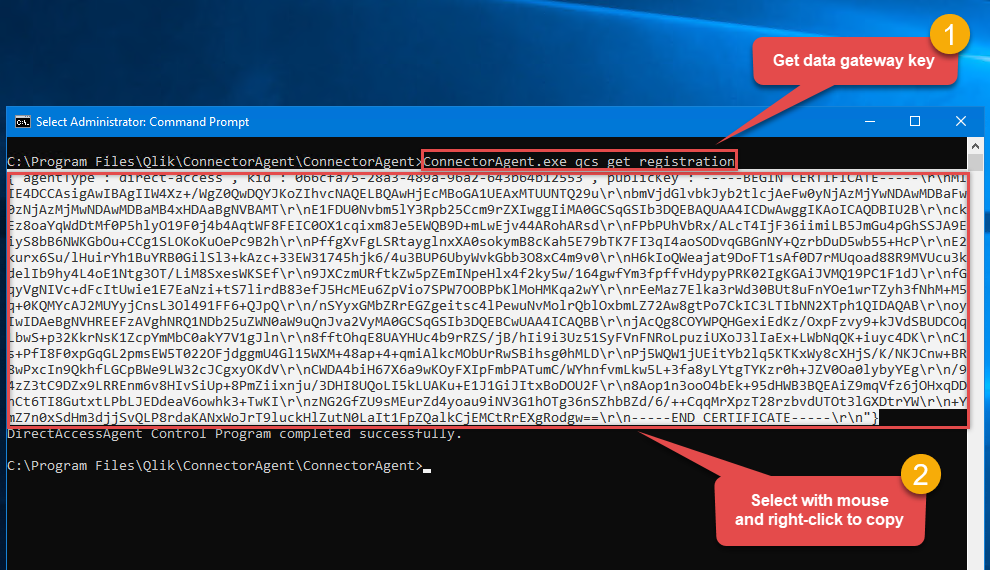
ConnectorAgent.exe qcs get_registration -
-
Now let's head back to the Qlik Cloud Administration page to complete the data gateway registration.
-
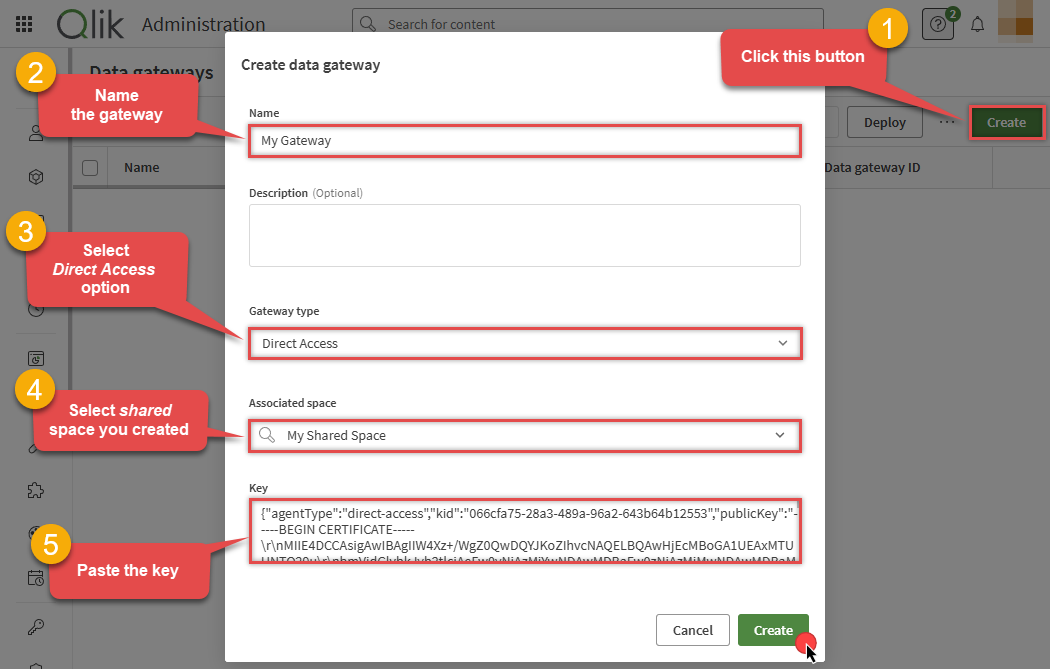
Create the gateway entry in your tenant and apply the key:
-
Name gateway.
-
Select Direct Access for Gateway type.
-
Select shared space.
-
Paste generated key.
-
Click Create.
-
-
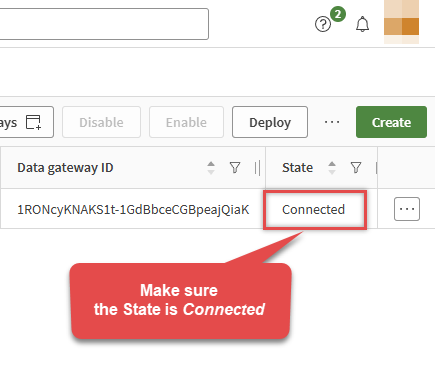
Finally, verify the status shows Connected:
Create ODBC connection in Analytics
With the gateway actively running, let's build the actual ODBC connection in Analytics.
-
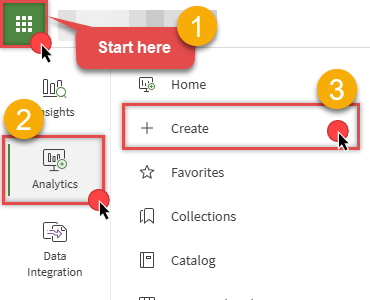
Navigate to your My Qlik tenants page, choose your tenant, select the Analytics tile, and click the Create menu item:
-
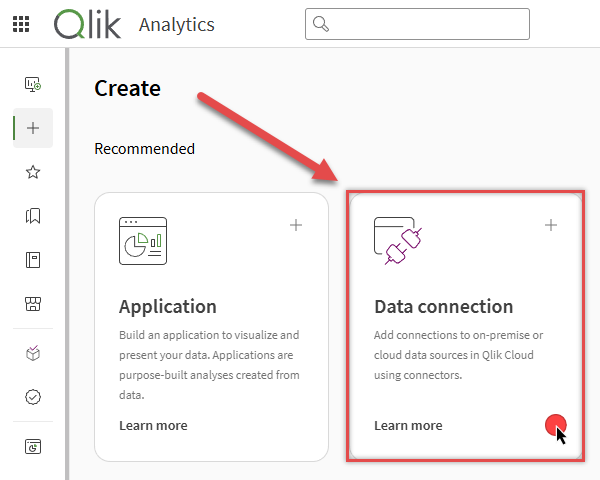
Click the Data connection tile:
-
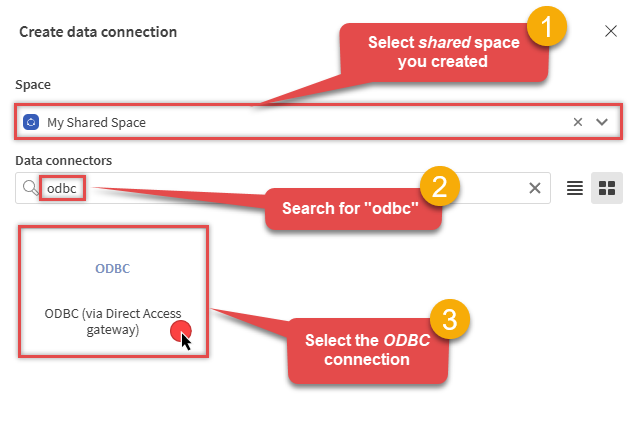
Next, let's create the ODBC data connection by selecting your shared space and finding the right connector:
-
Pick your shared space.
-
Search for odbc.
-
Choose the ODBC (via Direct Access gateway) option.
-
-
Finally, configure the ODBC connection fields to wrap up the setup:
-
Select your Data gateway.
-
Select the System DSN option.
-
Choose the ODBC source (DSN).
-
Select the DB2 SQL syntax.
-
Name the connection.
-
Click Test connection, then click Create.
OutlookMailOffice365DSN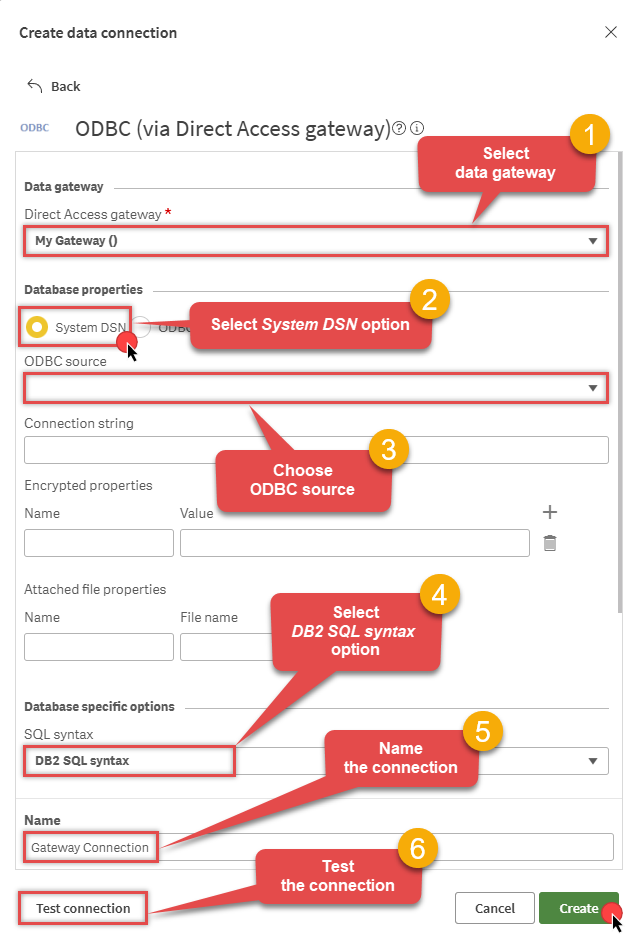
-
-
Connection is ready!
You are now successfully wired up to your Outlook Mail (Office 365) data. Let's see how to actually load it into your dashboard.
Load Outlook Mail (Office 365) data into Qlik Cloud
Depending on your specific use case, you can choose one of the two methods below to bring your data into the Qlik Cloud environment for analysis.
Use Analytics app with Data load editor
This is the best method if you need to run dynamic SQL. We will use your new gateway connection in the Data load editor to pull the data and verify it visually.
-
Navigate to your My Qlik tenants page, choose your tenant, select the Analytics tile, and click the Create menu item:
-
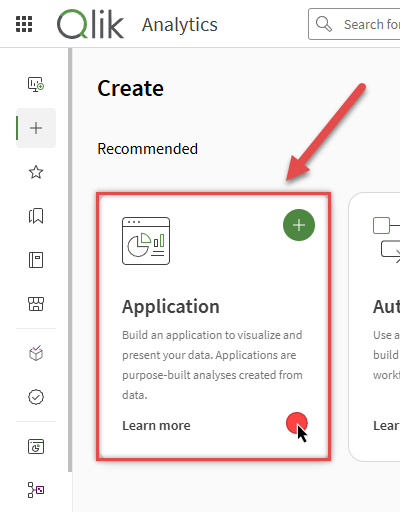
Click the Application tile to start creating a new application:
-
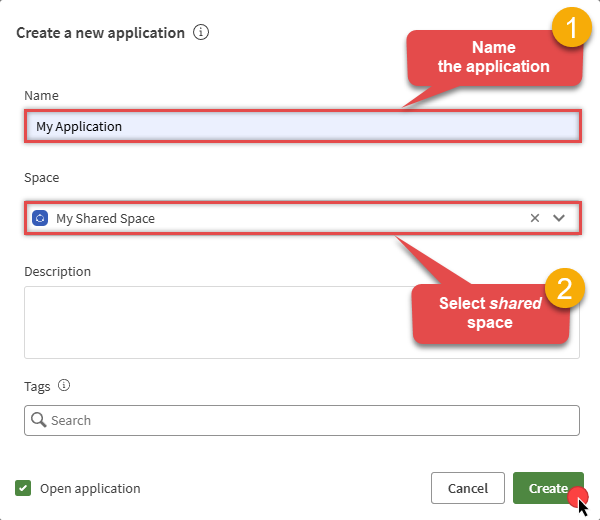
Next, create the application within your shared space:
Name the application.
Select your shared space.
Click the Create button.
-
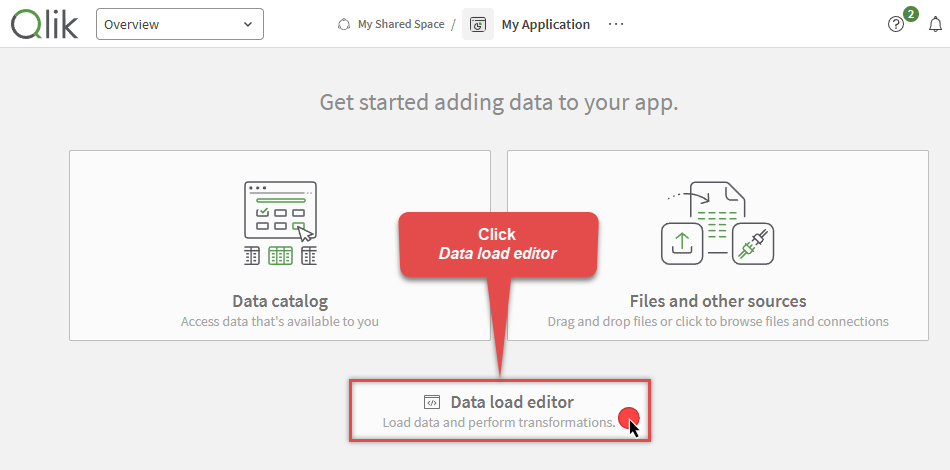
Now, open the new application and click the Data load editor option:
-
With the editor open, you can configure your DSN and SQL query before running the data load:
-
Select your shared space connection.
-
Click the gateway connection button to use the ODBC (via Direct Access gateway) option.
-
Name the table as MyData and prepare your SQL load script.
-
Click Load data.
SELECT * FROM MyMessages
        SELECT * FROM MyMessages SELECT * FROM MyMessages SELECT * FROM MyMessages SELECT * FROM MyMessagesSELECT * FROM MyMessages SELECT * FROM MyMessagesSELECT * FROM MyMessages SELECT * FROM MyMessagesSELECT * FROM MyMessages SELECT * FROM MyMessages SELECT * FROM MyMessages SELECT * FROM MyMessagesSELECT * FROM MyMessages SELECT * FROM MyMessagesSELECT * FROM MyMessages SELECT * FROM MyMessagesSELECT * FROM MyMessages SELECT * FROM MyMessages SELECT * FROM MyMessages SELECT * FROM MyMessagesSELECT * FROM MyMessages SELECT * FROM MyMessagesSELECT * FROM MyMessages SELECT * FROM MyMessagesSELECT * FROM MyMessages SELECT * FROM MyMessagesSELECT * FROM MyMessages SELECT * FROM MyMessagesSELECT * FROM MyMessages SELECT * FROM MyMessagesSELECT * FROM MyMessages SELECT * FROM MyMessagesSELECT * FROM MyMessages SELECT * FROM MyMessagesSELECT * FROM MyMessages SELECT * FROM MyMessagesSELECT * FROM MyMessages SELECT * FROM MyMessagesSELECT * FROM MyMessages SELECT * FROM MyMessagesSELECT * FROM MyMessages SELECT * FROM MyMessagesSELECT * FROM MyMessages SELECT * FROM MyMessagesSELECT * FROM MyMessages SELECT * FROM MyMessagesSELECT * FROM MyMessages SELECT * FROM MyMessagesSELECT * FROM MyMessages SELECT * FROM MyMessagesSELECT * FROM MyMessages SELECT * FROM MyMessagesSELECT * FROM MyMessages SELECT * FROM MyMessagesSELECT * FROM MyMessages SELECT * FROM MyMessagesSELECT * FROM MyMessages SELECT * FROM MyMessagesSELECT * FROM MyMessages SELECT * FROM MyMessagesSELECT * FROM MyMessages SELECT * FROM MyMessagesSELECT * FROM MyMessages SELECT * FROM MyMessagesSELECT * FROM MyMessages SELECT * FROM MyMessagesSELECT * FROM MyMessages SELECT * FROM MyMessagesSELECT * FROM MyMessages SELECT * FROM MyMessagesSELECT * FROM MyMessages SELECT * FROM MyMessagesSELECT * FROM MyMessages SELECT * FROM MyMessagesSELECT * FROM MyMessages SELECT * FROM MyMessagesSELECT * FROM MyMessages SELECT * FROM MyMessagesSELECT * FROM MyMessages SELECT * FROM MyMessagesSELECT * FROM MyMessages SELECT * FROM MyMessagesSELECT * FROM MyMessages SELECT * FROM MyMessagesSELECT * FROM MyMessages SELECT * FROM MyMessagesSELECT * FROM MyMessages SELECT * FROM MyMessagesSELECT * FROM MyMessages SELECT * FROM MyMessagesSELECT * FROM MyMessages SELECT * FROM MyMessagesSELECT * FROM MyMessages SELECT * FROM MyMessagesSELECT * FROM MyMessages SELECT * FROM MyMessagesSELECT * FROM MyMessages SELECT * FROM MyMessagesSELECT * FROM MyMessages SELECT * FROM MyMessagesSELECT * FROM MyMessages SELECT * FROM MyMessagesSELECT * FROM MyMessages SELECT * FROM MyMessagesSELECT * FROM MyMessages SELECT * FROM MyMessagesSELECT * FROM MyMessages SELECT * FROM MyMessagesSELECT * FROM MyMessages SELECT * FROM MyMessagesSELECT * FROM MyMessages SELECT * FROM MyMessagesSELECT * FROM MyMessages SELECT * FROM MyMessages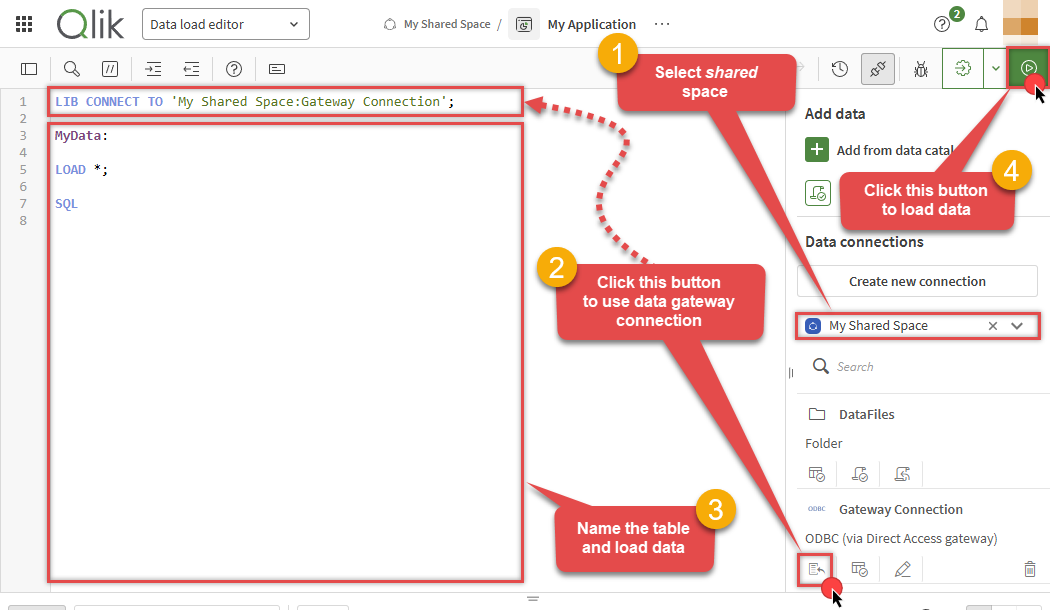
LIB CONNECT TO 'My Shared Space:Gateway Connection'; MyData: LOAD *; SQL SELECT * FROM MyMessages -
-
Once the data has successfully loaded, go to the sheet to build your dashboard:
Select the Sheet option.
Select the Fields section.
Drag and drop the fields onto the sheet to create your visuals.
MyData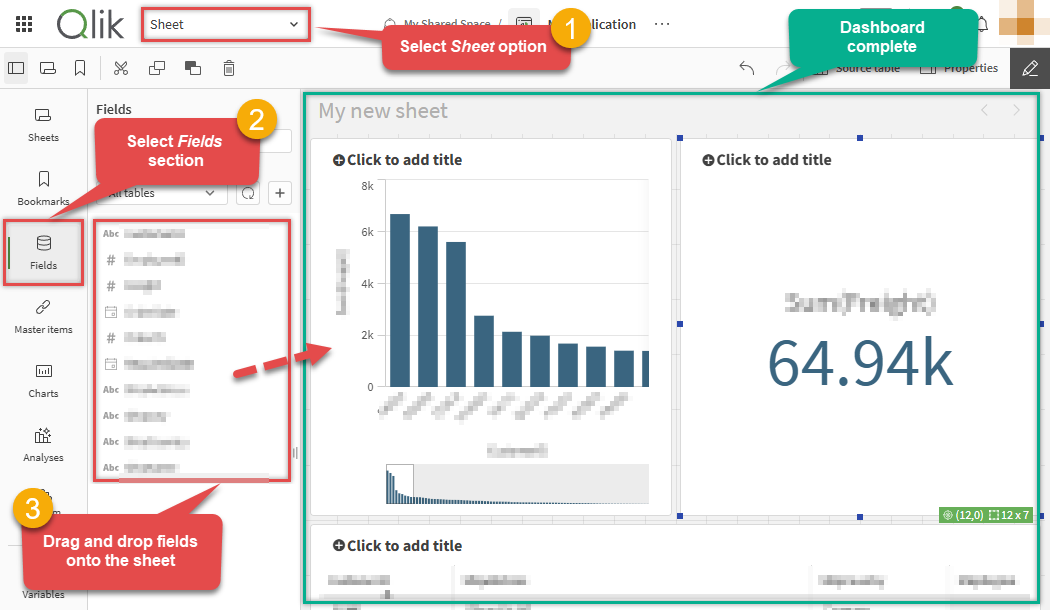
-
Your Outlook Mail (Office 365) data is now ready for analysis!
Use Data flow for data integration
Use this method if you want to build a complete source-to-destination pipeline directly inside Qlik Cloud.
-
Navigate to your My Qlik tenants page, choose your tenant, select the Analytics tile, and click the Create menu item:
-
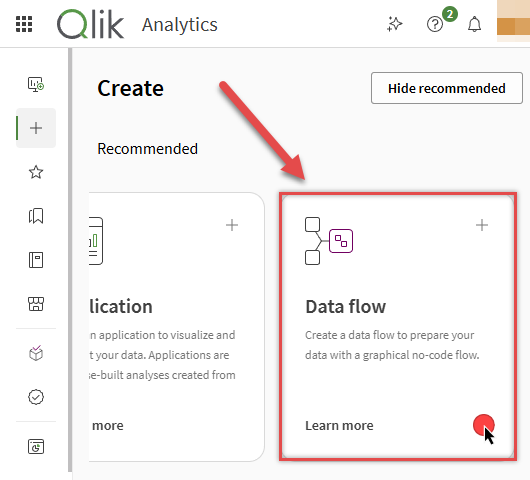
Click the Data flow tile to start building your integration:
-
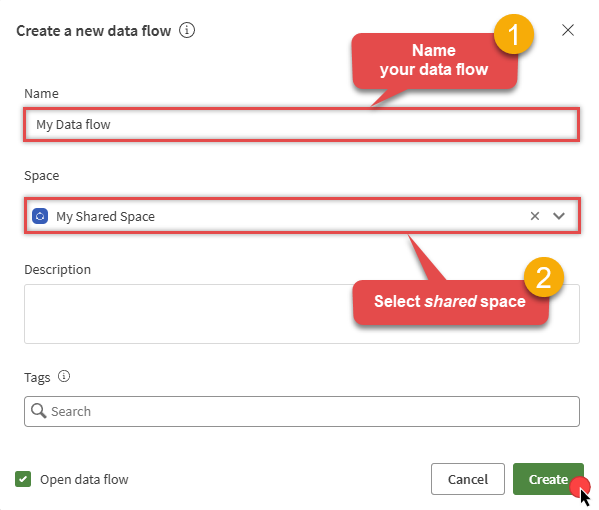
Next, create the data flow within your shared space:
Name your data flow.
Select your shared space.
Click the Create button.
-
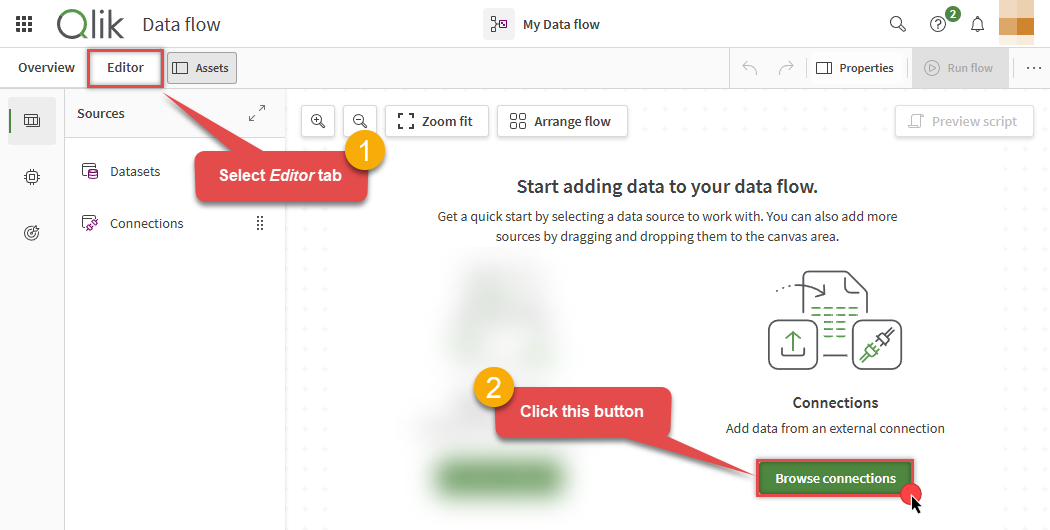
Now that the data flow is created, open the editor and browse your available connections:
Select the Editor tab.
Click the Browse connections button.
-
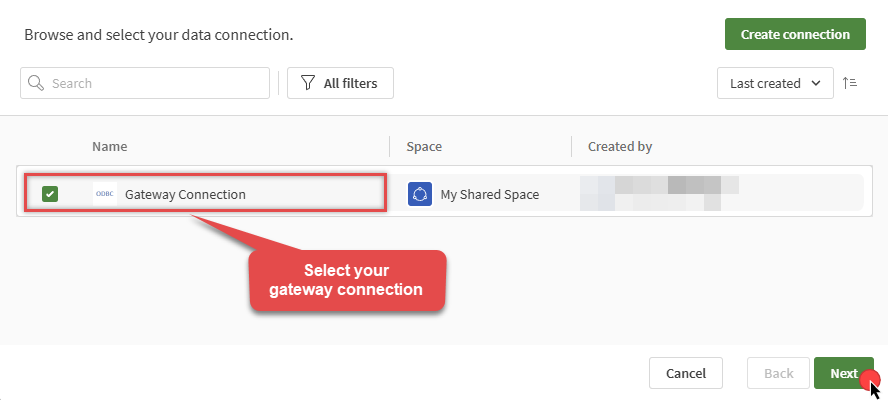
Select the gateway-backed ODBC connection we set up earlier:
Choose your gateway connection.
Click Next.
-
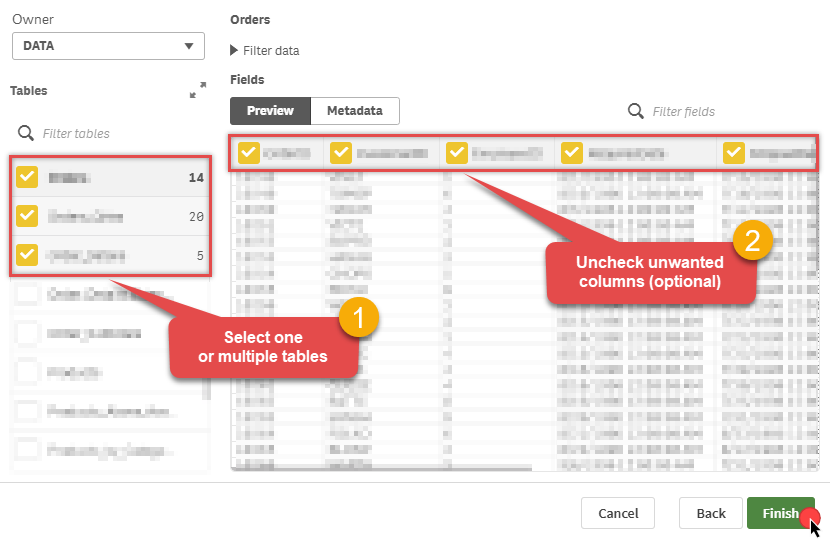
Select your source tables and the specific fields you want to import:
Select one or multiple tables.
Uncheck any unwanted columns (optional).
Click Finish.
-
Map your source and destination nodes to define the flow:
Connect the source node to the destination node.
Click Run flow to start the integration process.
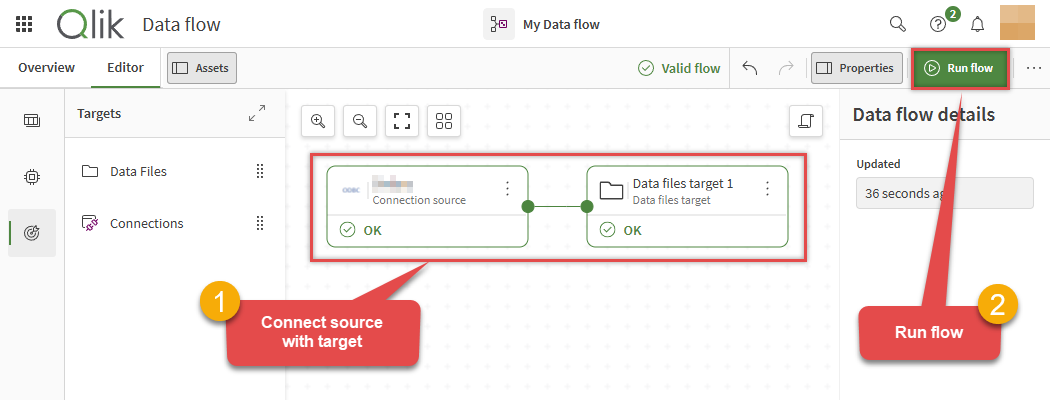
-
Wait for the successful completion message to appear:
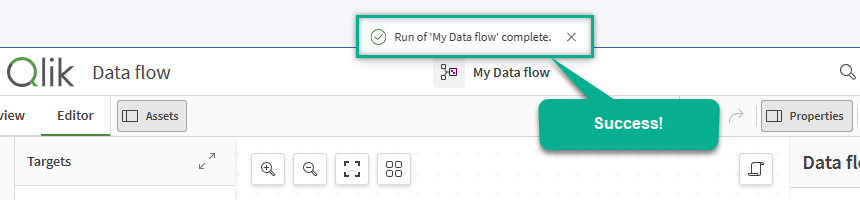
-
Your Outlook Mail (Office 365) data integration is now complete!
Outlook Mail (Office 365) Connector actions
Got a specific use case in mind? We've mapped out exactly how to perform a variety of essential Outlook Mail (Office 365) operations directly in Qlik Cloud, so you don't have to figure out the setup from scratch. Check out the step-by-step guides below:
- Get Tables
- Get Table Columns
- Get My Information
- Get Messages
- Send Mail
- Get My Mail Folders [only works with User Credentials]
- Get Mail Folder by Id [only works with User Credentials]
- Get Users
- Get User by Id
- Get Groups
- Get Group by Id
- Get Mail Folders
- Get My Messages [only works with User Credentials]
- Get My Message by Id [only works with User Credentials]
- Get Message Attachments
- Get Message Attachment
- Get Messages by Search Filters - Output binary data (EML RFC 822 / MIME)
- Get Message by Id (Single) - Output binary data (EML RFC 822 / MIME)
- Delete Message by Id (Single)
- Delete Messages - Using Search Condition (Bulk Delete)
- Download Message by Id (Single *.EML File RFC 822 / MIME)
- Download Messages by Search Condition (Multiple *.EML Files RFC 822 / MIME)
- Download Message Attachment (Single File)
- Download Message Attachments (Multiple Files) - Using Search Condition
- Make Generic REST API Request
- Make Generic REST API Request (Bulk Write)
Optional: Centralized data access via ZappySys Data Gateway
In some situations, you may need to provide Outlook Mail (Office 365) data access to multiple users or services. Configuring the data source on a Data Gateway creates a single, centralized connection point for this purpose.
This configuration provides two primary advantages:
-
Centralized data access
The data source is configured once on the gateway, eliminating the need to set it up individually on each user's machine or application. This significantly simplifies the management process.
-
Centralized access control
Since all connections route through the gateway, access can be governed or revoked from a single location for all users.
| Data Gateway |
Local ODBC
data source
|
|
|---|---|---|
| Simple configuration | ||
| Installation | Single machine | Per machine |
| Connectivity | Local and remote | Local only |
| Connections limit | Limited by License | Unlimited |
| Central data access | ||
| Central access control | ||
| More flexible cost |
To achieve this, you must first create a data source in the Data Gateway (server-side) and then create an ODBC data source in Qlik Cloud (client-side) to connect to it.
Let's not wait and get going!
Create Outlook Mail (Office 365) data source in the gateway
In this section we will create a data source for Outlook Mail (Office 365) in the Data Gateway. Let's follow these steps to accomplish that:
-
Search for
gatewayin the Windows Start Menu and open ZappySys Data Gateway Configuration: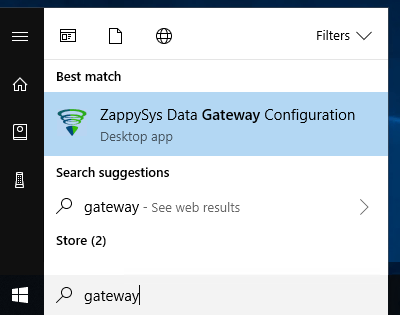
-
Go to the Users tab and follow these steps to add a Data Gateway user:
- Click the Add button
-
In the Login field enter a username, e.g.,
john - Then enter a Password
- Check the Is Administrator checkbox
- Click OK to save
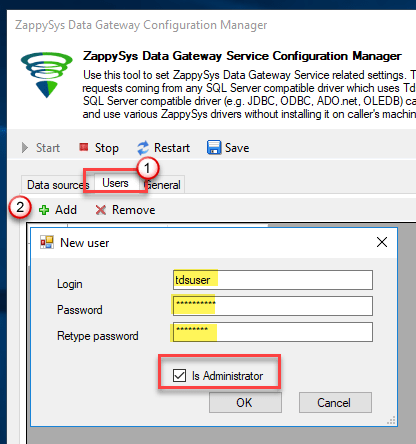
-
Now we are ready to add a data source:
- Click the Add button
- Give the Data source a name (have it handy for later)
- Then select Native - ZappySys API Driver
- Finally, click OK
OutlookMailOffice365DSNZappySys API Driver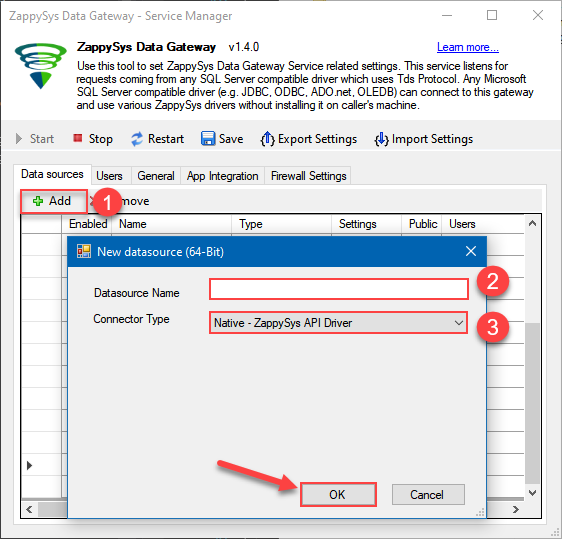
-
When the ZappySys API Driver configuration window opens, go back to ODBC Data Source Administrator where you already have the Outlook Mail (Office 365) ODBC data source created and configured, and follow these steps on how to Import data source configuration into the Gateway:
-
Open ODBC data source configuration and click Copy settings:
 ZappySys API Driver - Outlook Mail (Office 365)Read and write Microsoft Outlook Mail (Office 365) data effortlessly. Send, manage, and sync messages, attachments, and folders — almost no coding required.OutlookMailOffice365DSN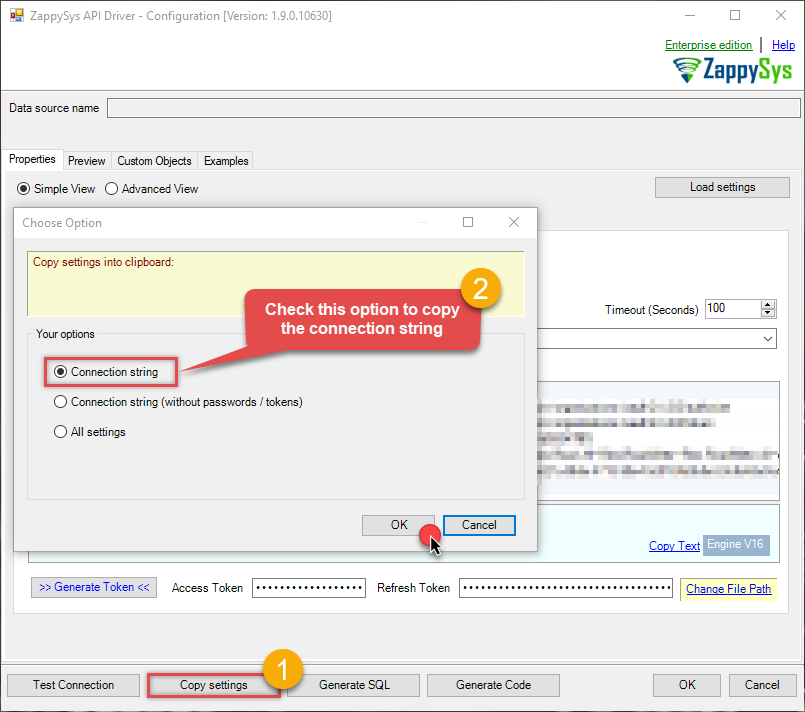
-
The window opens, telling us the connection string was successfully copied to the clipboard:
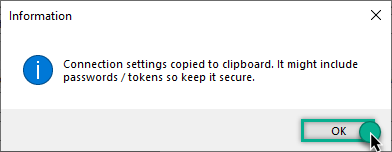
-
Then go to Data Gateway configuration and in data source configuration window click Load settings:
OutlookMailOffice365DSN
ZappySys API Driver - Configuration [Version: 2.0.1.10418]ZappySys API Driver - Outlook Mail (Office 365)Read and write Microsoft Outlook Mail (Office 365) data effortlessly. Send, manage, and sync messages, attachments, and folders — almost no coding required.OutlookMailOffice365DSN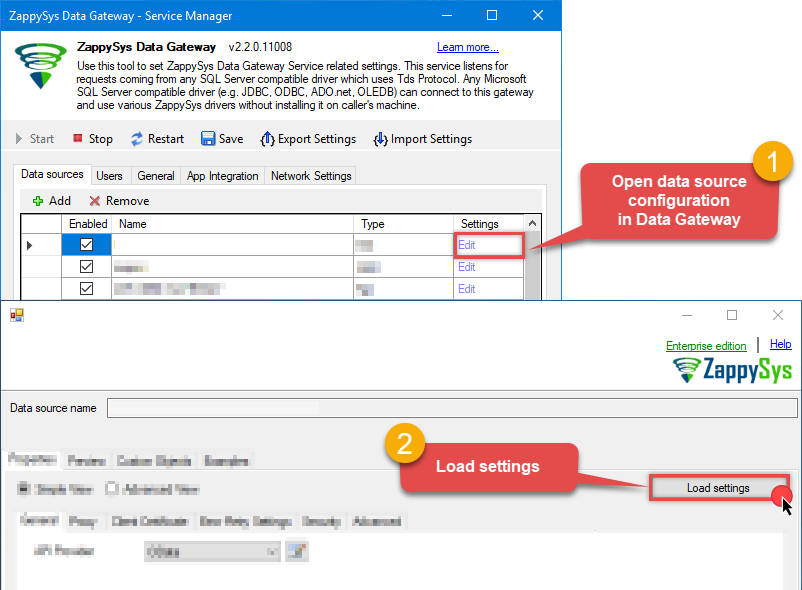
-
Once a window opens, just paste the settings by pressing
CTRL+Vor by clicking right mouse button and then Paste option.
-
Open ODBC data source configuration and click Copy settings:
-
Once done, go to the Network Settings tab and Add a firewall rule for inbound traffic:
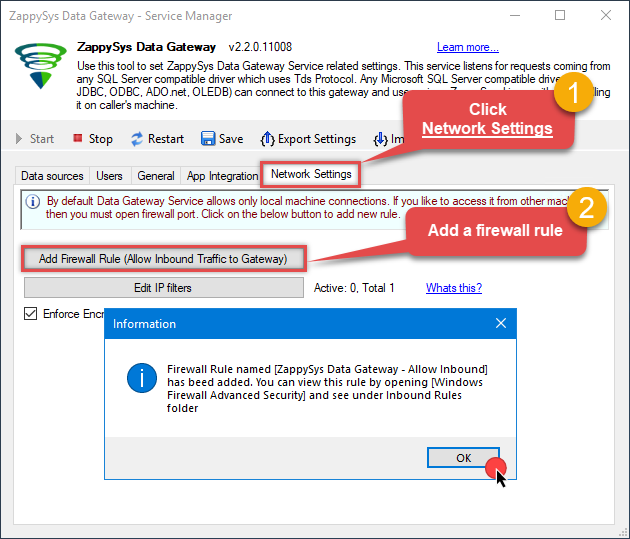
- This will initially allow all inbound traffic.
- Click Edit IP filters to restrict access to specific IP addresses or ranges.
-
Crucial Step: After creating or modifying the data source, you must:
- Click the Save button to persist your changes.
- Hit Yes when prompted to restart the Data Gateway service.
This ensures all changes are properly applied:
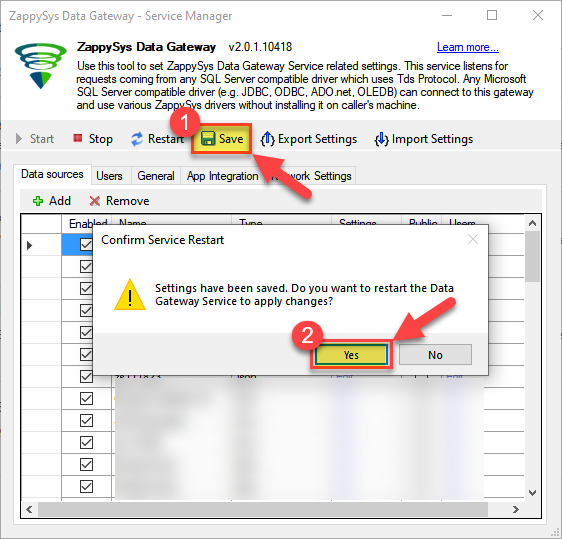 Skipping this step may cause the new settings to fail, preventing you from connecting to the data source.
Create ODBC data source to connect to the gateway
In this part we will create an ODBC data source to connect to the ZappySys Data Gateway from Qlik Cloud. To achieve that, let's perform these steps:
-
Search for
odbcand open the ODBC Data Sources (64-bit):
-
Create a User data source (User DSN) based on the ODBC Driver 17 for SQL Server driver:
ODBC Driver 17 for SQL Server
If you don't see the ODBC Driver 17 for SQL Server driver in the list, choose a similar version. -
Then set a Name for the data source (e.g.
Gateway) and the address of the Data Gateway:ZappySysGatewayDSNlocalhost,5000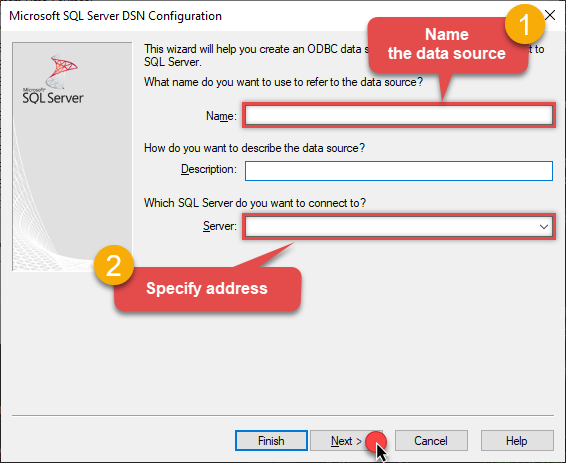 Make sure you separate the hostname and port with a comma, e.g.
localhost,5000. -
Proceed with the authentication part:
- Select SQL Server authentication
-
In the Login ID field enter the user name you created in the Data Gateway, e.g.,
john - Set Password to the one you configured in the Data Gateway
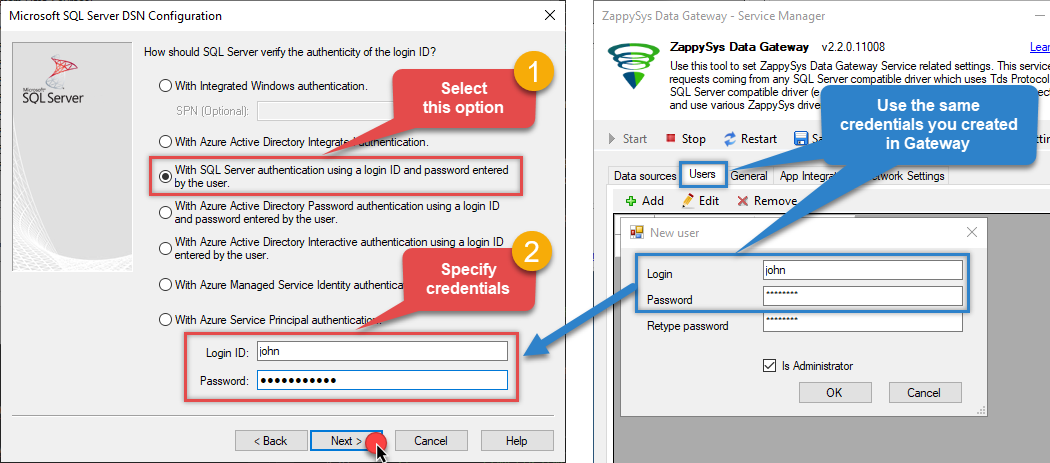
-
Then set the default database property to
OutlookMailOffice365DSN(the one we used in the Data Gateway):OutlookMailOffice365DSNOutlookMailOffice365DSN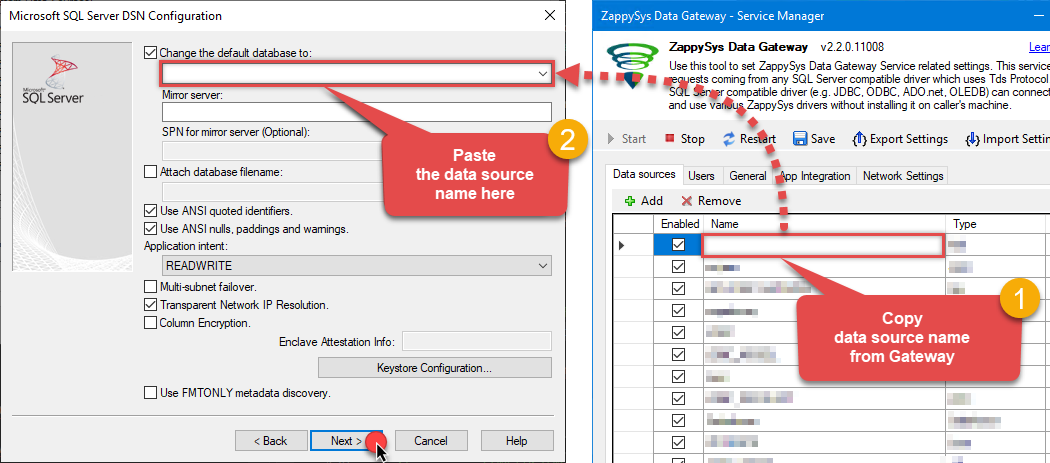 Make sure to type the data source name manually or copy/paste it directly into the field. Using the dropdown might fail because the Trust server certificate option is not enabled yet (next step).
 -
Continue by checking the Trust server certificate option:
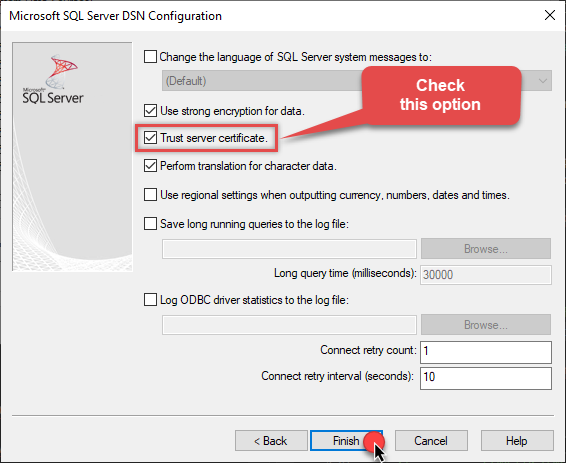
-
Once you do that, test the connection:
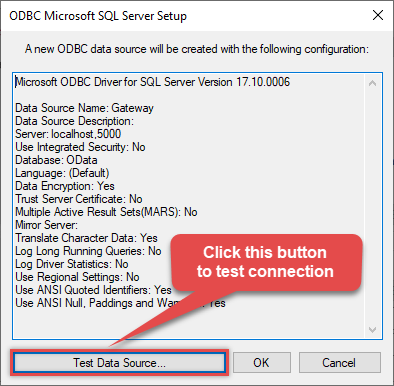
-
If the connection is successful, everything is good:
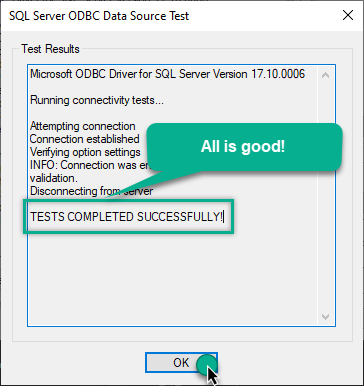
-
Done!
We are ready to move to the final step. Let's do it!
Access data in Qlik Cloud via the gateway
Finally, we are ready to read data from Outlook Mail (Office 365) in Qlik Cloud via the Data Gateway. Follow these final steps:
-
Go back to Qlik Cloud.
-
Navigate to your My Qlik tenants page, choose your tenant, select the Analytics tile, and click the Create menu item:
-
Click the Data connection tile:
-
Next, let's create the ODBC data connection by selecting your shared space and finding the right connector:
-
Pick your shared space.
-
Search for odbc.
-
Choose the ODBC (via Direct Access gateway) option.
-
-
Finally, configure the ODBC connection fields to wrap up the setup:
-
Select your Data gateway.
-
Select the System DSN option.
-
Choose the ODBC source (DSN).
-
Select the DB2 SQL syntax.
-
Name the connection.
-
Click Test connection, then click Create.
ZappySysGatewayDSN
-
-
Read the data the same way we discussed at the beginning of this article.
-
That's it!
Now you can connect to Outlook Mail (Office 365) data in Qlik Cloud via the ZappySys Data Gateway.
john and your password.
Conclusion
In this guide, we demonstrated how to connect to Outlook Mail (Office 365) in Qlik Cloud and integrate your data — all without writing complex code.
Ready to get started? Download ODBC PowerPack now or ping us via chat if you still need help: