

Table Requests
Description
No description available
Supported Operations
Below section contains supported CRUD operations. Each operation is executed by some EndPoint behind the scene.| Method | Supported | Reference EndPoint |
|---|---|---|
| SELECT | get_requests | |
| INSERT | ||
| UPDATE | ||
| UPSERT | ||
| DELETE | delete_request | |
| LOOKUP | get_request_details |
Examples
SSIS
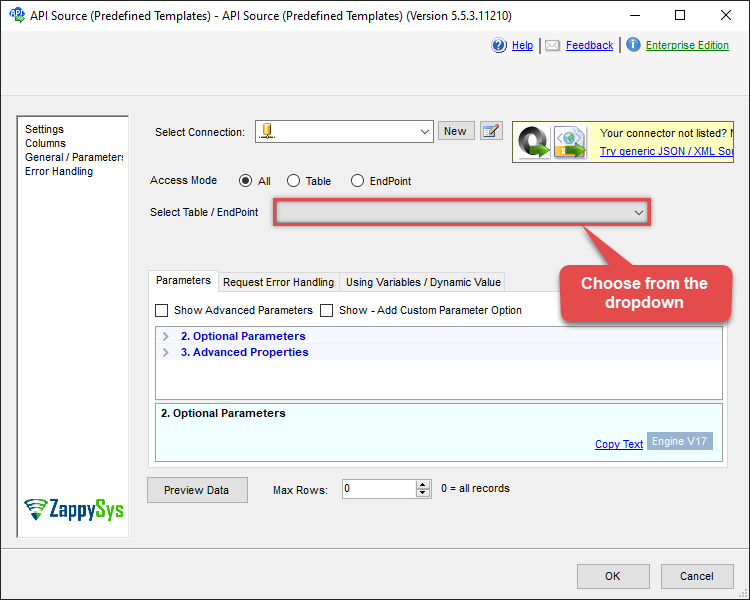
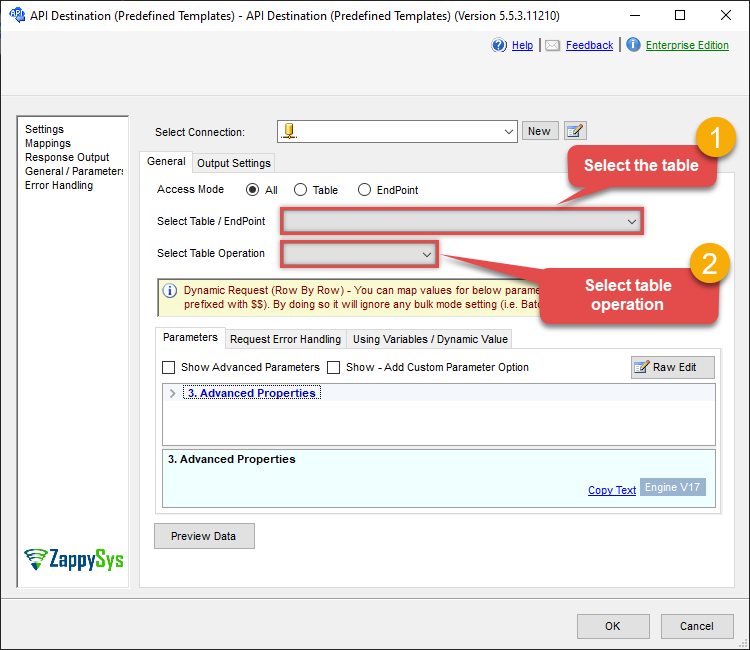
Use ManageEngine ServiceDesk Plus (Zoho) Connector in API Source component to read data or in API Destination component to read/write data:
Read from Requests table using API Source

| Optional Parameters | |
|---|---|
| MetaDetectionOrder | Default |
Read/write to Requests table using API Destination
| Optional Parameters | |
|---|---|
| MetaDetectionOrder | Default |
ODBC application
Use these SQL queries in your ODBC application data source:
Read requests
<p>Reads all requests from the ServiceDesk Plus instance. This example retrieves a list of requests, including their basic details such as subject, requester, and status.</p> <p>The <code>Requests</code> table provides access to the ticketing system's core data, allowing you to monitor and analyze incoming support requests.</p>
SELECT * FROM RequestsRead request by ID
<p>Reads detailed information about a specific request identified by its unique ID. This query returns extended properties that might not be available in the list view.</p> <p>Use the <code>WHERE id=...</code> clause to filter for a single request. Replace <code>111112345</code> with the actual request ID you wish to inspect.</p>
SELECT * FROM Requests WHERE id=111112345Delete request
<p>Deletes a specific request from the system based on its unique ID. This action permanently removes the request record.</p> <p>Ensure you have the correct ID before executing this command, as the operation cannot be undone. Replace <code>111112345</code> with the target request ID.</p>
DELETE FROM Requests WHERE id=111112345SQL Server
Use these SQL queries in SQL Server after you create a data source in Data Gateway:
Read requests
<p>Reads all requests from the ServiceDesk Plus instance. This example retrieves a list of requests, including their basic details such as subject, requester, and status.</p> <p>The <code>Requests</code> table provides access to the ticketing system's core data, allowing you to monitor and analyze incoming support requests.</p>
DECLARE @MyQuery NVARCHAR(MAX) = 'SELECT * FROM Requests';

EXEC (@MyQuery) AT [LS_TO_MANAGEENGINE_SERVICEDESK_PLUS_ZOHO_IN_GATEWAY];
Read request by ID
<p>Reads detailed information about a specific request identified by its unique ID. This query returns extended properties that might not be available in the list view.</p> <p>Use the <code>WHERE id=...</code> clause to filter for a single request. Replace <code>111112345</code> with the actual request ID you wish to inspect.</p>
DECLARE @MyQuery NVARCHAR(MAX) = 'SELECT * FROM Requests WHERE id=111112345';

EXEC (@MyQuery) AT [LS_TO_MANAGEENGINE_SERVICEDESK_PLUS_ZOHO_IN_GATEWAY];
Delete request
<p>Deletes a specific request from the system based on its unique ID. This action permanently removes the request record.</p> <p>Ensure you have the correct ID before executing this command, as the operation cannot be undone. Replace <code>111112345</code> with the target request ID.</p>
DECLARE @MyQuery NVARCHAR(MAX) = 'DELETE FROM Requests WHERE id=111112345';

EXEC (@MyQuery) AT [LS_TO_MANAGEENGINE_SERVICEDESK_PLUS_ZOHO_IN_GATEWAY];