
Introduction
You can connect to your CSV data from Alteryx via the high-performance CSV ODBC Driver. We'll walk you through the entire setup.
Let's not waste time and get started!
Create data source using CSV ODBC Driver
Step-by-step instructions
To get data from CSV using Alteryx, we first need to create an ODBC data source. We will later read this data in Alteryx. Perform these steps:
-
Download and install ODBC PowerPack (if you haven't already).
-
Search for
odbcand open the ODBC Data Sources (64-bit):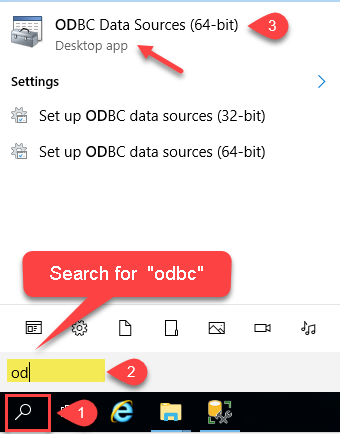
-
Create a User data source (User DSN) based on the ZappySys CSV Driver driver:
ZappySys CSV Driver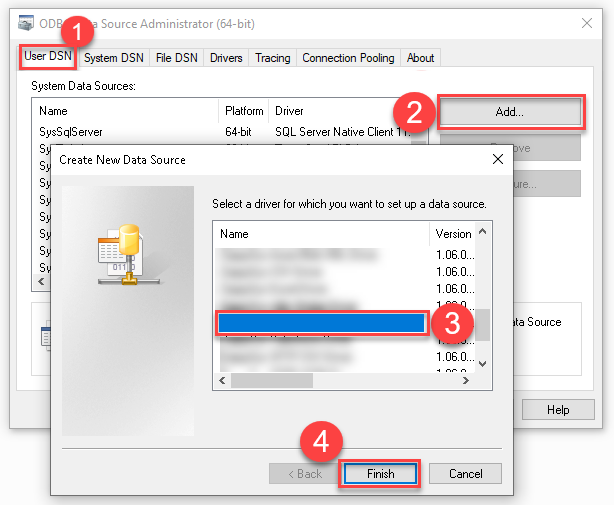
- Create and use a User DSN if the client application runs under a User Account. This is the ideal option at design time (e.g., when developing in Visual Studio). Use it for both types of applications (64-bit and 32-bit).
- Create and use a System DSN if the client application runs under a System Account (e.g., as a Windows Service). This is usually the required option in a production environment. If your Windows Service is a 32-bit application, you must use the 32-bit ODBC Data Source Administrator to configure this
-
Select Url or File.
Read CSV API in Alteryx
-
Paste the following Url. In this example, We are using Zip format CSV File URL, but you need to refer your CSV File/URL.
https://zappysys.com/downloads/files/test/cust-1.csv.zipClick on Test Connection button to view whether the Test Connection is SUCCESSFUL or Not.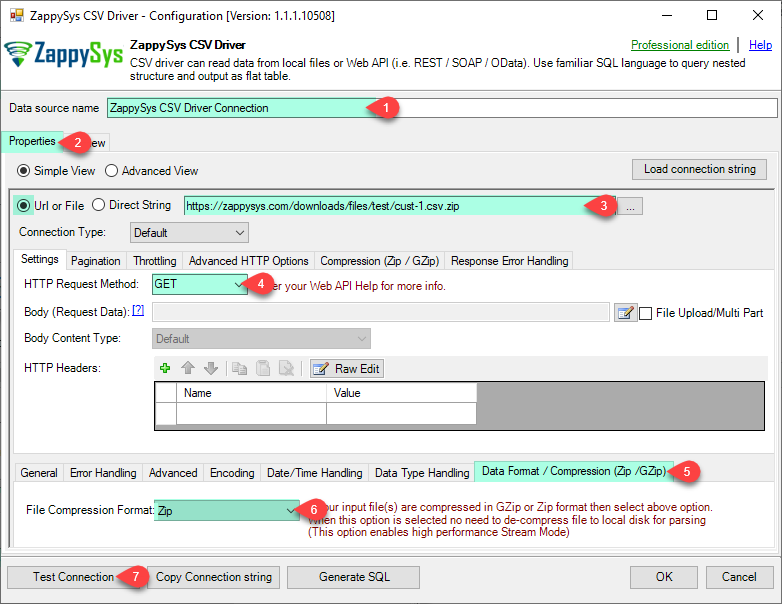
Read CSV File in Alteryx
-
You can use pass single file or multiple file path using wildcard pattern in path and you can use select single file by clicking [...] path button or multiple file using wildcard pattern in path.
Note: If you want to operation with multiple files then use wild card pattern as below
(when you use wild card pattern in source path then system will treat target path as folder regardless you end with slash)

C:\SSIS\Test\reponse.csv (will read only single reponse.csv file)
C:\SSIS\Test\j*.csv (all files starting with file name j)
C:\SSIS\Test\*.csv (all files with .csv Extension and located under folder subfolder)
Click on Test Connection button to view whether the Test Connection is SUCCESSFUL or Not.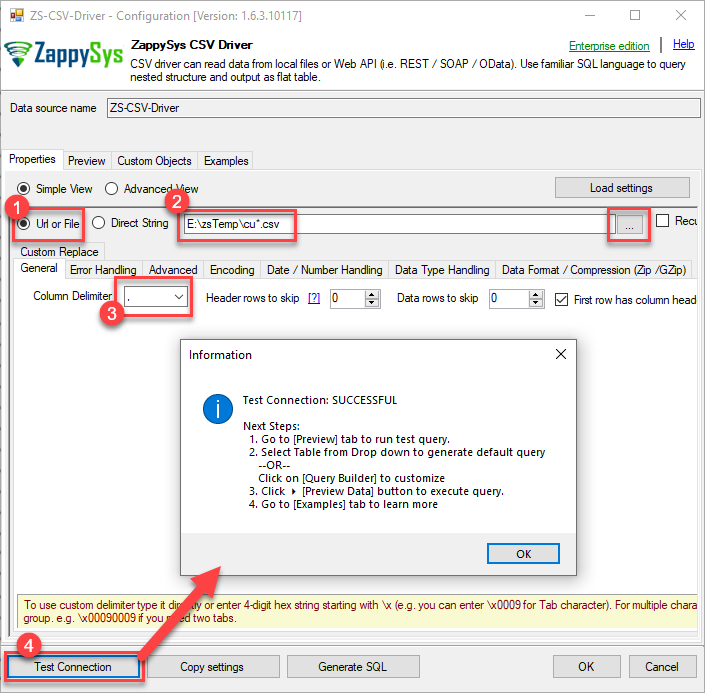
-
-
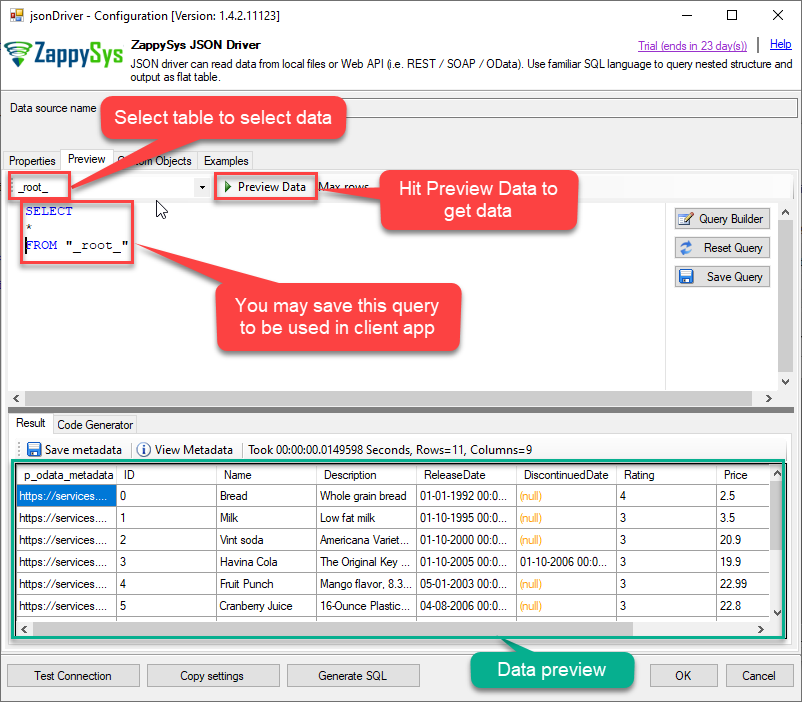
Once you configured a data source, you can preview data. Hit Preview tab, and use similar settings to preview data:
-
Click OK to finish creating the data source
-
That's it; we are done. In a few clicks we configured the read the CSV data using ZappySys CSV Connector.
Read CSV data in Alteryx Designer (workstation)
Here we will be reading CSV data on your workstation using Alteryx Designer. Follow the steps below to connect via ODBC and run your workflow locally.
-
Open Alteryx Designer.
-
First, verify your DCM Settings to ensure you can access ODBC drivers. Go to Options > User Settings > Edit User Settings.
If DCM Mode is set to DCM Only, change it to DCM Optional if you would like to access the legacy Generic ODBC Connection.
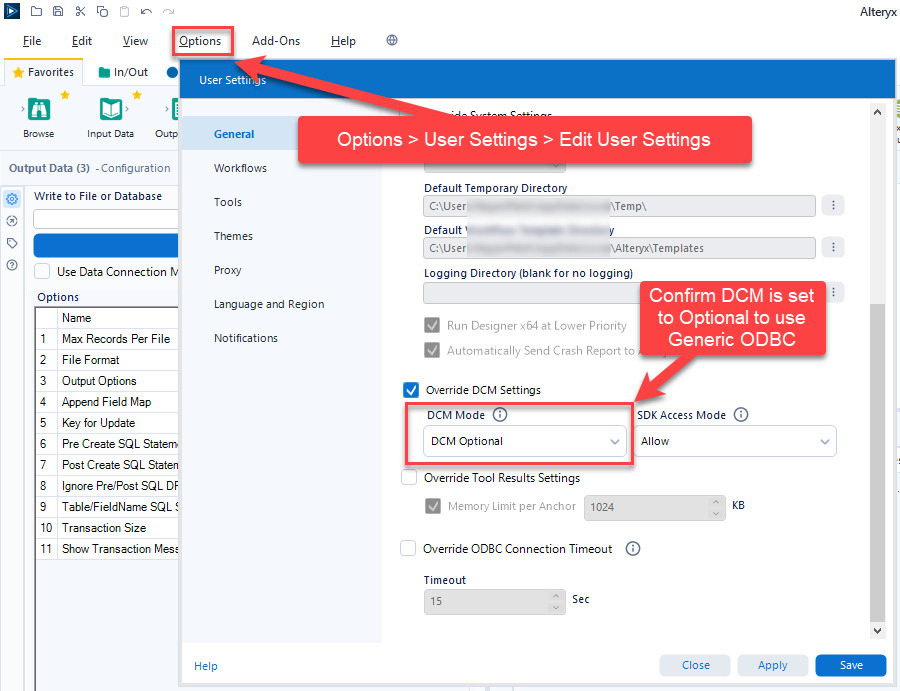 After changing this setting, you may need to click Save and restart the connection window for the "Generic ODBC" icon to appear.
 -
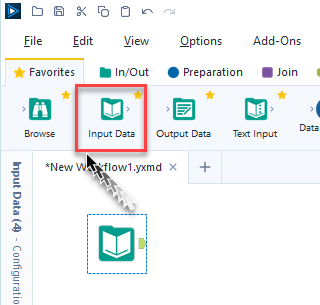
Drag an Input Data tool onto your Alteryx canvas.
-
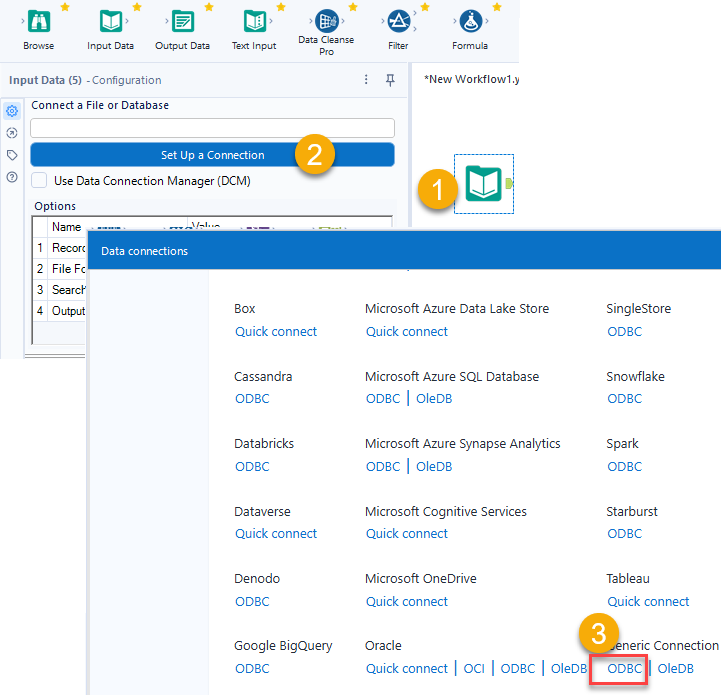
In the Configuration pane, click Set Up a Connection.
-
Note for DCM Users: If your environment has DCM (Data Connection Manager) enabled, the classic "Generic ODBC" icon may be hidden. To find it, select Data sources on the left and type "ODBC" in the search bar.
-
Once the ODBC window opens, click Connect Asset and select your CsvDSN DSN from the list.
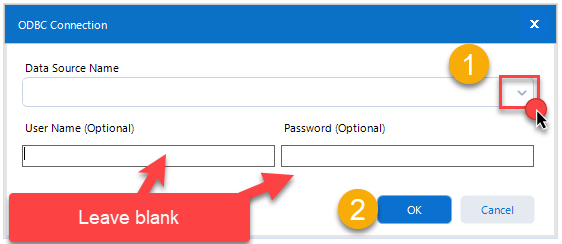 Ensure you have configured a 64-bit System DSN in the Windows ODBC Data Source Administrator before this step.
 -
After selecting your DSN, configure your SQL Query in the Input Data tool configuration:
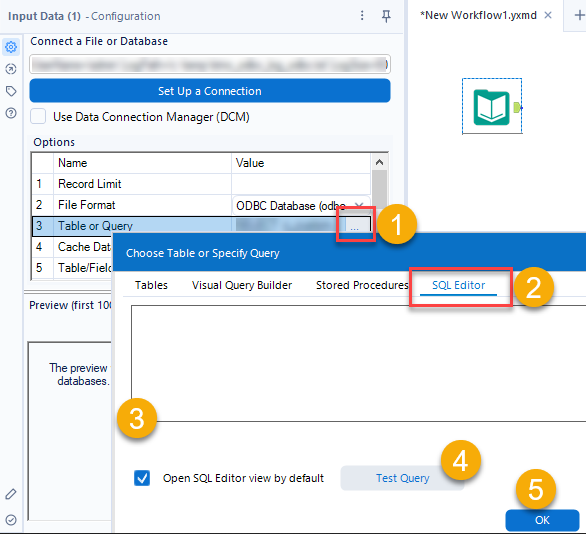
-
To save your data, drag an Output Data tool and connect it to the Input Data tool.
-
Configure the Output Data tool to write to a CSV file:
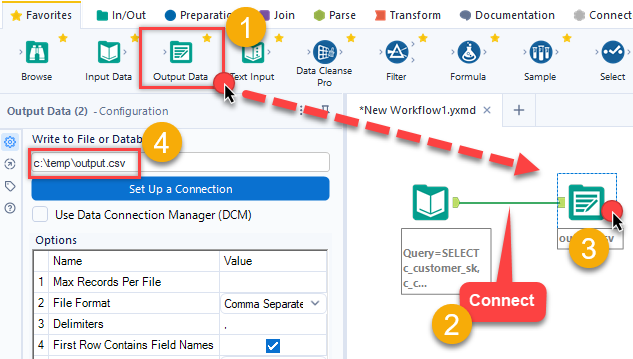
-
Press Run (Ctrl+R) to execute the workflow. Verify the results in the Results Window at the bottom.
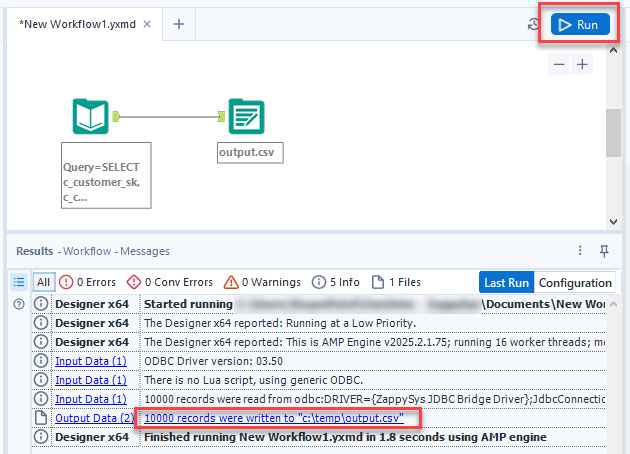
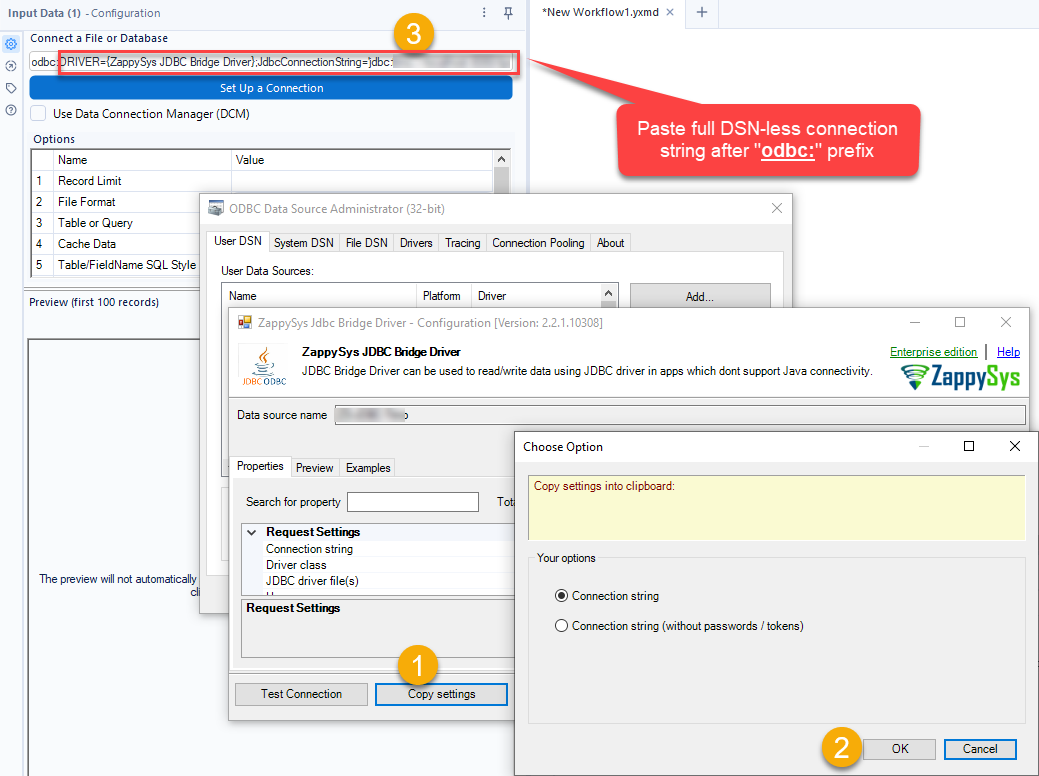
Using DSN-less Connection String
If you prefer to use a DSN-less connection string instead of creating an ODBC data source in Alteryx, you can enter the connection string directly in the Input Data tool's connection setup:
Deploy workflow and run on server (e.g. Alteryx Server)
To run your Alteryx workflow on a server (e.g. Alteryx Server or a machine used for scheduled runs), install ZappySys ODBC PowerPack and configure the same DSN on that server so the workflow can connect to CSV data.
- On the server where the workflow will run, download and install ODBC PowerPack (v2.2.1 or higher for Alteryx support).
- Open ODBC Data Sources (64-bit) on the server and create a System DSN with the same name and settings as on your workstation (use the same driver and connection configuration). An easy way to copy your workstation DSN settings to the server is described in How to copy ODBC DSN or Data Gateway settings to another server (use Copy Settings on the workstation, then Load settings on the server).
- Deploy or publish your workflow to the server (e.g. upload to Alteryx Server or copy the workflow to the server).
- Run the workflow on the server; it will use the DSN you created in step 2 to connect to CSV.
Configuring pagination in the CSV Driver
ZappySys CSV Driver equips users with powerful tools for seamless data extraction and management from REST APIs, leveraging advanced pagination methods for enhanced efficiency. These options are designed to handle various types of pagination structures commonly used in APIs. Below are the detailed descriptions of these options:
Page-based Pagination: This method works by retrieving data in fixed-size pages from the Rest API. It allows you to specify the page size and navigate through the results by requesting different page numbers, ensuring that you can access all the data in a structured manner.
Offset-based Pagination: With this approach, you can extract data by specifying the starting point or offset from which to begin retrieving data. It allows you to define the number of records to skip and fetch subsequent data accordingly, providing precise control over the data extraction process.
Cursor-based Pagination: This technique involves using a cursor or a marker that points to a specific position in the dataset. It enables you to retrieve data starting from the position indicated by the cursor and proceed to subsequent segments, ensuring that you capture all the relevant information without missing any records.
Token-based Pagination: In this method, a token serves as a unique identifier for a specific data segment. It allows you to access the next set of data by using the token provided in the response from the previous request. This ensures that you can systematically retrieve all the data segments without duplication or omission.
Utilizing these comprehensive pagination features in the ZappySys CSV Driver facilitates efficient data management and extraction from REST APIs, optimizing the integration and analysis of extensive datasets.
For more detailed steps, please refer to this link: How to do REST API Pagination in SSIS / ODBC Drivers
Authentication
ZappySys offers various authentication methods to securely access data from various sources. These authentication methods include OAuth, Basic Authentication, Token-based Authentication, and more, allowing users to connect to a wide range of data sources securely.
ZappySys Authentication is a robust system that facilitates secure access to data from a diverse range of sources. It includes a variety of authentication methods tailored to meet the specific requirements of different data platforms and services. These authentication methods may involve:
OAuth: ZappySys supports OAuth for authentication, which allows users to grant limited access to their data without revealing their credentials. It's commonly used for applications that require access to user account information.
Basic Authentication: This method involves sending a username and password with every request. ZappySys allows users to securely access data using this traditional authentication approach.
Token-based Authentication: ZappySys enables users to utilize tokens for authentication. This method involves exchanging a unique token with each request to authenticate the user's identity without revealing sensitive information.
By implementing these authentication methods, ZappySys ensures the secure and reliable retrieval of data from various sources, providing users with the necessary tools to access and integrate data securely and efficiently. For more comprehensive details on the authentication process, please refer to the official ZappySys documentation or reach out to their support team for further assistance.
For more details, please refer to this link: ZappySys Connections
Optional: Centralized data access via ZappySys Data Gateway
In some situations, you may need to provide CSV data access to multiple users or services. Configuring the data source on a Data Gateway creates a single, centralized connection point for this purpose.
This configuration provides two primary advantages:
-
Centralized data access
The data source is configured once on the gateway, eliminating the need to set it up individually on each user's machine or application. This significantly simplifies the management process.
-
Centralized access control
Since all connections route through the gateway, access can be governed or revoked from a single location for all users.
| Data Gateway |
Local ODBC
data source
|
|
|---|---|---|
| Simple configuration | ||
| Installation | Single machine | Per machine |
| Connectivity | Local and remote | Local only |
| Connections limit | Limited by License | Unlimited |
| Central data access | ||
| Central access control | ||
| More flexible cost |
To achieve this, you must first create a data source in the Data Gateway (server-side) and then create an ODBC data source in Alteryx (client-side) to connect to it.
Let's not wait and get going!
Create CSV data source in the gateway
In this section we will create a data source for CSV in the Data Gateway. Let's follow these steps to accomplish that:
-
Search for
gatewayin the Windows Start Menu and open ZappySys Data Gateway Configuration: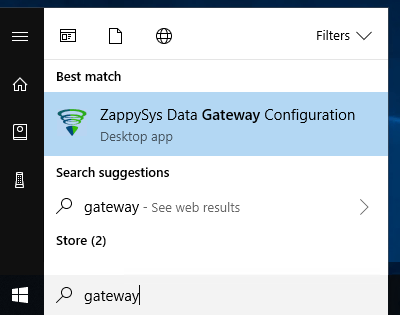
-
Go to the Users tab and follow these steps to add a Data Gateway user:
- Click the Add button
-
In the Login field enter a username, e.g.,
john - Then enter a Password
- Check the Is Administrator checkbox
- Click OK to save
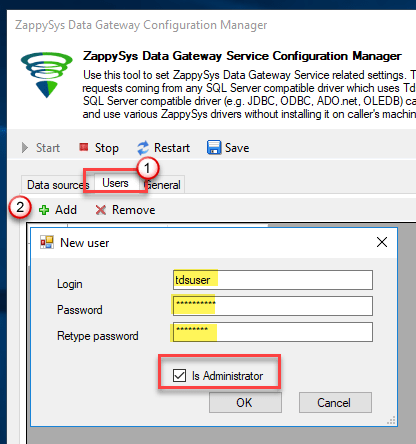
-
Now we are ready to add a data source:
- Click the Add button
- Give the Data source a name (have it handy for later)
- Then select Native - ZappySys CSV Driver
- Finally, click OK
CsvDSNZappySys CSV Driver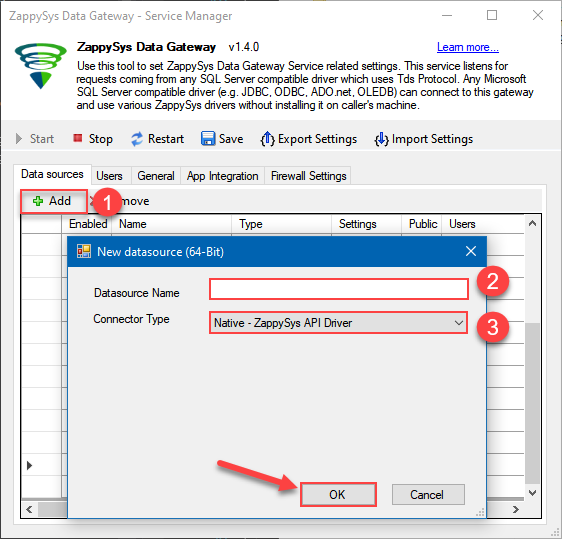
-
When the ZappySys CSV Driver configuration window opens, go back to ODBC Data Source Administrator where you already have the CSV ODBC data source created and configured, and follow these steps on how to Import data source configuration into the Gateway:
-
Open ODBC data source configuration and click Copy settings:
 ZappySys CSV Driver - CSVRead and write CSV data effortlessly. Extract, sync, and manage CSV from URLs, strings, and local files for analytics, reporting, and data pipelines — almost no coding required.CsvDSN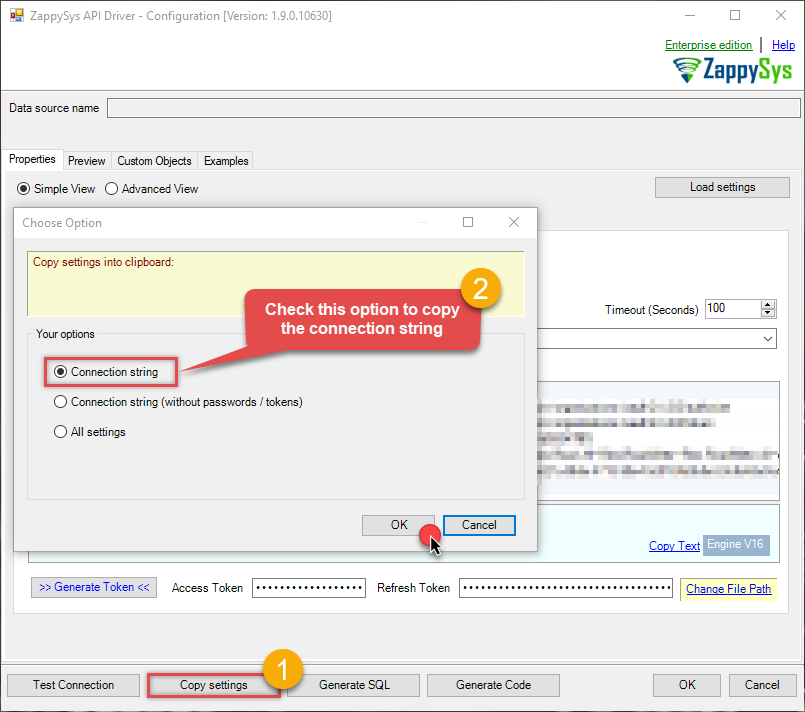
-
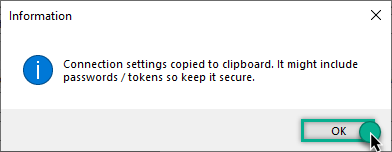
The window opens, telling us the connection string was successfully copied to the clipboard:
-
Then go to Data Gateway configuration and in data source configuration window click Load settings:
CsvDSN
ZappySys CSV Driver - Configuration [Version: 2.0.1.10418]ZappySys CSV Driver - CSVRead and write CSV data effortlessly. Extract, sync, and manage CSV from URLs, strings, and local files for analytics, reporting, and data pipelines — almost no coding required.CsvDSN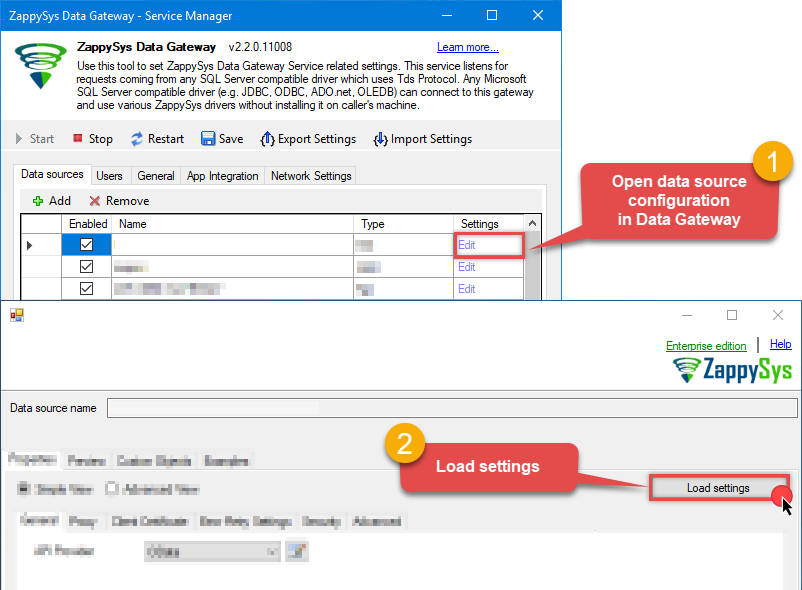
-
Once a window opens, just paste the settings by pressing
CTRL+Vor by clicking right mouse button and then Paste option.
-
Open ODBC data source configuration and click Copy settings:
-
Once done, go to the Network Settings tab and Add a firewall rule for inbound traffic:
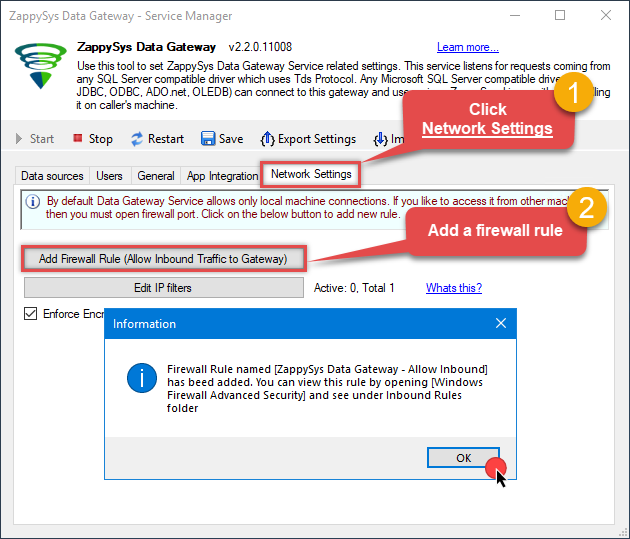
- This will initially allow all inbound traffic.
- Click Edit IP filters to restrict access to specific IP addresses or ranges.
-
Crucial Step: After creating or modifying the data source, you must:
- Click the Save button to persist your changes.
- Hit Yes when prompted to restart the Data Gateway service.
This ensures all changes are properly applied:
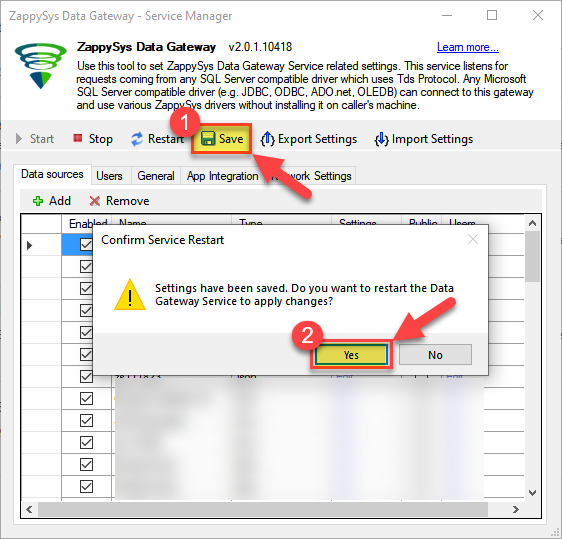 Skipping this step may cause the new settings to fail, preventing you from connecting to the data source.
Create ODBC data source to connect to the gateway
In this part we will create an ODBC data source to connect to the ZappySys Data Gateway from Alteryx. To achieve that, let's perform these steps:
-
Search for
odbcand open the ODBC Data Sources (64-bit):
-
Create a User data source (User DSN) based on the ODBC Driver 17 for SQL Server driver:
ODBC Driver 17 for SQL Server
If you don't see the ODBC Driver 17 for SQL Server driver in the list, choose a similar version. -
Then set a Name for the data source (e.g.
Gateway) and the address of the Data Gateway:ZappySysGatewayDSNlocalhost,5000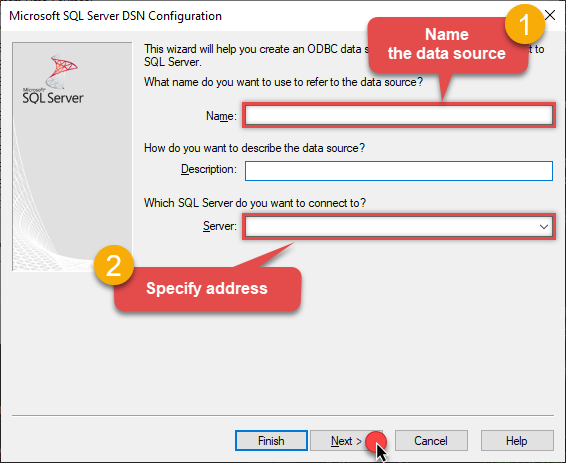 Make sure you separate the hostname and port with a comma, e.g.
localhost,5000. -
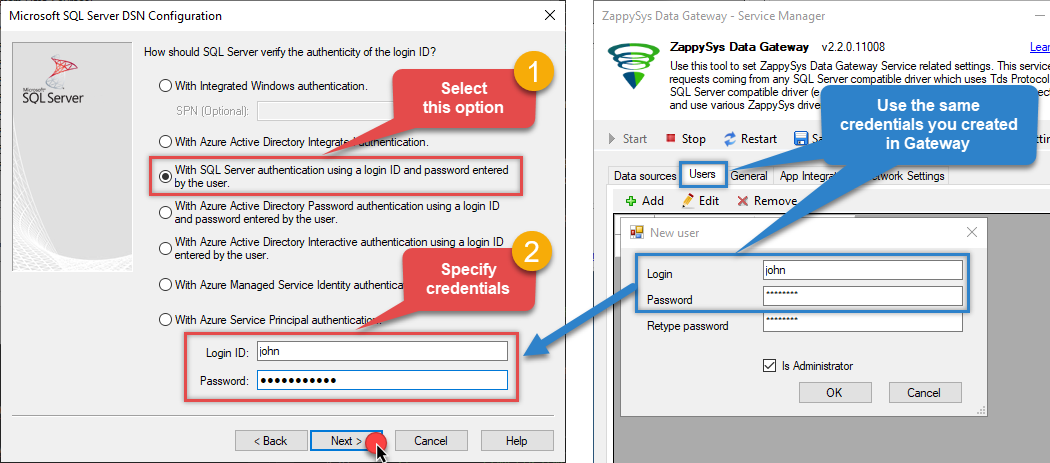
Proceed with the authentication part:
- Select SQL Server authentication
-
In the Login ID field enter the user name you created in the Data Gateway, e.g.,
john - Set Password to the one you configured in the Data Gateway
-
Then set the default database property to
CsvDSN(the one we used in the Data Gateway):CsvDSNCsvDSN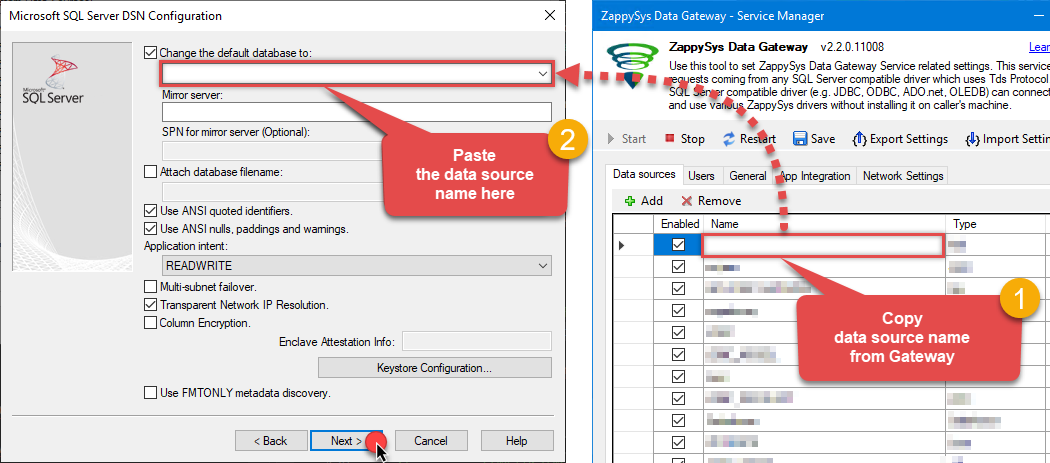 Make sure to type the data source name manually or copy/paste it directly into the field. Using the dropdown might fail because the Trust server certificate option is not enabled yet (next step).
 -
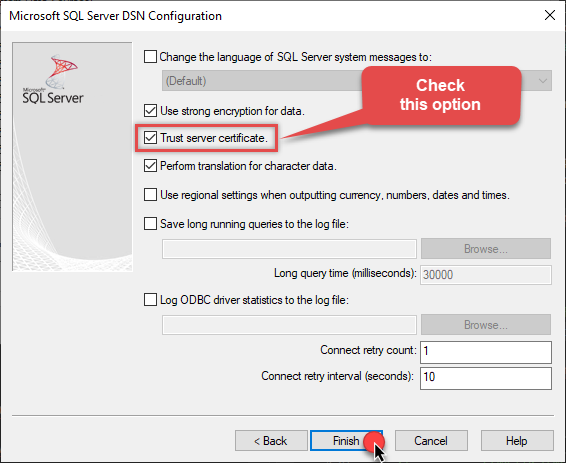
Continue by checking the Trust server certificate option:
-
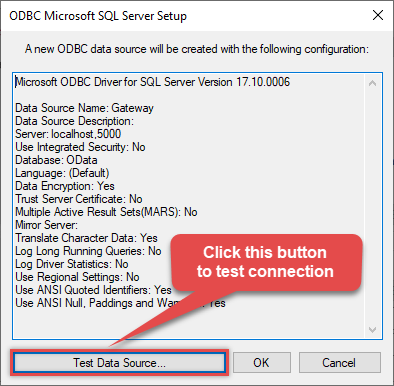
Once you do that, test the connection:
-
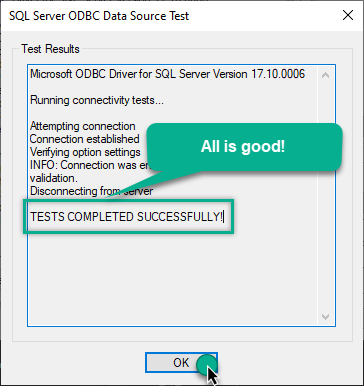
If the connection is successful, everything is good:
-
Done!
We are ready to move to the final step. Let's do it!
Access data in Alteryx via the gateway
Finally, we are ready to read data from CSV in Alteryx via the Data Gateway. Follow these final steps:
-
Go back to Alteryx.
-
Drag an Input Data tool onto your Alteryx canvas.
-
In the Configuration pane, click Set Up a Connection.
-
Note for DCM Users: If your environment has DCM (Data Connection Manager) enabled, the classic "Generic ODBC" icon may be hidden. To find it, select Data sources on the left and type "ODBC" in the search bar.
-
Once the ODBC window opens, click Connect Asset and select your ZappySysGatewayDSN DSN from the list.
Ensure you have configured a 64-bit System DSN in the Windows ODBC Data Source Administrator before this step. -
Read the data the same way we discussed at the beginning of this article.
-
That's it!
Now you can connect to CSV data in Alteryx via the ZappySys Data Gateway.
john and your password.
Conclusion
In this guide, we demonstrated how to connect to CSV in Alteryx and integrate your data — all without writing complex code.
Ready to get started? Download ODBC PowerPack now or ping us via chat if you still need help: