Salesforce Connector for Power BI How to Test Connection
Introduction
In this article we will delve deeper into Salesforce and Power BI integration, and will learn how to test connection. We are continuing from where we left off. By this time, you must have installed ODBC PowerPack, created ODBC Data Source, and configured authentication settings in your Salesforce account .
So, let's not waste time and begin.
Use Query Builder to generate SQL query
-
The first thing you have to do is open Query Builder:
 ZappySys API Driver - SalesforceAmazon Ads Connector can be used to get Amazon advertisements using Amazon Advertisements API, download various advertisement-related reports.SalesforceDSN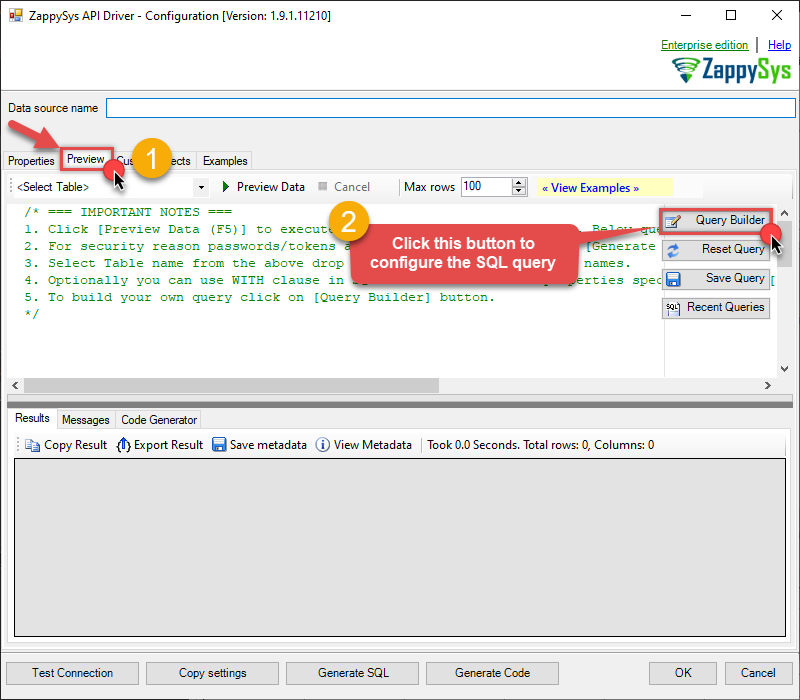
-
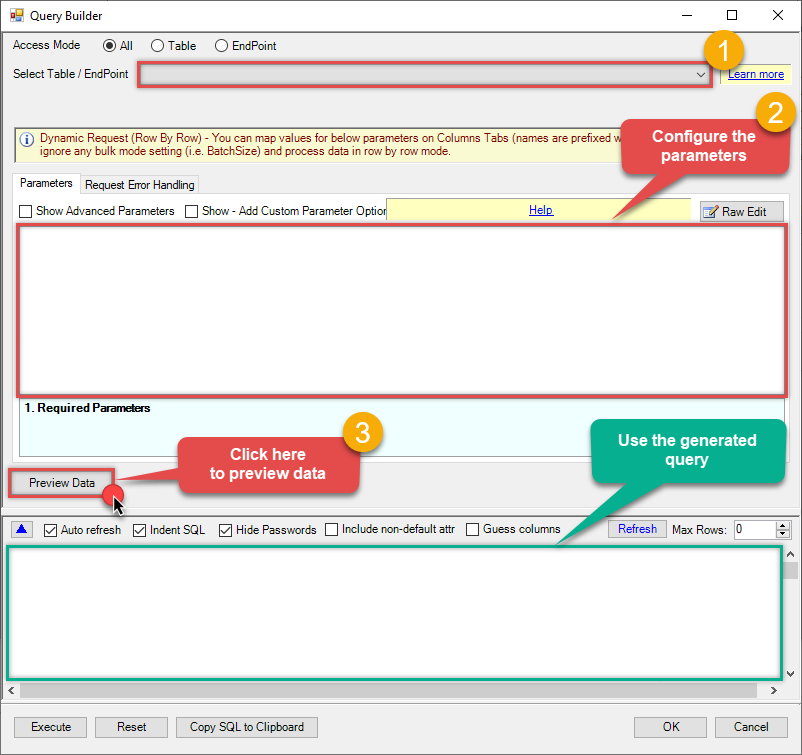
Then simply select the Test Connection endpoint (action).
-
Continue by configuring the Required parameters. You can also set optional parameters too.
-
Move on by hitting Preview Data button to preview the results.
-
If you see the results you need, simply copy the generated query:
-
That's it! You can use this query in Power BI.
Let's not stop here and explore SQL query examples, including how to use them in Stored Procedures and Views (virtual tables) in the next steps.
SQL query examples
Use these SQL queries in your Power BI data source:
How to Test connection
SELECT * FROM test_connectionTest Connection in Power BI
-
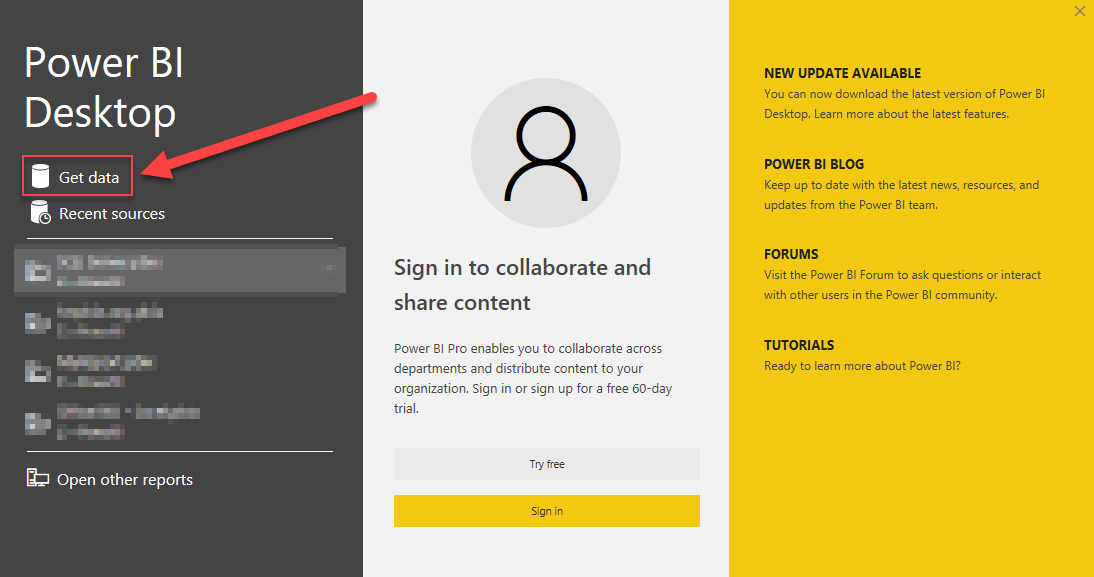
Once you open Power BI Desktop click Get Data to get data from ODBC:
-
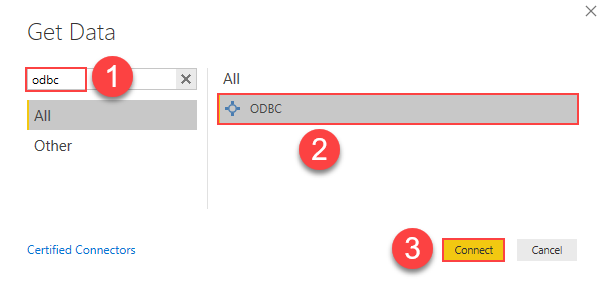
A window opens, and then search for "odbc" to get data from ODBC data source:
-
Another window opens and asks to select a Data Source we already created. Choose SalesforceDSN and continue:
SalesforceDSN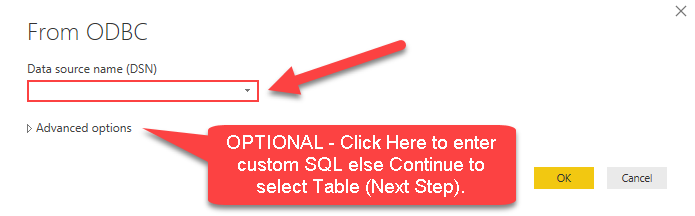
-
Most likely, you will be asked to authenticate to a newly created DSN. Just select Windows authentication option together with Use my current credentials option:
SalesforceDSN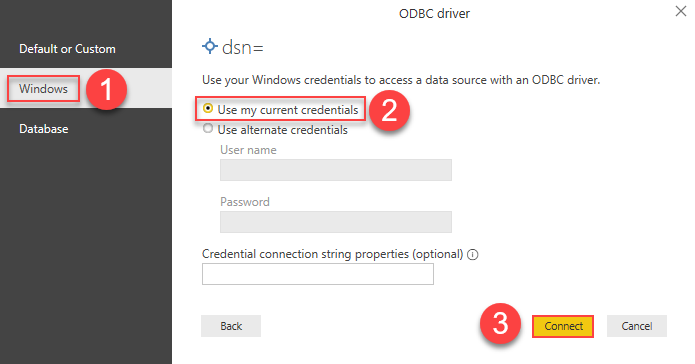
-
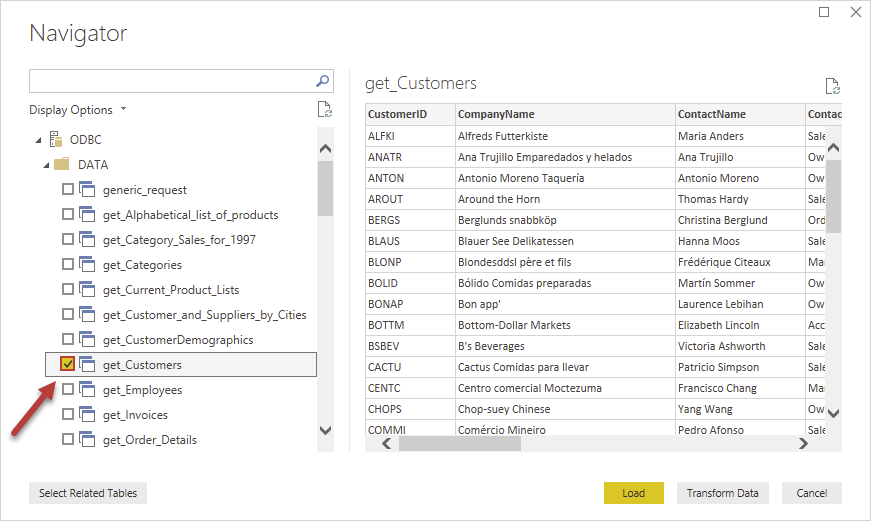
Finally, you will be asked to select a table or view to get data from. Select one and load the data!
-
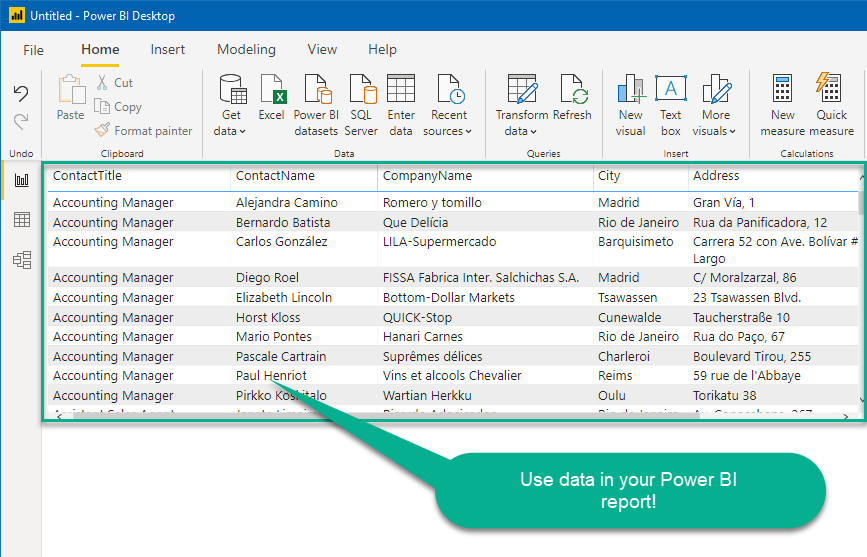
Finally, finally, use extracted data from Salesforce in a Power BI report:
More actions supported by Salesforce Connector
Learn how to perform other actions directly in Power BI with these how-to guides:
- Get Beta Report
- Get Profiles
- Get Report
- Make Generic API Request
- Make Generic API Request (Bulk Write)