

Endpoint Archive Contacts
Name
archive_contacts
Description
Related Tables
Parameters
| Parameter | Required | Options | |||||||||||||||||||||||||||||||||||||||||||||||||||||||||||||||||||||||||||||||||||||||||||||||||
|---|---|---|---|---|---|---|---|---|---|---|---|---|---|---|---|---|---|---|---|---|---|---|---|---|---|---|---|---|---|---|---|---|---|---|---|---|---|---|---|---|---|---|---|---|---|---|---|---|---|---|---|---|---|---|---|---|---|---|---|---|---|---|---|---|---|---|---|---|---|---|---|---|---|---|---|---|---|---|---|---|---|---|---|---|---|---|---|---|---|---|---|---|---|---|---|---|---|---|---|
| There are no parameters | |||||||||||||||||||||||||||||||||||||||||||||||||||||||||||||||||||||||||||||||||||||||||||||||||||
Output Columns
| Label | Data Type (SSIS) | Data Type (SQL) | Length | Description |
|---|---|---|---|---|
| Status |
DT_WSTR
|
nvarchar(50)
|
50 |
Input Columns
| Label | Data Type (SSIS) | Data Type (SQL) | Length | Description |
|---|---|---|---|---|
| Id |
DT_WSTR
|
nvarchar(100)
|
100 | Id of a company |
Examples
SSIS
Use Hubspot Connector in API Source or in API Destination SSIS Data Flow components to read or write data.
API Destination
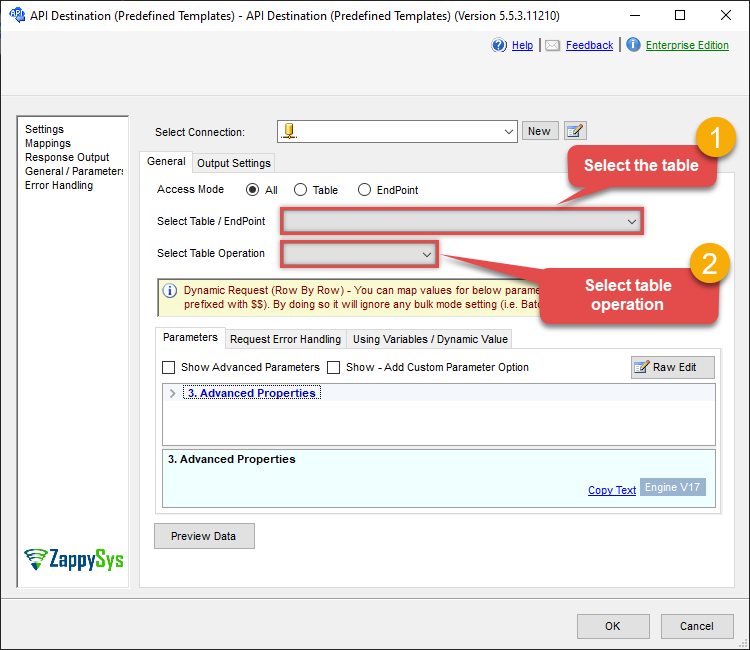
This Endpoint belongs to the Contacts table, therefore it is better to use it, instead of accessing the endpoint directly. Use this table and table-operation pair to archive contacts:

| There are no parameters to configure. |
ODBC application
Use these SQL queries in your ODBC application data source:
Delete a contact
<p>Deletes a contact by ID. Supply the contact ID in the <code>WHERE</code> clause.</p>
DELETE FROM Contacts
WHERE Id=1234
Bulk delete contacts using IDs from SQL Server
<p>Deletes multiple contacts by ID. IDs are read from a SQL Server SELECT statement or stored procedure. The result set must include an <code>Id</code> column (e.g. from a staging table such as <code>StagingContacts</code>) with the contact IDs to delete.</p>
DELETE FROM Contacts
SOURCE (
  'MSSQL',
  'Data Source=localhost;Initial Catalog=Test;Integrated Security=true',
  'SELECT Id FROM StagingContacts'
)
archive_contacts endpoint belongs to
Contacts
table(s), and can therefore be used via those table(s).
SQL Server
Use these SQL queries in SQL Server after you create a data source in Data Gateway:
Delete a contact
<p>Deletes a contact by ID. Supply the contact ID in the <code>WHERE</code> clause.</p>
DECLARE @MyQuery NVARCHAR(MAX) = 'DELETE FROM Contacts
WHERE Id=1234';

EXEC (@MyQuery) AT [LS_TO_HUBSPOT_IN_GATEWAY];
Bulk delete contacts using IDs from SQL Server
<p>Deletes multiple contacts by ID. IDs are read from a SQL Server SELECT statement or stored procedure. The result set must include an <code>Id</code> column (e.g. from a staging table such as <code>StagingContacts</code>) with the contact IDs to delete.</p>
DECLARE @MyQuery NVARCHAR(MAX) = 'DELETE FROM Contacts
SOURCE (
  ''MSSQL'',
  ''Data Source=localhost;Initial Catalog=Test;Integrated Security=true'',
  ''SELECT Id FROM StagingContacts''
)';

EXEC (@MyQuery) AT [LS_TO_HUBSPOT_IN_GATEWAY];
archive_contacts endpoint belongs to
Contacts
table(s), and can therefore be used via those table(s).