

Table Trash
Description
No description available
Supported Operations
Below section contains supported CRUD operations. Each operation is executed by some EndPoint behind the scene.| Method | Supported | Reference EndPoint |
|---|---|---|
| SELECT | list_deleted_files | |
| INSERT | ||
| UPDATE | ||
| UPSERT | ||
| DELETE | empty_trash | |
| LOOKUP |
Examples
SSIS
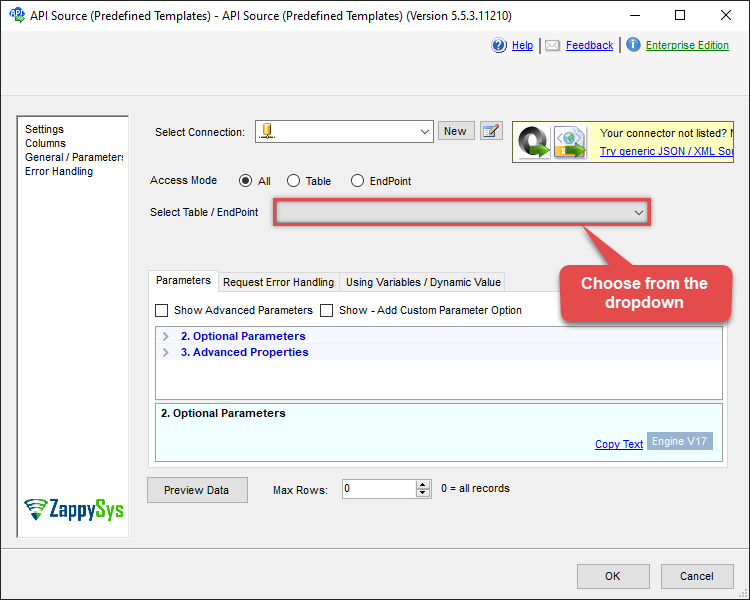
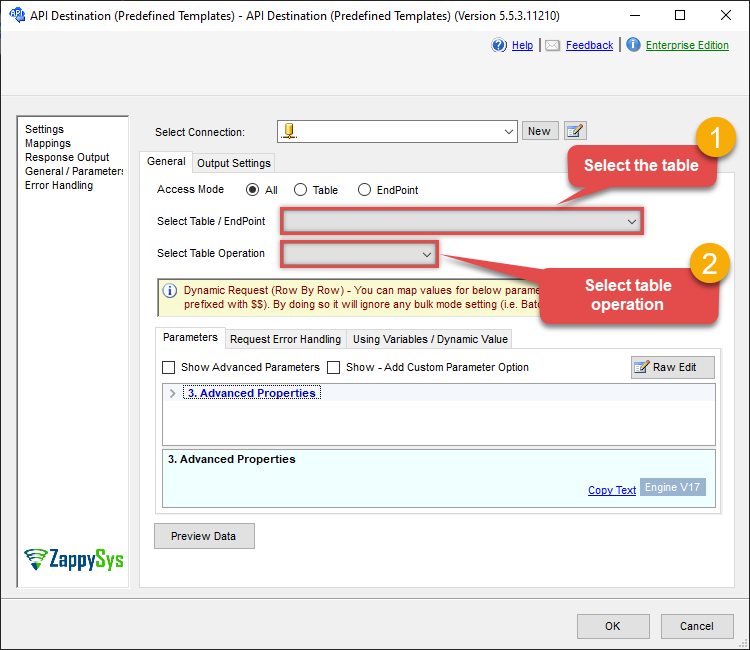
Use Google Drive Connector in API Source component to read data or in API Destination component to read/write data:
Read from Trash table using API Source

| Optional Parameters | |
|---|---|
| Search Criteria | trashed=true |
Read/write to Trash table using API Destination
| Optional Parameters | |
|---|---|
| Search Criteria | trashed=true |
ODBC application
Use these SQL queries in your ODBC application data source:
List trash
<p>Returns items in the Trash (deleted files and folders) for the user's drive.</p>
SELECT * FROM TrashList trash for a shared drive
<p>Returns items in the Trash for a specific shared drive. Supply <code>DriveType='drive'</code> and the shared drive ID.</p>
SELECT * FROM Trash
WITH(DriveType='drive',
     DriveId='1j0HFOP4gsoExxxxxx')
Empty trash
<p>Permanently empties the Trash for the user's drive.</p>
DELETE FROM TrashEmpty trash for a shared drive
<p>Permanently empties the Trash for a specified shared drive. Supply <code>DriveType='drive'</code> and the shared drive ID.</p>
DELETE FROM Trash
WITH(DriveType='drive',
     DriveId='1j0HFOP4gsoExxxxxx')
SQL Server
Use these SQL queries in SQL Server after you create a data source in Data Gateway:
List trash
<p>Returns items in the Trash (deleted files and folders) for the user's drive.</p>
DECLARE @MyQuery NVARCHAR(MAX) = 'SELECT * FROM Trash';

EXEC (@MyQuery) AT [LS_TO_GOOGLE_DRIVE_IN_GATEWAY];
List trash for a shared drive
<p>Returns items in the Trash for a specific shared drive. Supply <code>DriveType='drive'</code> and the shared drive ID.</p>
DECLARE @MyQuery NVARCHAR(MAX) = 'SELECT * FROM Trash
WITH(DriveType=''drive'',
     DriveId=''1j0HFOP4gsoExxxxxx'')';

EXEC (@MyQuery) AT [LS_TO_GOOGLE_DRIVE_IN_GATEWAY];
Empty trash
<p>Permanently empties the Trash for the user's drive.</p>
DECLARE @MyQuery NVARCHAR(MAX) = 'DELETE FROM Trash';

EXEC (@MyQuery) AT [LS_TO_GOOGLE_DRIVE_IN_GATEWAY];
Empty trash for a shared drive
<p>Permanently empties the Trash for a specified shared drive. Supply <code>DriveType='drive'</code> and the shared drive ID.</p>
DECLARE @MyQuery NVARCHAR(MAX) = 'DELETE FROM Trash
WITH(DriveType=''drive'',
     DriveId=''1j0HFOP4gsoExxxxxx'')';

EXEC (@MyQuery) AT [LS_TO_GOOGLE_DRIVE_IN_GATEWAY];