

Endpoint Read Comments
Name
get_comments
Description
Related Tables
Parameters
| Parameter | Required | Options | ||||||||||||||||||||||||||||||||||||||||||||||||||||||||||||||||
|---|---|---|---|---|---|---|---|---|---|---|---|---|---|---|---|---|---|---|---|---|---|---|---|---|---|---|---|---|---|---|---|---|---|---|---|---|---|---|---|---|---|---|---|---|---|---|---|---|---|---|---|---|---|---|---|---|---|---|---|---|---|---|---|---|---|---|
|
Name:
Label: Fields |
||||||||||||||||||||||||||||||||||||||||||||||||||||||||||||||||||
|
Name:
Label: Issue Key(s) or Ids - Comma Separated (PRJA-10,PRJA-13) Use comma separated IDs or Keys for Issues. 1000 ids max or JIRA internal limit for Payload. |
||||||||||||||||||||||||||||||||||||||||||||||||||||||||||||||||||
|
Name:
Label: Search by |
|
|||||||||||||||||||||||||||||||||||||||||||||||||||||||||||||||||
|
Name:
Label: Project Key(s) - Comma Separated (CBS,BRK) Specify a project to search issues for |
||||||||||||||||||||||||||||||||||||||||||||||||||||||||||||||||||
|
Name:
Label: JQL Expression (For Issue Search) Use JQL to use an advanced mode of searching. Few links are https://www.atlassian.com/blog/jira/jql-the-most-flexible-way-to-search-jira-14 and als check https://wac-cdn.atlassian.com/dam/jcr:241d9c9b-475f-411f-90a2-97ca344442b3/atlassian-jql-cheat-sheet-2.pdf?cdnVersion=2169 |
|
|||||||||||||||||||||||||||||||||||||||||||||||||||||||||||||||||
|
Name:
Label: CustomColumnsRegex Enter regular expression for custom columns which you like to output. Use Pipe to type multiple column names (must use key - internal names for columns e.g. customfield_10004). You can use Regex too (e.g. field_100\d+ ). This filter is only applied for those fields which has flag custom=true. |
Output Columns
| Label | Data Type (SSIS) | Data Type (SQL) | Length | Description |
|---|---|---|---|---|
| IssueId |
DT_WSTR
|
nvarchar(20)
|
20 | |
| IssueKey |
DT_WSTR
|
nvarchar(50)
|
50 | |
| Id |
DT_WSTR
|
nvarchar(20)
|
20 | |
| Created |
DT_DBTIMESTAMP
|
datetime
|
||
| Updated |
DT_DBTIMESTAMP
|
datetime
|
||
| Self |
DT_WSTR
|
nvarchar(150)
|
150 | |
| BodyType |
DT_WSTR
|
nvarchar(50)
|
50 | |
| BodyContent |
DT_NTEXT
|
nvarchar(MAX)
|
||
| BodyContentText |
DT_NTEXT
|
nvarchar(MAX)
|
Join formatted text blocks using space separator (new lines will be lost) | |
| BodyVersion |
DT_NUMERIC
|
decimal(18,5)
|
||
| AuthorSelf |
DT_WSTR
|
nvarchar(150)
|
150 | |
| AuthorAccountId |
DT_WSTR
|
nvarchar(100)
|
100 | |
| AuthorEmailAddress |
DT_WSTR
|
nvarchar(100)
|
100 | |
| AuthorAvatarUrls48x48 |
DT_WSTR
|
nvarchar(500)
|
500 | |
| AuthorAvatarUrls24x24 |
DT_WSTR
|
nvarchar(500)
|
500 | |
| AuthorAvatarUrls16x16 |
DT_WSTR
|
nvarchar(500)
|
500 | |
| AuthorAvatarUrls32x32 |
DT_WSTR
|
nvarchar(500)
|
500 | |
| AuthorDisplayName |
DT_WSTR
|
nvarchar(100)
|
100 | |
| AuthorActive |
DT_BOOL
|
bit
|
||
| AuthorTimeZone |
DT_WSTR
|
nvarchar(100)
|
100 | |
| AuthorAccountType |
DT_WSTR
|
nvarchar(50)
|
50 | |
| UpdateAuthorSelf |
DT_WSTR
|
nvarchar(150)
|
150 | |
| UpdateAuthorAccountId |
DT_WSTR
|
nvarchar(50)
|
50 | |
| UpdateAuthorEmailAddress |
DT_WSTR
|
nvarchar(100)
|
100 | |
| UpdateAuthorAvatarUrls48x48 |
DT_WSTR
|
nvarchar(500)
|
500 | |
| UpdateAuthorAvatarUrls24x24 |
DT_WSTR
|
nvarchar(500)
|
500 | |
| UpdateAuthorAvatarUrls16x16 |
DT_WSTR
|
nvarchar(500)
|
500 | |
| UpdateAuthorAvatarUrls32x32 |
DT_WSTR
|
nvarchar(500)
|
500 | |
| UpdateAuthorDisplayName |
DT_WSTR
|
nvarchar(100)
|
100 | |
| UpdateAuthorActive |
DT_BOOL
|
bit
|
||
| UpdateAuthorTimeZone |
DT_WSTR
|
nvarchar(44)
|
44 | |
| UpdateAuthorAccountType |
DT_WSTR
|
nvarchar(36)
|
36 | |
| jsdPublic |
DT_BOOL
|
bit
|
Input Columns
| Label | Data Type (SSIS) | Data Type (SQL) | Length | Description | |||||||||||||||||||||||||||||||||||||||||||||||||||||||||||||||||||||||||||||||||||||||||||||||
|---|---|---|---|---|---|---|---|---|---|---|---|---|---|---|---|---|---|---|---|---|---|---|---|---|---|---|---|---|---|---|---|---|---|---|---|---|---|---|---|---|---|---|---|---|---|---|---|---|---|---|---|---|---|---|---|---|---|---|---|---|---|---|---|---|---|---|---|---|---|---|---|---|---|---|---|---|---|---|---|---|---|---|---|---|---|---|---|---|---|---|---|---|---|---|---|---|---|---|---|
| There are no Static columns defined for this endpoint. This endpoint detects columns dynamically at runtime. | |||||||||||||||||||||||||||||||||||||||||||||||||||||||||||||||||||||||||||||||||||||||||||||||||||
Examples
SSIS
Use Jira Connector in API Source or in API Destination SSIS Data Flow components to read or write data.
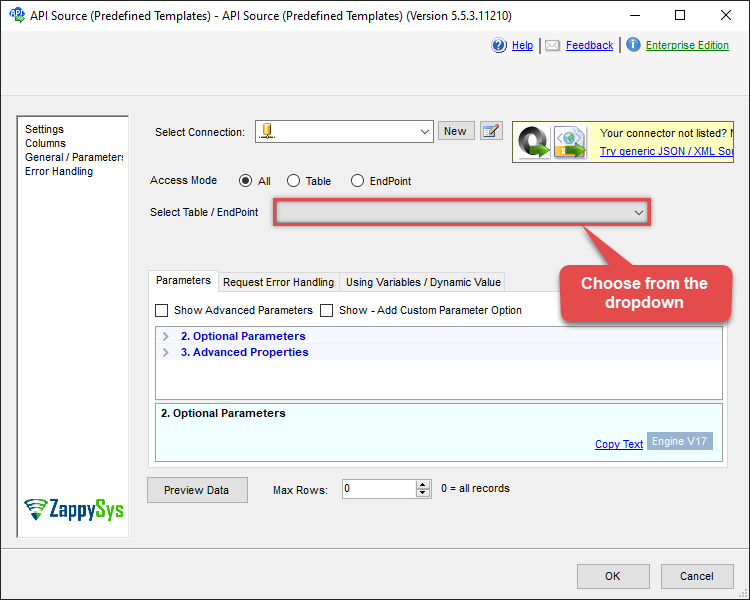
API Source
This Endpoint belongs to the Comments table, therefore it is better to use it, instead of accessing the endpoint directly:

| Optional Parameters | |
|---|---|
| Fields | id,key |
| Issue Key(s) or Ids - Comma Separated (PRJA-10,PRJA-13) | |
API Destination
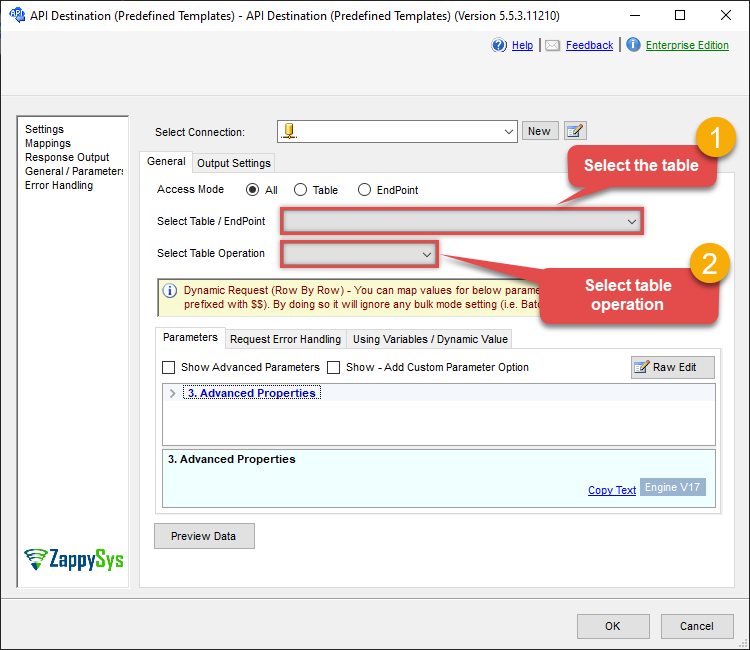
This Endpoint belongs to the Comments table, therefore it is better to use it, instead of accessing the endpoint directly. Use this table and table-operation pair to read comments:
| Optional Parameters | |
|---|---|
| Fields | id,key |
| Issue Key(s) or Ids - Comma Separated (PRJA-10,PRJA-13) | |
ODBC application
Use these SQL queries in your ODBC application data source:
Read comments for all issues
<p>Gets every comment across all issues. Use this when you need a flat list of all comments. To limit by issue, use the following examples that filter by issue ID or Key, or by JQL.</p>
SELECT * FROM CommentsRead comments for an issue by Key
<p>Gets all comments for a single issue identified by its key (e.g. CS-1).</p>
SELECT * FROM Comments WITH(Key='CS-1')Read comments for issues by JQL
<p>Gets all comments for issues that match a JQL expression. The connector first finds issues with the given JQL, then returns comments for those issues. Use the same JQL syntax as in the “Read issues using JQL query” example.</p>
SELECT * FROM Comments WITH (Jql='status IN (Done, Closed) AND created > -5d' )Read comments for an issue by ID or Key
<p>Gets all comments for one issue. Identify the issue by <code>IssueId</code> in the <code>WHERE</code> clause or by <code>Key</code> in <code>WITH</code>.</p>
SELECT * FROM Comments Where IssueId=10003 --OR WITH(Key='10003')
get_comments endpoint belongs to
Comments
table(s), and can therefore be used via those table(s).
SQL Server
Use these SQL queries in SQL Server after you create a data source in Data Gateway:
Read comments for all issues
<p>Gets every comment across all issues. Use this when you need a flat list of all comments. To limit by issue, use the following examples that filter by issue ID or Key, or by JQL.</p>
DECLARE @MyQuery NVARCHAR(MAX) = 'SELECT * FROM Comments';

EXEC (@MyQuery) AT [LS_TO_JIRA_IN_GATEWAY];
Read comments for an issue by Key
<p>Gets all comments for a single issue identified by its key (e.g. CS-1).</p>
DECLARE @MyQuery NVARCHAR(MAX) = 'SELECT * FROM Comments WITH(Key=''CS-1'')';

EXEC (@MyQuery) AT [LS_TO_JIRA_IN_GATEWAY];
Read comments for issues by JQL
<p>Gets all comments for issues that match a JQL expression. The connector first finds issues with the given JQL, then returns comments for those issues. Use the same JQL syntax as in the “Read issues using JQL query” example.</p>
DECLARE @MyQuery NVARCHAR(MAX) = 'SELECT * FROM Comments WITH (Jql=''status IN (Done, Closed) AND created > -5d'' )';

EXEC (@MyQuery) AT [LS_TO_JIRA_IN_GATEWAY];
Read comments for an issue by ID or Key
<p>Gets all comments for one issue. Identify the issue by <code>IssueId</code> in the <code>WHERE</code> clause or by <code>Key</code> in <code>WITH</code>.</p>
DECLARE @MyQuery NVARCHAR(MAX) = 'SELECT * FROM Comments Where IssueId=10003 --OR WITH(Key=''10003'')';

EXEC (@MyQuery) AT [LS_TO_JIRA_IN_GATEWAY];
get_comments endpoint belongs to
Comments
table(s), and can therefore be used via those table(s).