

Table Invoices
Description
No description available
Supported Operations
Below section contains supported CRUD operations. Each operation is executed by some EndPoint behind the scene.| Method | Supported | Reference EndPoint |
|---|---|---|
| SELECT | get_invoices | |
| INSERT | ||
| UPDATE | ||
| UPSERT | ||
| DELETE | delete_invoice | |
| LOOKUP | get_single_invoice |
Examples
SSIS
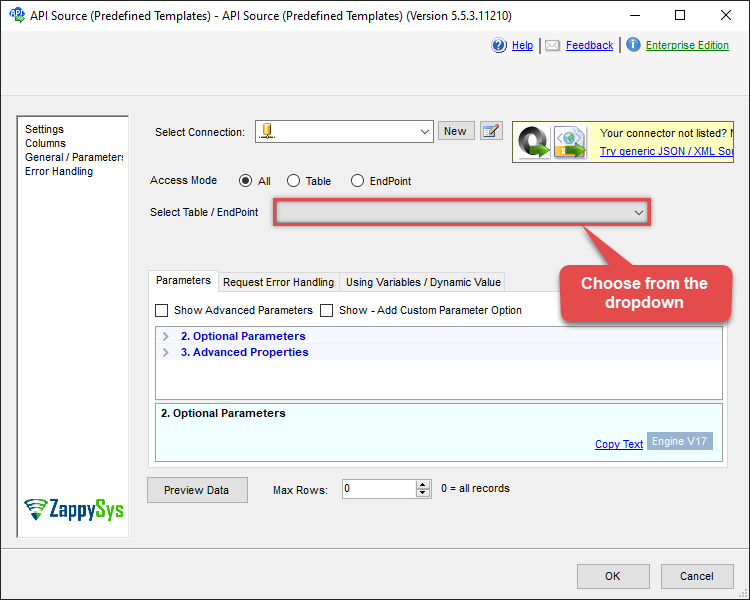
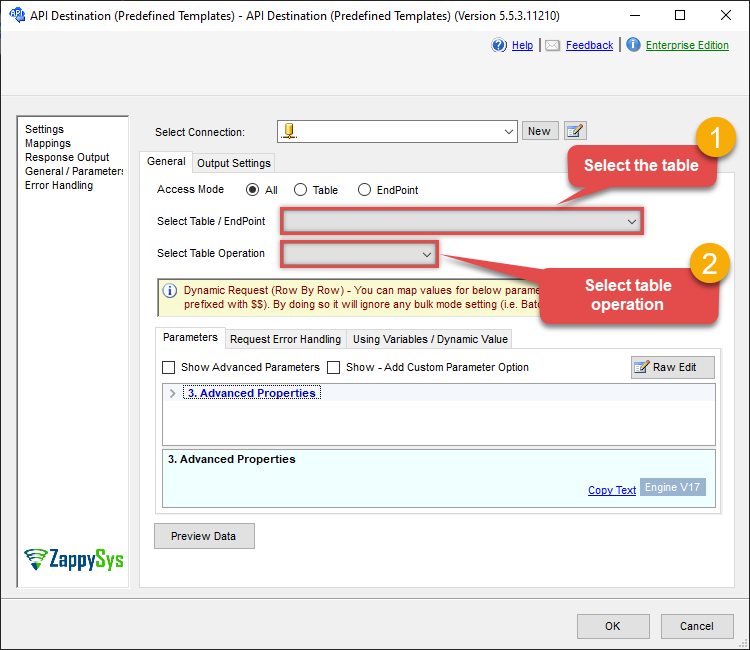
Use Stripe Connector in API Source component to read data or in API Destination component to read/write data:
Read from Invoices table using API Source

| Optional Parameters | |
|---|---|
| Customer Id | |
| Status (draft or open or paid or uncollectible or void) | |
| Subscription Id | |
| Collection method (charge_automatically or send_invoice) | |
| Created later than (yyyy-MM-dd) | |
| Created on or later than (yyyy-MM-dd) | |
| Created earlier than (yyyy-MM-dd) | |
| Created on or earlier than (yyyy-MM-dd) | |
| Due Date later than (yyyy-MM-dd) | |
| Due Date on or later than (yyyy-MM-dd) | |
| Due Date earlier than (yyyy-MM-dd) | |
| Due Date on or earlier than (yyyy-MM-dd) | |
Read/write to Invoices table using API Destination
| Optional Parameters | |
|---|---|
| Customer Id | |
| Status (draft or open or paid or uncollectible or void) | |
| Subscription Id | |
| Collection method (charge_automatically or send_invoice) | |
| Created later than (yyyy-MM-dd) | |
| Created on or later than (yyyy-MM-dd) | |
| Created earlier than (yyyy-MM-dd) | |
| Created on or earlier than (yyyy-MM-dd) | |
| Due Date later than (yyyy-MM-dd) | |
| Due Date on or later than (yyyy-MM-dd) | |
| Due Date earlier than (yyyy-MM-dd) | |
| Due Date on or earlier than (yyyy-MM-dd) | |
ODBC application
Use these SQL queries in your ODBC application data source:
Read invoices
<p>Reads all records from the <code>Invoices</code> table. This example demonstrates a basic SELECT query to retrieve a complete list of invoices from the Stripe account.</p>
SELECT * FROM InvoicesRead an invoice
<p>Reads a single invoice record from the <code>Invoices</code> table by specifying the <code>Id</code>. This example demonstrates how to filter results to a specific invoice using the WHERE clause.</p>
SELECT * FROM Invoices
WHERE Id = 'abc'
Create an invoice
<p>Creates a new invoice record in the <code>Invoices</code> table. This example demonstrates how to use the <code>INSERT INTO</code> statement to specify the customer and amount remaining for the new invoice.</p>
INSERT INTO Invoices([Customer],[AmountRemaining])
VALUES ('cus_LqWX1s0E32JJeZL', 12345)
Update an invoice
<p>Updates an existing invoice record in the <code>Invoices</code> table. This example shows how to modify the <code>DaysUntilDue</code> field for a specific invoice identified by its <code>Id</code>.</p>
UPDATE Invoices
SET [DaysUntilDue] = 20
WHERE Id = 'abc'
Delete an invoice
<p>Deletes an invoice record from the <code>Invoices</code> table. This example demonstrates how to remove an invoice using the <code>DELETE FROM</code> statement with a specific <code>Id</code> in the WHERE clause.</p>
DELETE FROM Invoices
WHERE Id = 'abc'
SQL Server
Use these SQL queries in SQL Server after you create a data source in Data Gateway:
Read invoices
<p>Reads all records from the <code>Invoices</code> table. This example demonstrates a basic SELECT query to retrieve a complete list of invoices from the Stripe account.</p>
DECLARE @MyQuery NVARCHAR(MAX) = 'SELECT * FROM Invoices';

EXEC (@MyQuery) AT [LS_TO_STRIPE_IN_GATEWAY];
Read an invoice
<p>Reads a single invoice record from the <code>Invoices</code> table by specifying the <code>Id</code>. This example demonstrates how to filter results to a specific invoice using the WHERE clause.</p>
DECLARE @MyQuery NVARCHAR(MAX) = 'SELECT * FROM Invoices
WHERE Id = ''abc''';

EXEC (@MyQuery) AT [LS_TO_STRIPE_IN_GATEWAY];
Create an invoice
<p>Creates a new invoice record in the <code>Invoices</code> table. This example demonstrates how to use the <code>INSERT INTO</code> statement to specify the customer and amount remaining for the new invoice.</p>
DECLARE @MyQuery NVARCHAR(MAX) = 'INSERT INTO Invoices([Customer],[AmountRemaining])
VALUES (''cus_LqWX1s0E32JJeZL'', 12345)';

EXEC (@MyQuery) AT [LS_TO_STRIPE_IN_GATEWAY];
Update an invoice
<p>Updates an existing invoice record in the <code>Invoices</code> table. This example shows how to modify the <code>DaysUntilDue</code> field for a specific invoice identified by its <code>Id</code>.</p>
DECLARE @MyQuery NVARCHAR(MAX) = 'UPDATE Invoices
SET [DaysUntilDue] = 20
WHERE Id = ''abc''';

EXEC (@MyQuery) AT [LS_TO_STRIPE_IN_GATEWAY];
Delete an invoice
<p>Deletes an invoice record from the <code>Invoices</code> table. This example demonstrates how to remove an invoice using the <code>DELETE FROM</code> statement with a specific <code>Id</code> in the WHERE clause.</p>
DECLARE @MyQuery NVARCHAR(MAX) = 'DELETE FROM Invoices
WHERE Id = ''abc''';

EXEC (@MyQuery) AT [LS_TO_STRIPE_IN_GATEWAY];