

Endpoint List calendars
Name
list_calendars
Description
Related Tables
Parameters
| Parameter | Required | Options |
|---|---|---|
|
Name:
Label: User ID (e.g. 'me' or other-user-email) The UserId parameter can be 'me' (the authenticated user) or a specific user's email (e.g., 'someuser@example.com'). For OAuth, 'me' is the signed-in user; other users require domain-wide delegation. For Service Accounts, use 'me' for the service account itself, or specify an email if impersonation is enabled. |
YES | |
|
Name:
Label: Max Results Maximum number of events per page |
Output Columns
| Label | Data Type (SSIS) | Data Type (SQL) | Length | Description |
|---|---|---|---|---|
| Id |
DT_WSTR
|
nvarchar(300)
|
300 | |
| Summary |
DT_WSTR
|
nvarchar(300)
|
300 | |
| Description |
DT_WSTR
|
nvarchar(1500)
|
1500 | |
| TimeZone |
DT_WSTR
|
nvarchar(300)
|
300 |
Input Columns
| Label | Data Type (SSIS) | Data Type (SQL) | Length | Description | |||||||||||||||||||||||||||||||||||||||||||||||||||||||||||||||||||||||||||||||||||||||||||||||
|---|---|---|---|---|---|---|---|---|---|---|---|---|---|---|---|---|---|---|---|---|---|---|---|---|---|---|---|---|---|---|---|---|---|---|---|---|---|---|---|---|---|---|---|---|---|---|---|---|---|---|---|---|---|---|---|---|---|---|---|---|---|---|---|---|---|---|---|---|---|---|---|---|---|---|---|---|---|---|---|---|---|---|---|---|---|---|---|---|---|---|---|---|---|---|---|---|---|---|---|
| There are no Static columns defined for this endpoint. This endpoint detects columns dynamically at runtime. | |||||||||||||||||||||||||||||||||||||||||||||||||||||||||||||||||||||||||||||||||||||||||||||||||||
Examples
SSIS
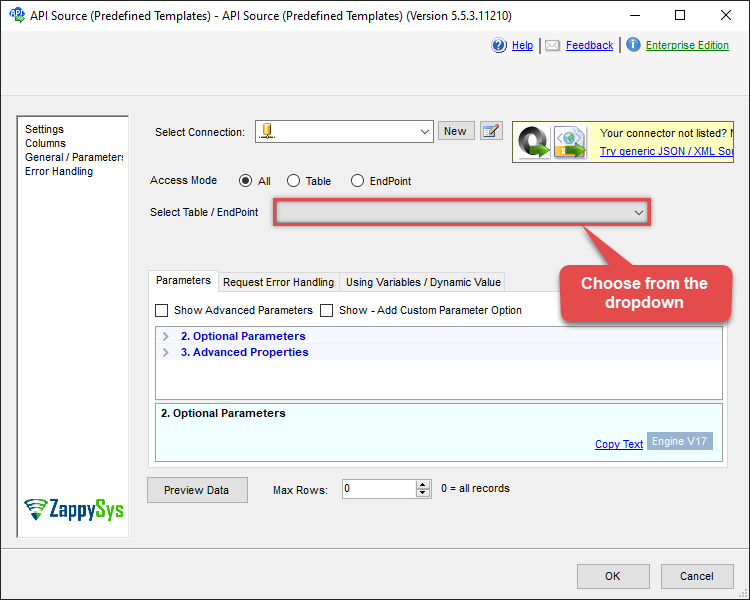
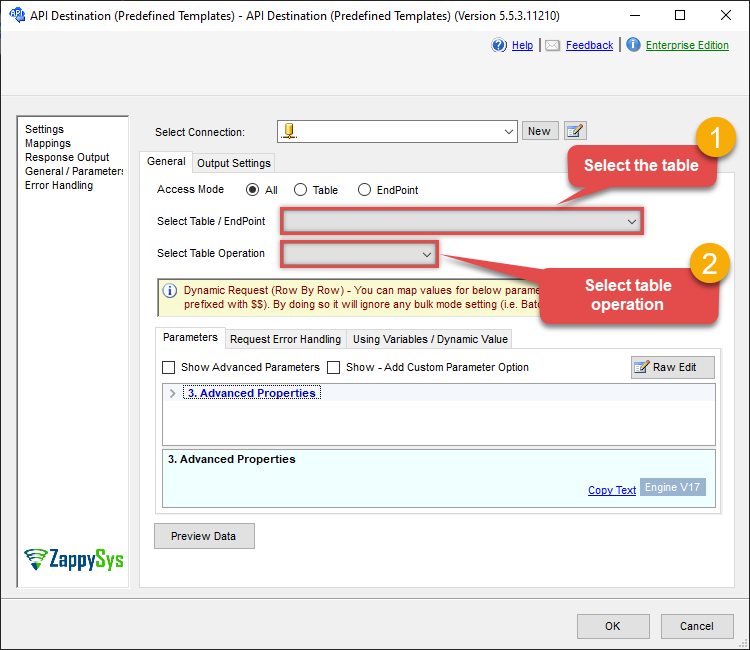
Use Google Calendar Connector in API Source or in API Destination SSIS Data Flow components to read or write data.
API Source
This Endpoint belongs to the Calendars table, therefore it is better to use it, instead of accessing the endpoint directly:

| Required Parameters | |
|---|---|
| User ID (e.g. 'me' or other-user-email) | Fill-in the parameter... |
API Destination
This Endpoint belongs to the Calendars table, therefore it is better to use it, instead of accessing the endpoint directly. Use this table and table-operation pair to list calendars:
| Required Parameters | |
|---|---|
| User ID (e.g. 'me' or other-user-email) | Fill-in the parameter... |
ODBC application
Use these SQL queries in your ODBC application data source:
List calendars
<p>This example retrieves a list of calendars accessible to the authenticated user or specified user. Use <code>UserId='me'</code> for the current user (OAuth) or a specific email for service accounts with domain-wide delegation.</p> <p><strong>Note:</strong> For service accounts, impersonation may be required for non-'me' users.</p>
SELECT * FROM Calendars
-- Default: Lists calendars for the authenticated user

--OR--
--SELECT * FROM Calendars WITH(UserId='me') -- for OAuth authenticated user
--SELECT * FROM Calendars WITH(UserId='someuser@email.com') -- for specific user (requires domain-wide delegation for service accounts)
list_calendars endpoint belongs to
Calendars
table(s), and can therefore be used via those table(s).
SQL Server
Use these SQL queries in SQL Server after you create a data source in Data Gateway:
List calendars
<p>This example retrieves a list of calendars accessible to the authenticated user or specified user. Use <code>UserId='me'</code> for the current user (OAuth) or a specific email for service accounts with domain-wide delegation.</p> <p><strong>Note:</strong> For service accounts, impersonation may be required for non-'me' users.</p>
DECLARE @MyQuery NVARCHAR(MAX) = 'SELECT * FROM Calendars
-- Default: Lists calendars for the authenticated user

--OR--
--SELECT * FROM Calendars WITH(UserId=''me'') -- for OAuth authenticated user
--SELECT * FROM Calendars WITH(UserId=''someuser@email.com'') -- for specific user (requires domain-wide delegation for service accounts)';

EXEC (@MyQuery) AT [LS_TO_GOOGLE_CALENDAR_IN_GATEWAY];
list_calendars endpoint belongs to
Calendars
table(s), and can therefore be used via those table(s).